Introduction to Type 3 - The Achiever
In the Enneagram system, Type 3 (also known as The Achiever, The Winner, or The Performer) is one of the most common personality types in achievement-oriented cultures. Type 3 individuals are driven by the need for recognition, validation, and the desire to be valuable in others' eyes. They often have excellent adaptability, know how to make a good impression, and have a strong goal orientation.
The core of Type 3 lies in the unconscious belief: "I am only lovable and worthy when I achieve success and am admired by others." Therefore, they spend most of their energy building an image, completing goals, and conquering challenges. However, their biggest blind spot is their disconnection from true emotions and difficulty recognizing their intrinsic worth.
How Enneagram Arrows Work
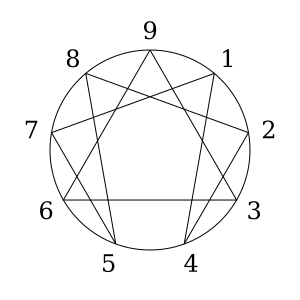
One of the most profound discoveries of the Enneagram is that humans are not limited to a single personality type. When we operate in a healthy state, we adopt positive qualities of another type along the "integration" arrow. Conversely, when stressed, pressured, or unbalanced, we fall into negative behaviors of another type along the "disintegration" arrow.
For Type 3, the two key arrows are:
- Integration arrow: Type 3 moves toward Type 6 (The Loyalist).
- Disintegration arrow: Type 3 moves back toward Type 9 (The Peacemaker).
Understanding these two directions not only helps Type 3 identify their current state but also provides a clear roadmap for sustainable personal growth.
Integration Arrow: Type 3 Moving Toward Type 6
Overview of Type 6
Type 6 (The Loyalist) is a personality type driven by the need for safety, security, and loyalty. Type 6 individuals are skilled at spotting risks, always preparing for worst-case scenarios, and placing high value on trustworthiness, commitment, and responsibility.
How Integration Occurs
When Type 3 is in a healthy and balanced state, they begin to realize that success based solely on external image is not enough. They gradually shift from "seeking approval" to "building real value." At this point, qualities of Type 6 begin to emerge:
- Greater honesty with self and others: Healthy Type 3 no longer hides flaws or embellishes themselves. They learn to accept vulnerability, admit mistakes, and share real struggles.
- Building relationships based on trust: Instead of only networking for personal gain, integrated Type 3 focuses on loyalty, commitment, and responsibility to the group. They become reliable teammates, not just shining leaders.
- Better risk awareness and preparation: Type 3 is known for fast action and sometimes recklessness. When integrating toward Type 6, they pause to analyze potential negative scenarios, make contingency plans, and become more cautious in key decisions.
- Connecting with true fears: The deepest part of integration is Type 3 learning to face the fear of "being worthless" and "unlovable" instead of running away through new achievements. When they dare to look at fear, they begin to heal and develop inner self-worth.
Benefits of Integration
When Type 3 successfully moves toward Type 6, they are no longer "hollow" achievers. They become trustworthy leaders, genuine friends, and individuals with inner depth. Their success becomes more sustainable because it is built on real value, not just external image.
Disintegration Arrow: Type 3 Moving Back to Type 9
Overview of Type 9
Type 9 (The Peacemaker) is driven by the need to maintain inner peace and avoid conflict. Type 9 individuals often tend toward passivity, procrastination, distraction by substitute activities, and may lose connection with their own desires.
How Disintegration Occurs
When Type 3 falls into prolonged stress, burnout, or feels uncontrollable failure, they no longer have enough energy to maintain the success image. At this point, negative traits of Type 9 begin to emerge:
- Passivity and procrastination: A disintegrating Type 3 may suddenly fall into a "paralyzed" state, unable to start any new project. They postpone work, avoid important meetings, and lose the motivation that is their hallmark.
- Disconnection from emotions and goals: In this state, Type 3 no longer feels passion or life purpose. They operate like a machine, working mechanically without enthusiasm, or conversely, they may completely neglect work and live aimlessly.
- Avoiding conflict at all costs: To protect themselves from painful feelings of failure, disintegrating Type 3 tends to "camouflage" with superficial agreeableness. They nod to everything, avoid confrontation, and gradually become invisible in discussions.
- Self-deception: Similar to Type 9's self-reassurance that "everything is fine," disintegrating Type 3 may convince themselves they no longer care about success, that rest is what they need. But underneath is emptiness and silent panic.
- Engaging in mindless activities: Instead of focusing on important goals, disintegrating Type 3 may spend hours on substitute activities like scrolling social media, binge-watching, or other entertainment to avoid facing feelings of helplessness.
Recognizing Disintegration State
One of the clearest signs of a disintegrating Type 3 is intense internal contradiction: they feel they are "dying inside" but cannot act; they hate themselves for passivity but lack energy to escape. If not recognized and addressed in time, this state can lead to severe burnout, depression, or identity crisis.
Comparative Summary Table
| Aspect | Integration (toward Type 6) | Disintegration (toward Type 9) |
|---|---|---|
| Emotions | Safe, connected, honest | Paralyzed, empty, passive |
| Behavior | Committed, reliable, well-prepared | Procrastinating, avoidant, directionless |
| Relationships | Builds deep trust | Avoids conflict, withdraws |
| Relationship with work | Meaningful, sustainable work | Mechanical work or neglect |
| Motivation | Intrinsic value | Fear of failure, paralysis |
| Relationship with self | Accepts weaknesses, connects with emotions | Self-deception, disconnected from emotions |
Practical Applications for Type 3
How to Promote Integration
- Practice radical honesty: Spend time daily asking: "What am I hiding from myself?", "In what area am I pretending to be successful?" Facing the truth about yourself is the first step to integration.
- Build non-transactional relationships: Proactively connect with people who offer no career benefit. Learn to listen and commit without calculation.
- Embrace vulnerability: Allow yourself to show weakness to trusted people. This relieves the pressure to be perfect and fosters deeper connections.
- Make contingency plans: Learn from Type 6 by always preparing for worst-case scenarios. This not only keeps you safer but also reduces underlying anxiety.
How to Recognize and Escape Disintegration
- Recognize early signs: If you notice unusual procrastination, loss of interest in work, or avoidance of commitments, pause and ask: "Am I falling into a disintegration state?"
- Consciously reduce pressure: Instead of trying to maintain a frantic pace, proactively reduce workload, reschedule, and allow yourself rest before it's too late.
- Reconnect with your body: Disintegrating Type 3 often "lives in their head" and ignores body signals. Exercise, meditate, and breathe deeply to return to the present.
- Seek support: Don't hesitate to share with friends, family, or a therapist. Disintegrating Type 9 tends to self-isolate, so connecting with others is an effective antidote.
Conclusion
Integration and disintegration arrows are two sides of the same coin in Type 3's growth journey. While the integration arrow toward Type 6 brings honesty, reliability, and depth, the disintegration arrow toward Type 9 is an early warning of imbalance. Sustainable successful Type 3s are not those who never fall into disintegration, but those who are sensitive enough to recognize early signs and brave enough to return to the integration path. Understanding both directions is the key to transforming from a "success machine" into a whole person, successful in both career and inner life.