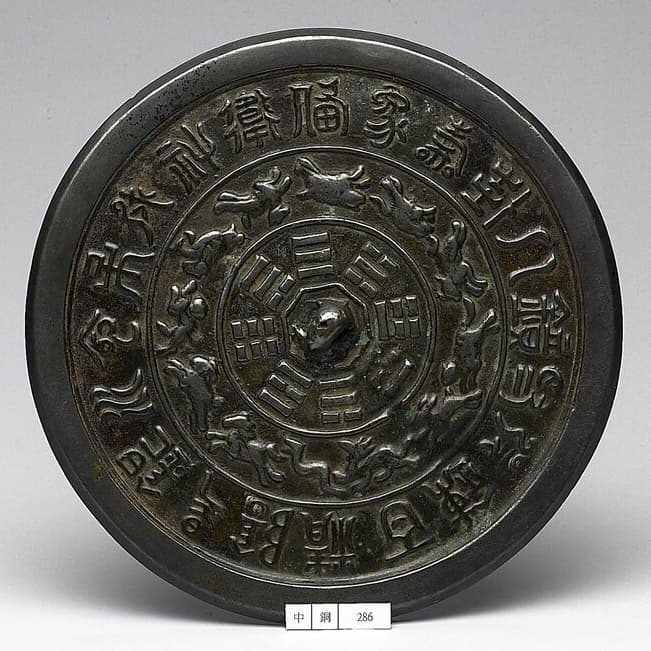
Introduction to the Heavenly Stems and the Position of Ding
In the Heavenly Stem system, Ding ranks fourth, after Jia, Yi, and Bing. While Bing is Yang Fire, representing the radiant sun, Ding is Yin Fire, symbolizing a small flame, candlelight, or the gentle glow of stars at night. This distinction within the same element creates two different energy layers: Bing is explosive, while Ding spreads quietly.
In the I Ching, the concept of Heavenly Stems is not a standalone notion, but the principles of Yin-Yang and Five Elements underpin the philosophy of change. Ding is often associated with the Li hexagram (☲), the trigram of fire, clarity, and mutual dependence. Li consists of two yang lines surrounding one yin line, representing an empty yet luminous center, a quality very close to Ding's nature.
Yin-Yang Characteristics of Ding
Yin Fire: the flame of nourishment
Ding belongs to Yin Fire, meaning its energy is fiery but not aggressive. If Yang Fire (Bing) resembles the midday sun that burns and illuminates everything, Yin Fire (Ding) is like a kitchen flame or a candle in a dark room. Ding's flame does not aim to destroy but to warm, cook, and gently dispel darkness.
Thus, Ding is often compared to a mother, a teacher, or a caregiver. This energy is tolerant, patient, and transformative. In practical interpretation, those with strong Ding energy often make others feel safe, possessing the ability to listen and empathize deeply.
The difference between Bing and Ding
Within the same Fire element, Bing and Ding represent contrasting life strategies. Bing moves outward, seeking recognition and visibility. Ding moves inward, aiming for thorough refinement and sustainable value. Bing can light up a room instantly but may exhaust quickly. Ding burns slowly, lasts longer, and can sustain through the night.
In applying I Ching wisdom, this distinction reminds us that loud, aggressive strength is not always optimal. There are times when Ding's gentle persistence is the best approach to solve long-term problems.
Ding in the Five Elements and Its Relationships
Position in the generative cycle
In the generative cycle, Wood feeds Fire. Thus, Jia (Yang Wood) and Yi (Yin Wood) serve as fuel for Ding. This explains why those with balanced Ding energy often benefit from Wood presence, such as plants, green colors, or adaptability in character.
Ding generates Earth, specifically Ji (Yin Earth). A small fire burns into ash, which becomes fertile soil. This image shows Ding's role in transformation, turning rawness into refinement. Within an organization, Ding-type individuals quietly improve processes without needing immediate credit.
Overcoming and counteracting relationships
Fire overcomes Metal. While Bing conquers Metal forcefully like a steel furnace, Ding softens Metal subtly, like gradual heat causing expansion. This demonstrates a conflict-resolution method: not direct confrontation but persistent, gentle pressure to change the state of a problem.
Conversely, Water overcomes Fire. Excessive Water energy (like Ren or Gui) can extinguish Ding's small flame. This explains why those with weak Ding may be easily influenced by cold environments, lose motivation, or fall into pessimism under pressure.
Symbolic Meaning of Ding in the I Ching
Connection with the Li hexagram and illumination
Ding is often understood through the Li hexagram (離). Li represents attachment, clarity, and penetrating insight. Its central yin line indicates the emptiness needed for light to pass through. Similarly, to illuminate others, those with Ding energy must keep their minds free from material attachments and prejudice.
Li also symbolizes the eyes and observation. This aligns with Ding's sensitive and perceptive nature, capable of noticing details others overlook. In the arts, Ding embodies the observer, the subtle critic, the one who lights up a new perspective.
Lessons on dependence from Li
Li literally means "dependence" or "clinging." A flame cannot survive without fuel. Ding teaches us about connection and humility. No one shines forever alone. We must rely on others, receive nourishment, and then spread value outward. This is a profound principle embedded in the image of Yin Fire.
Practical Applications
In daily life and personality
Understanding Ding helps people recognize their energy style. If Ding stands out in your birth day stem, you tend to work diligently, quietly, and avoid boasting. You build trust over time but may lack the quick decisiveness of Metal or the explosiveness of Bing.
It is crucial not to view Ding as weakness. In a world that values noise, Ding's energy reminds us that persistence, attention to detail, and patience are the foundations of great achievements.
In feng shui and living spaces
For those seeking to supplement Ding energy, warm yellow lighting, candles, or moderate red, pink, and orange decor can help. Gentle lighting rather than harsh brightness supports focus and tranquility. However, these applications are only referential and hold no absolute power to change destiny.
In strategic thinking and decision-making
When facing difficult decisions, visualizing Ding's energy helps choose a gentle yet firm approach. Instead of forcing, persuade with warmth. Instead of direct confrontation, let time become an ally. This strategy has been applied by many Eastern thinkers in governance, education, and diplomacy.
Conclusion
Heavenly Stem Ding, with its Yin Fire nature, is one of the most profound symbols of the Eastern philosophy of quiet strength. Not as loud as Bing, not as rigid as Geng, Ding chooses to exist through nourishment, transformation, and inner illumination. In the I Ching, this energy links to the Li hexagram, reminding us of dependence, observation, and wisdom accompanied by humility.
Understanding Ding is not for labeling or fatalistic fortune-telling, but for recognizing that within each of us lies a small flame, perhaps not dazzling the whole world, yet warm enough to sustain those around us on life's long journey.