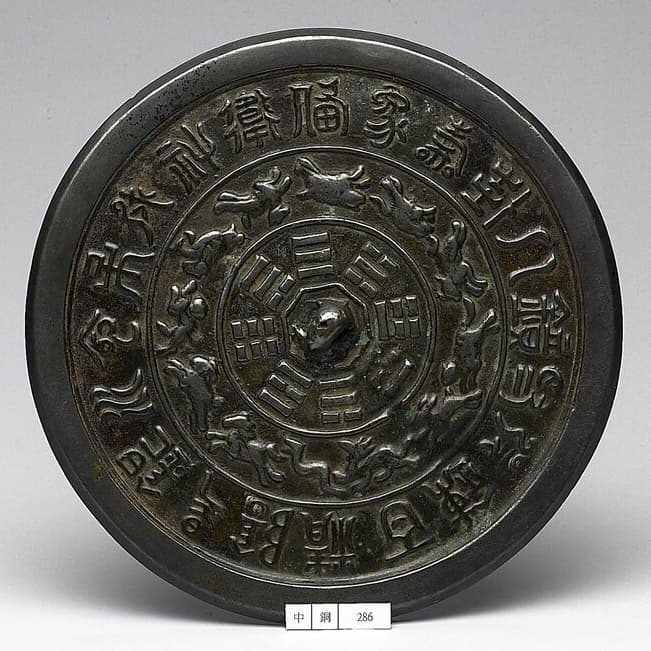
Introduction to Heavenly Stems and the Role of Wu
In the East Asian sexagenary cycle, each Heavenly Stem carries a Yin-Yang nature and an element from the Five Elements. The ten stems are Jia, Yi, Bing, Ding, Wu, Ji, Geng, Xin, Ren, Gui. Wu (戊) is the fifth, belonging to Yang Earth. It pairs with Ji (Yin Earth) to complete the Earth element. While Ji represents fertile soil for farming, Wu symbolizes mountains, dikes, and embankments.
In the I Ching, stems are not directly mentioned, but the underlying philosophy of Yin-Yang and Five Elements is deeply interwoven with the hexagrams. Wu is often associated with the hexagrams Bo (Splitting Apart) and Gen (Keeping Still).
Yin-Yang Characteristics of Wu
Yang Earth: Symbol of Stability
Wu is Yang, so it carries active, outward energy. However, as Earth, it tends to be still and stable rather than constantly moving like Fire or Wind. The combination creates the image of a great mountain or a durable dike: solid and hard to shake, but potentially rigid if lacking flexibility.
In I Ching theory, Yang Earth represents the center, balancing other elements. Earth receives from Fire (which generates it), produces Metal, controls Water, and is controlled by Wood. Wu, being Yang, manifests these interactions with greater intensity.
Comparing Wu with Ji (Yin Earth)
If Wu is a mountain or dike, Ji is flat land or a garden. Wu protects and blocks (like a flood barrier), while Ji receives and nourishes (like farmland). Wu tends toward stubbornness; Ji tends toward passivity. Together they form a complete picture of Earth's role.
Position of Wu in the Sexagenary Cycle
Order and Direction
Wu is the fifth stem, representing the center. In He Tu or Luo Shu numerology, Wu is often placed at the central palace. Its number is 5, symbolizing balance.
Wu in the Sexagenary Cycle
Wu combines with Earthly Branches to form years such as Wu Zi, Wu Yin, Wu Chen, etc. Each combination has unique nuances:
- Wu Chen (1988): Double Earth, very stable but may be stagnant.
- Wu Zi (2008): Earth controls Water, creating internal tension.
- Wu Xu (2018): Earth with Earth, strong endurance.
Wu in Five Element Interactions
Generating and Being Generated
- Fire generates Earth: Wu benefits from Fire (Bing, Ding), which activates its potential.
- Earth generates Metal: Wu supports Metal (Geng, Xin), and in return Metal gives value and direction.
Controlling and Being Controlled
- Earth controls Water: Wu can manage Water (Ren, Gui), symbolizing control over emotions.
- Wood controls Earth: Wu is weakened by Wood (Jia, Yi), which can penetrate the soil.
Harmony with Other Elements
Earth is a neutral element, harmonizing well with Fire and Metal. However, excessive Water erodes it, and strong Wood breaks it. Balance is essential.
Wu and Its Associated Hexagrams
Bo Hexagram (Splitting Apart)
Bo consists of Gen (Mountain) over Kun (Earth). It shows a single Yang line at the top, indicating the decline of Yang forces. Wu, as Yang Earth, relates to this line. The hexagram reminds us that after collapse comes renewal, just as eroded land can be rebuilt.
Gen Hexagram (Keeping Still)
Gen is doubled mountain, representing stillness and stopping. Wu, as mountain Earth, embodies the energy of Gen: knowing when to pause, observing patiently, and avoiding impulsive actions. Gen is also associated with meditation and inner reflection, matching Wu's composed nature.
Kun Hexagram (Receptive)
Kun is pure Yin Earth, while Wu adds a Yang counterpoint: Kun receives, Wu actively protects. Their interplay completes the archetype of Earth.
Practical Applications of Wu
Personality Traits of Wu People
- Reliable and steadfast: Like a mountain, they are trustworthy and supportive.
- Practical and down-to-earth: They prefer concrete solutions.
- Potentially stubborn: Their firmness can become rigidity.
- High stress tolerance: They endure hardship like a dike withstands floods.
Wu in Feng Shui and Astrology
In Feng Shui, Wu helps determine directions and land positions. Favorable colors are yellow and earth tones; Fire colors (red, orange) provide support. Avoid excessive green (Wood). In Zi Wei Dou Shu, Wu appears in birth years and affects destiny palaces, but must be interpreted with other factors.
Cautions in Interpretation
Understanding Wu is only part of the larger system. Avoid mechanical application; each person is a complex combination of many elements. Interpretations of personality or fate should be viewed as guidance, not absolute truth. Personal growth depends on education, environment, and free will.
Conclusion
Heavenly Stem Wu, as Yang Earth, symbolizes stability, centrality, and nourishment in the sexagenary system. In the I Ching, Wu is linked to Bo and Gen, highlighting stillness, patience, and resilience. Understanding Wu helps us appreciate positive traits like reliability while acknowledging tendencies toward stubbornness for self-improvement. This knowledge serves both scholarly study and personal reflection.