What is Physiognomy?
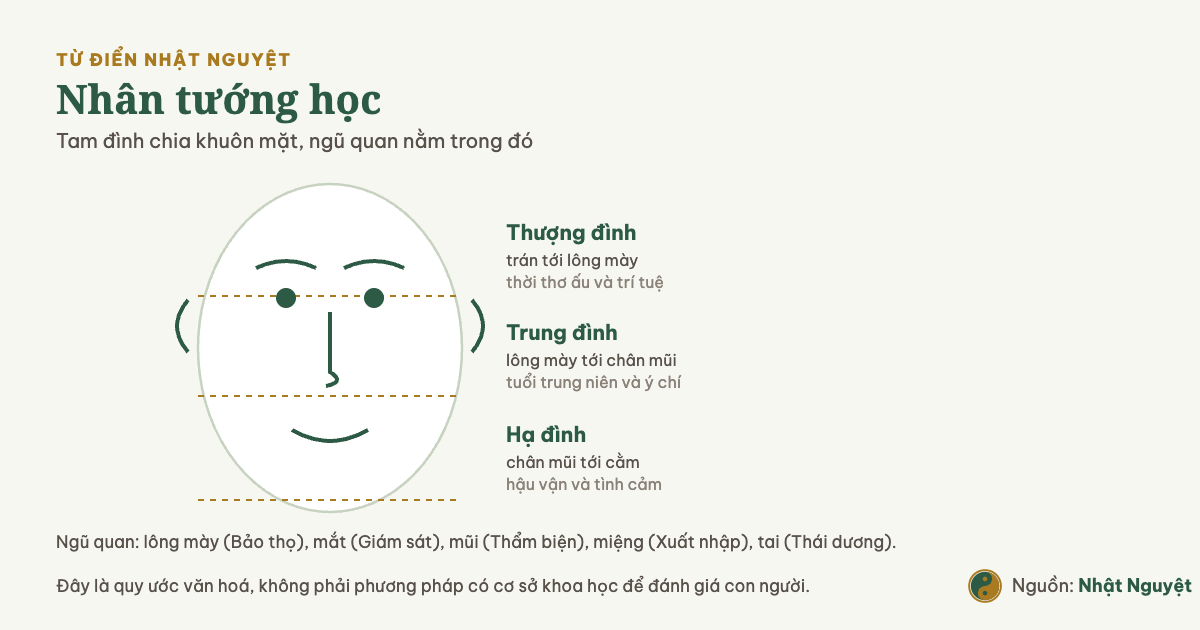
Physiognomy (Chinese: 人相學) is the study of the relationship between physical features and human destiny. The ancients believed that facial features, hands, voice, and outward appearance partly reflect personality, health, wealth, and longevity. This is traditional knowledge for reference, not verified by modern science.
Origin and Usage
Physiognomy originates from Eastern culture, tied to the concept that "appearance arises from the mind." The term is commonly used in articles about face reading, palm reading, moles, and voice. In practice, the face is divided into regions such as the Five Officials (eyes, nose, mouth, ears, eyebrows) and Six Palaces (bone and contour areas). Each region is believed to represent an aspect of life: eyebrows are the Longevity Officer, ears are the Sun Officer, mouth is the gate of speech. Additionally, physiognomy considers five sounds through voice, such as the Chui (Fire) voice or Shang (Metal) voice.
Distinction from Similar Terms
Physiognomy differs from "destiny reading" which includes astrology,八字, and other prediction methods. "Face reading" is the specific act, while "physiognomy" is the field of study. It should be distinguished from "physiognomic methods," a detailed theoretical system. Physiognomy is also not the same as palmistry, which focuses only on hands.
Notes for Study
Conclusions from physiognomy should be considered reference information, not used to judge people or decide fate. Modern science has not verified the link between appearance and destiny.