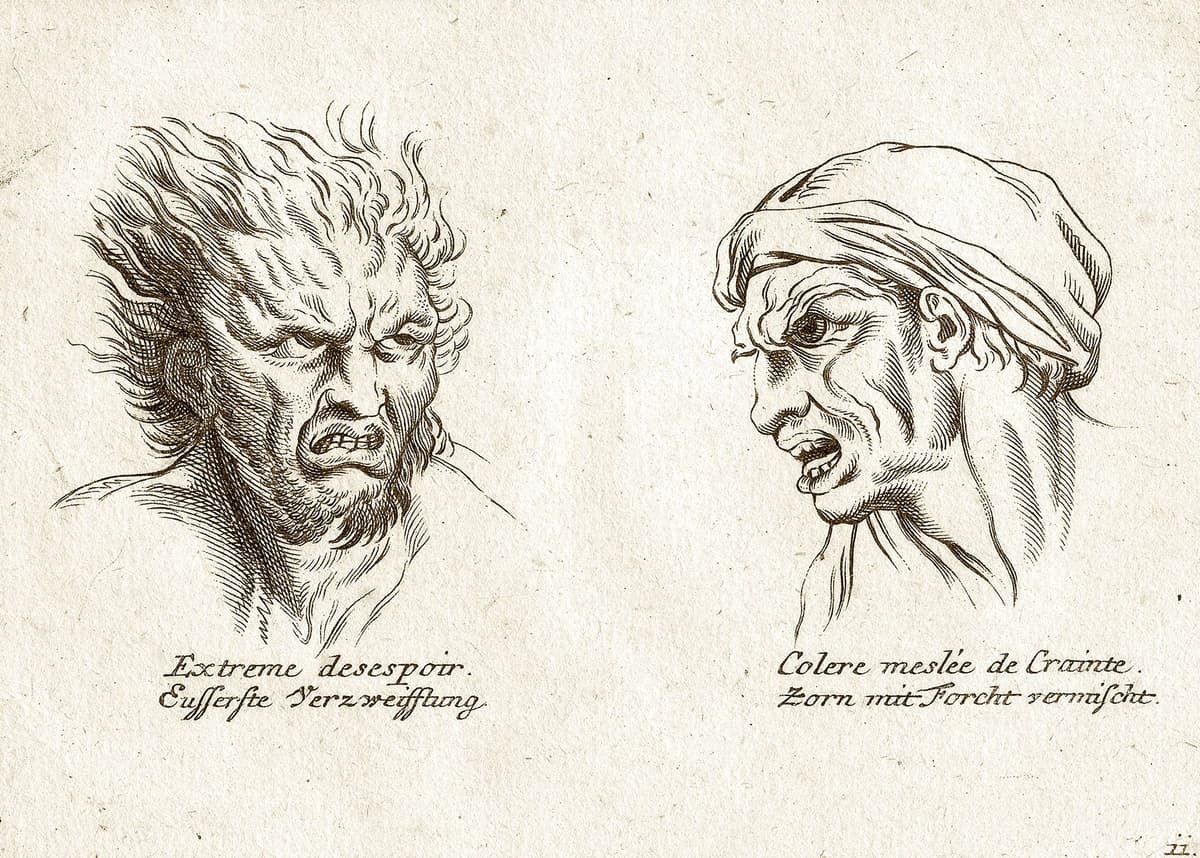
What Is Face Reading and Where Does It Come From?
Face reading is the practice of observing physical features, mainly the face and hands, to infer personality, life tendencies and the phases of a person's life. In Eastern physiognomy, the face is seen as a mirror of the inner self and destiny, while the hand is compared to a miniature map of life. This is a long-standing traditional body of knowledge, intended for reference, and not verified by modern science.
The origins of physiognomy are often linked to various legends in India, China, Greece and Egypt. Through centuries of cultural exchange, these schools blended and formed the Eastern physiognomy system known today. The ancients believed that "appearance arises from the mind", meaning that inner character and lifestyle can gradually shape facial features, spirit and outward bearing.
What Are the Main Features on the Face?
The face is the center of physiognomy and is divided into several systems of features. Each system has its own terminology and method of interpretation, but all aim to describe the relationship between outward form and aspects of life.
The commonly encountered groups include:
- Five Officials: the five main organs, namely eyebrows, eyes, nose, mouth and ears.
- Five Peaks: five prominent areas on the face, including the forehead, nose bridge, chin and two cheekbones.
- Six Palaces: six bone areas and important positions, including the two forehead bones, two cheekbones and two jawbones.
- Three Zones: dividing the face into upper, middle and lower parts, corresponding to youth, middle age and later life.
In addition, features such as moles, wrinkles, skin color and the spirit of the eyes are considered supplementary signs when interpreting a face.
What Do the Five Officials and Each Feature Mean?
The Five Officials is the most frequently mentioned system in physiognomy. Each feature is given a symbolic name and reflects a different group of life aspects.
The eyebrows are called the Longevity Official, often linked to lifespan, emotions and social relationships. The eyes are the Inspection Official, representing wisdom, character and fortune, with the spirit of the eyes valued more than their shape. The nose is the Judgment Official, tied to wealth, career and willpower. The mouth is the Intake and Output Official, reflecting speech and blessings. The ears are the Sun Official, symbolizing blessings, wisdom and longevity.
Reading each feature depends not only on size but also on balance, color, luster and harmony with the overall face.
How Do the Five Peaks and Six Palaces Differ?
The Five Peaks and Six Palaces are two facial zoning systems that overlap in many points but differ in interpretation. The Five Peaks emphasize five prominent areas, compared to five mountains on the face, each symbolizing an aspect of life.
In the Five Peaks, the forehead is the Southern Peak, representing wisdom and early-life fortune. The nose bridge is the Central Peak, representing middle age and career. The chin is the Northern Peak, reflecting later life and stability. The left cheekbone is the Eastern Peak and the right cheekbone is the Western Peak, linked to power, career and relationships.
The Six Palaces include the two forehead bones (Upper Palaces), two cheekbones (Middle Palaces) and two jawbones (Lower Palaces). This system is often used to assess relationships with superiors, personal power and endurance in later life.
How Do the Three Zones and Five Element Types Influence Reading?
The Three Zones divide the face into three vertical parts: the upper part from the hairline to the eyebrows, the middle from the eyebrows to the base of the nose, and the lower from the base of the nose to the chin. Each part corresponds to a life stage and a group of aspects such as wisdom, career and later life. Balance among the three parts is seen as a sign of harmony.
The Five Element types classify people into Metal, Wood, Water, Fire and Earth based on body features, face, skin color and personality. Metal types are often square-faced and upright. Wood types are tall, slender and flexible. Water types are full and gentle. Fire types have sharp features and quick movements. Earth types are solid and loyal. Each element type has its own interpretation of personality and career tendencies.
What Are the Main Lines in Palmistry?
Palmistry is the branch of physiognomy focused on the creases of the palm. The three main lines often mentioned are the Life Line, Head Line and Heart Line. There are also secondary lines such as the Fate Line, Marriage Line, Money Line and many smaller branches.
The Life Line is generally understood to reflect vitality and overall health, not simply a prediction of lifespan. The Head Line relates to thinking, logic and creativity. The Heart Line reflects how one loves and connects emotionally. The Fate Line is tied to work and advancement. Each line is read based on length, depth, clarity, starting point and branches.
It should be noted that palm lines can change over time due to habits, work and health, so traditional reading also emphasizes flexibility rather than fixed conclusions.
How Are Moles on the Face and Body Interpreted?
Moles are one of the signs of interest in folk physiognomy. Their position, size, color and prominence are believed to reveal different aspects of personality and destiny. Moles on the face are often linked to life stages and social relationships. Moles on the eyebrows, cheekbones, lips, chin, ear rims or back of the neck each have their own interpretations.
Moles on the body, such as on the chest, palm or sole, are also seen as special signs. However, these are folk beliefs for reference and should not be taken as firm statements about wealth, health or marriage. Many moles should be observed medically if there are unusual changes in color or size.
What Role Do Voice and the Five Sounds Play in Face Reading?
Beyond physical form, the voice is also part of Eastern physiognomy. The Five Sounds consist of five voice types corresponding to the five elements: Gong (Earth), Shang (Metal), Jue (Wood), Zhi (Fire) and Yu (Water). Each type is described by its timbre, pitch and rhythm.
The Gong voice is deep, thick and resonant, often associated with loyal people. The Shang voice is clear and decisive, linked to noble character. The Jue voice is high, resonant and clear. The Zhi voice is high, rapid and distinct. The Yu voice is deep, melodious and gentle. The ancients believed the voice could reveal something of personality and temperament, but this remains a traditional view to be considered cautiously.
How Should Face Reading Be Understood Correctly?
Face reading is a branch of traditional Eastern knowledge with cultural and reference value. Conclusions in physiognomy are based on observation and folk experience and have not been verified by modern science. Therefore, learners should view it as a cultural perspective, not a tool for certain predictions about wealth, health or marriage.
The important thing is to remain open-minded but clear-headed, without placing absolute faith in any interpretation. A person's life also depends on effort, choices and specific circumstances, not only on the lines of the face or hand.