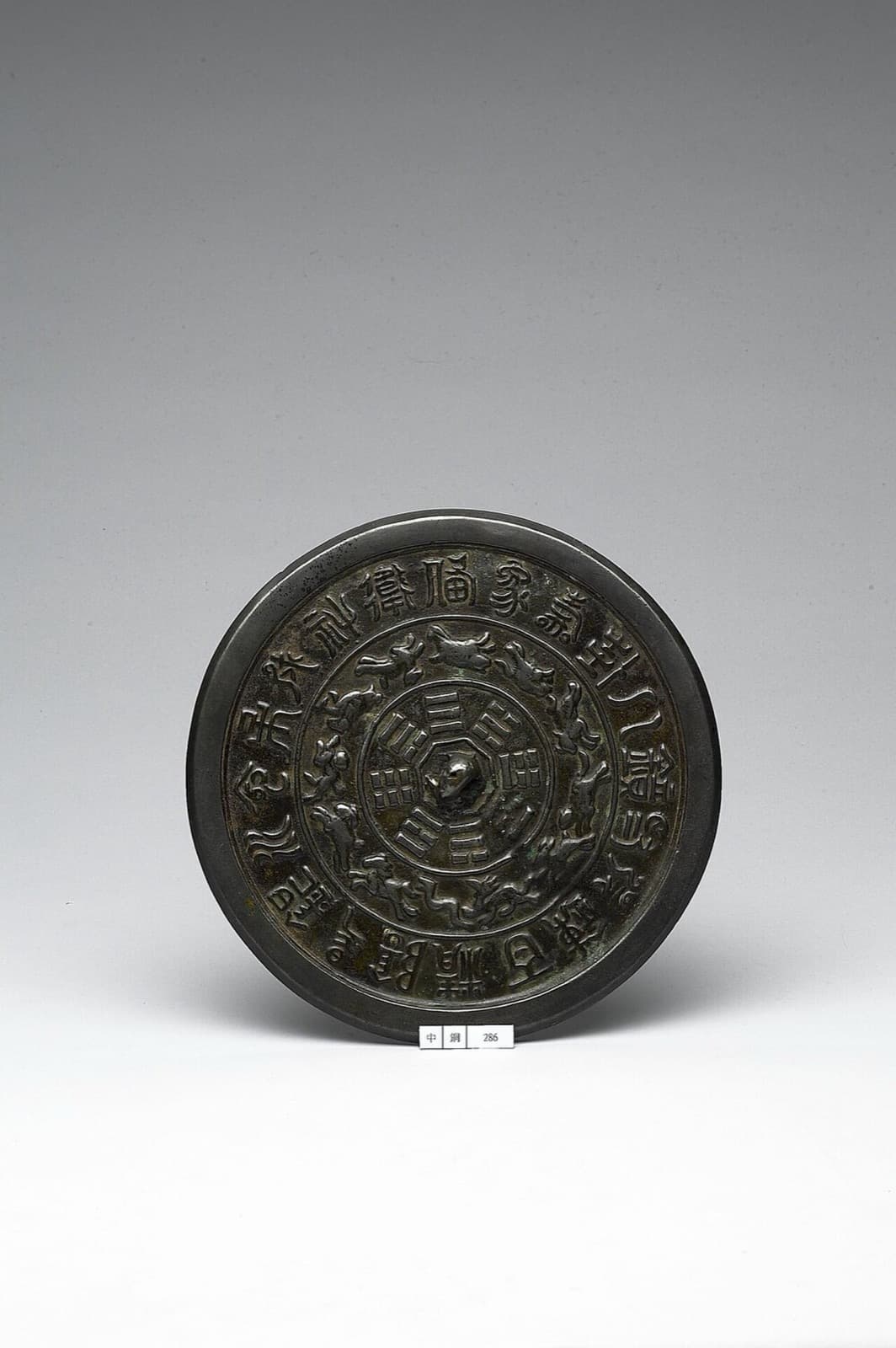
Introduction to the 24 Mountain Directions System
In Eastern feng shui, especially the Eight Mansions and Flying Star schools, accurately determining the orientation of a house, grave, or building is a crucial foundation. The 24 mountain directions system (also called 24 positions) is a more detailed division of the 8 main compass directions, with each main direction subdivided into 3 mountains, totaling 24 mountains. Each mountain is named with a Chinese character, associated with one of the 12 Earthly Branches, 10 Heavenly Stems, or 4 Trigrams of the Bagua.
The 24 mountain directions help feng shui practitioners precisely identify degrees on the compass, enabling them to judge fortune, vitality, prosperity, and decline, and to propose remedies or enhancements for living spaces. Each mountain not only has a specific position but also carries a five element, a trigram, and various symbolic meanings.
What is Geng Mountain?
Geng mountain (庚) is one of the 24 mountains, belonging to the Heavenly Stem group. In the 24 mountain system, Geng is located in the West, being one of the three mountains of the West direction (along with You and Xin). Specifically, on the compass, Geng mountain spans approximately from 105 to 120 degrees (measured clockwise from North), or equivalently from 285 to 300 degrees if measured from South. In practice, Geng mountain is often described as the West slightly leaning toward the Southwest.
Regarding the five elements, Geng mountain belongs to the Metal element, as the West corresponds to Metal in the five element theory. However, a distinction must be made: Geng is Yang Metal, while Xin is Yin Metal. This yin-yang distinction plays an important role in determining the compatibility between mountain and direction, between dragon vein and water outlet, etc.
Symbolic Meaning and Nature of Geng
In Eastern culture, Geng is the seventh of the ten Heavenly Stems. It is associated with metal, hardness, sharpness, and a certain coldness. Geng also represents autumn, the season of harvest, crystallization, and reaping. In terms of time, Geng corresponds to around the 8th lunar month, when the weather begins to turn cold and all things start to stagnate.
In feng shui, Geng mountain is often linked to qualities such as decisiveness, strength, and integrity, but it may also bring rigidity, aloofness, or a tendency to cause disputes. It is believed that when a house or tomb sits on Geng mountain, or faces toward it, one can receive energies related to the Metal element, affecting health (especially lungs and respiratory system), career (related to metal, machinery, finance), and relationships.
How to Identify Geng Mountain on the Compass
To identify Geng mountain in practice, one needs a specialized feng shui compass, typically with clear degree markings. Usually, a feng shui compass has 360 degrees divided into 24 sectors, each 15 degrees wide. Geng mountain starts from 105 degrees (from North) to 120 degrees, but note that different schools may have different conventions about the starting point.
In practice, when measuring a house's direction, one stands at the center of the house, with the back toward the mountain (behind the house), and looks toward the direction (front of the house). If the house's facing direction falls between 105 and 120 degrees, then the facing direction belongs to Geng mountain, and the sitting direction (behind) is the opposite mountain, which is Jia mountain (in the East). However, the common terminology is 'sitting mountain facing direction' or 'sitting facing', for example, a house 'sits Jia and faces Geng' means the house has its back to the East (Jia mountain) and looks toward the West (Geng direction).
Meaning of Geng Mountain in Choosing House Direction
According to the Eight Mansions feng shui concept, each person has personal auspicious and inauspicious directions based on birth year and gender. However, when considering Geng mountain, analysis should be based on factors such as the mountain's five element, its combination with other mountains, and especially its compatibility with the homeowner's element.
Geng mountain belongs to Metal, so people with Metal element, or Earth element (since Earth generates Metal), are generally considered compatible. People with Fire element may face more challenges because Fire overcomes Metal. People with Wood and Water elements need more careful consideration, as Metal overcomes Wood, and Water drains Metal's energy, potentially causing energy loss. However, this is only one layer of meaning; in practice, feng shui practitioners often consider many factors comprehensively, such as the star chart, flying stars, and time periods.
In Flying Star feng shui, each mountain direction has its own cycle. For example, in Period 8 (2004-2023), the Geng direction is often considered to have good combinations if it meets prosperous energy, but may encounter inauspicious stars if not properly resolved. Specifically, when setting up the chart, practitioners examine the star entering the center and the flying stars to each palace to judge the fortune of each mountain direction.
Geng Mountain in Yin House Feng Shui (Graves)
In yin house feng shui, choosing the mountain direction for graves is considered more important than for yang houses. Geng mountain is often used when the dragon vein comes from the West, or when the water outlet is in a corresponding position. Classical feng shui practitioners often have formulas like 'Geng mountain water outlet' to indicate special cases, but each case has its own requirements.
A tomb sitting on Geng mountain is believed to bring prosperity to descendants if combined with good dragon vein and water method. However, if it encounters harmful energies such as Yellow Spring, or if the land shape is bad, it may cause negative effects on descendants' health and wealth. Therefore, choosing a grave site depends not only on mountain direction but also on terrain, water accumulation, and many other factors.
Specific Cases in Interpreting Geng Mountain
To better understand how to interpret Geng mountain, consider some hypothetical cases:
Case 1: House Sitting Jia, Facing Geng
This is a house with its back to the East (Jia mountain) and facing the West (Geng direction). Jia mountain belongs to Wood, Geng direction belongs to Metal. In the five elements, Metal overcomes Wood, which may create conflict between mountain and direction. However, if the star chart has auspicious stars flying to this direction, or if the homeowner's element is compatible, it may still be acceptable. Practitioners often advise checking the stars in the chart carefully for an accurate conclusion.
Case 2: House Sitting Geng, Facing Jia
This house has its back to the West (Geng mountain) and faces the East (Jia direction). This is the configuration 'sitting Metal, facing Wood', i.e., does the mountain give birth to the direction? Actually, Metal overcomes Wood, so the mountain may control the direction, but in terms of yin-yang, Geng is Yang Metal and Jia is Yang Wood; two yang meeting may cause imbalance. In practice, a house sitting Geng and facing Jia is often considered not good for the health of elderly people in the house, especially lung and bone joint diseases.
Case 3: Combination with Other Mountains in the Same Direction
In the West direction, the three mountains Geng, You, and Xin have a close relationship. You mountain belongs to Metal (Yin Metal), and Xin mountain also belongs to Metal (Yin Metal). When a house's direction falls on the boundary between two mountains, for example between Geng and You, it is called 'neither proper nor auxiliary', which may cause instability. Practitioners often avoid such cases and advise careful measurement to determine accurately.
Comparison of Geng Mountain with Other Mountains in the West Group
The West group includes three mountains: Geng, You, and Xin. Among them:
| Mountain | Five Element | Yin/Yang | Nature |
|---|---|---|---|
| Geng | Metal | Yang | Strong, decisive |
| You | Metal | Yin | Refined, sharp, somewhat introverted |
| Xin | Metal | Yin | Gentle, adaptable, less conflicting |
Geng mountain differs from You and Xin in that it is Yang Metal, thus carrying strong, outward energy that is easily expressed. Meanwhile, You and Xin tend to be introverted and delicate. Therefore, when encountering a house facing Geng, people often appreciate decisiveness and leadership ability, but also need to be cautious about stubbornness and tendency to cause conflicts.
Practical Applications of Geng Mountain
Once a house or tomb is determined to belong to Geng mountain, one can apply some measures to enhance or resolve energy:
- To strengthen the Metal element, one can use metal objects, white or gray colors, or place round-shaped items in the corresponding area.
- To resolve conflicts caused by Fire, one can use Earth elements (yellow, brown, pottery) to generate Metal and reduce conflict.
- If Geng mountain is affected by unfavorable stars in the star chart, one can use water methods or feng shui symbols such as Bagua mirrors, Pi Xiu, or other spiritual objects to resolve.
However, it must be emphasized that feng shui is not an absolutely exact science. Applying these measures should be done by experienced individuals, and the results depend on many other factors such as the surrounding environment, age, and specific family circumstances.
Different Perspectives on Geng Mountain
There are various feng shui schools, each with somewhat different views on Geng mountain. For example, the San He school emphasizes the combination of mountain and water outlet, while the Flying Star school focuses on periods and flying stars. The Eight Mansions school uses the homeowner's life trigram to choose auspicious directions.
Some modern feng shui practitioners argue that Geng mountain should not be considered rigidly but combined with factors such as surrounding landscape, wind direction, light, and even psychological factors of users. This perspective emphasizes that feng shui is a flexible art and should not be applied mechanically.
Conclusion
Geng mountain is one of the important mountains in the 24 mountain directions system, carrying multiple layers of meaning regarding five elements, yin-yang, and cultural symbolism. Understanding Geng mountain greatly helps in determining and interpreting feng shui for houses and graves. However, like all feng shui elements, Geng mountain should not be considered in isolation but within the overall context of space, time, and the people using it.
Feng shui is an ancient knowledge system with reference value in creating harmonious living environments, but it should not replace decisions based on science and reality. Readers should approach it with an open mind, combined with personal understanding, to make the most suitable choices for their lives.
