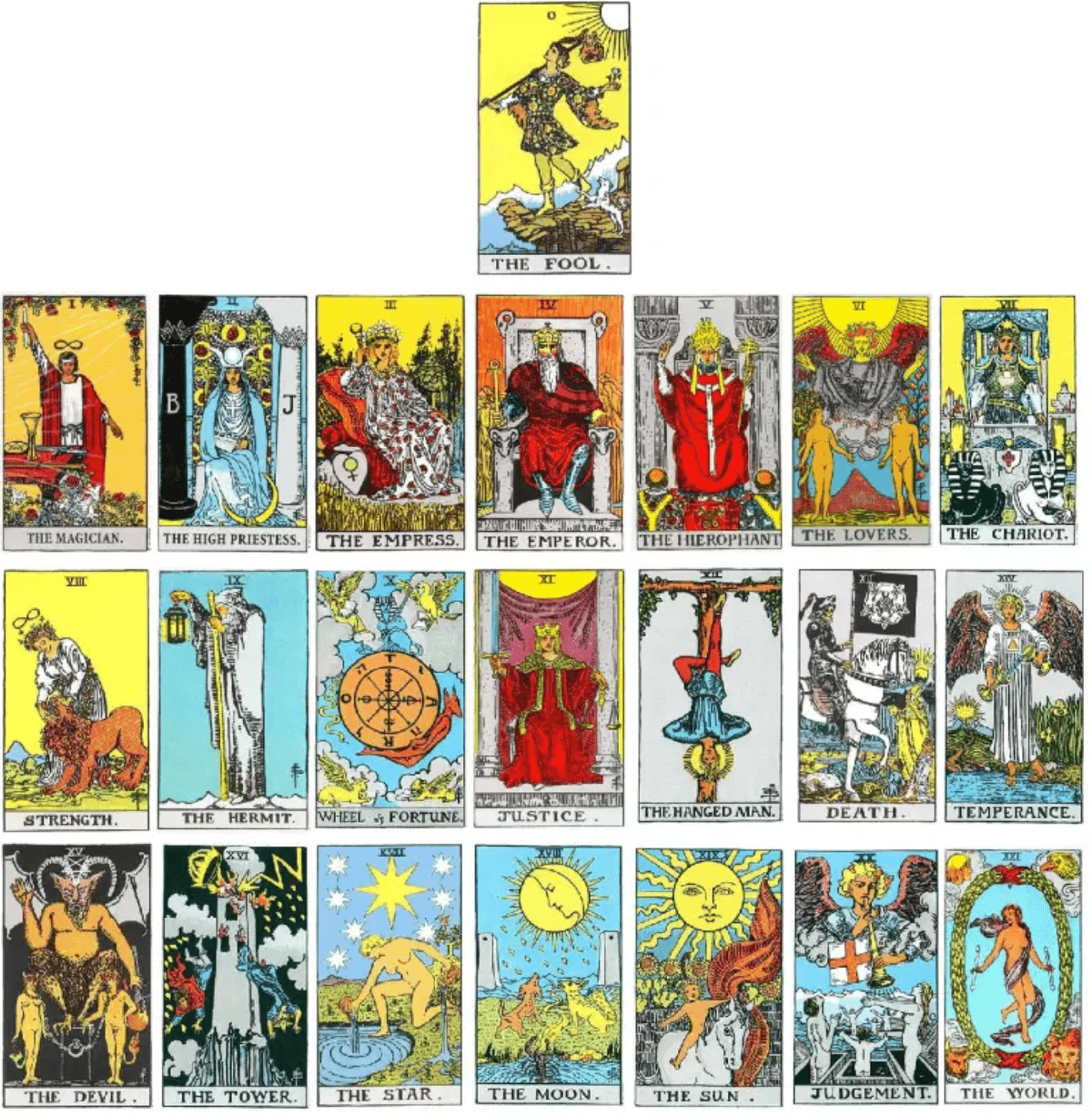
What is Tarot and how does it differ from traditional fortune telling?
Tarot is a deck of 78 cards, each a picture containing astrological symbols, constellations, or religious ideas, carrying its own story tied to human life. In the West, Tarot is seen as a form of divination and healing. When it arrived in Vietnam, many people used it as a way of fortune telling to satisfy spiritual needs.
The difference lies here: traditional fortune telling usually asks what fate will bring, while modern Tarot emphasizes reflecting on the current situation and the querent's emotions. The reader, also called a Tarot Reader, helps predict and decode secrets in life through the cards. But because it wears a gentler psychological language, Tarot feels friendlier and more approachable to young people than the image of a fortune teller sitting and pronouncing judgments.
Why do young people turn to Tarot after a relationship crisis?
After a relationship crisis, young people often fall into emotional overload: not knowing what is happening, not knowing what the other person thinks, not knowing whether to continue or stop. Tarot appears as a temporary support because it lets them ask questions without fear of judgment.
A student in Ho Chi Minh City shared that she turns to a Tarot Reader whenever life feels pressured, and after each reading she feels calmer, less anxious, and has more direction. A 25 year old in District 3 also said that whenever he faces troubles in love, he turns to Tarot for advice, even letting it influence his decision to continue or stop. He said there are things he cannot share with family, so it is easier to talk with a stranger.
What these stories share is not belief in miracles, but the need to be heard and to be allowed to be confused. After a breakup, the biggest questions are often: do I still have a chance, should I text them, was I wrong. Tarot does not answer those questions with certainty, but it gives the querent a place to begin.
Do young people turn to Tarot for answers or for a place to ask questions?
The honest answer is both, but mostly the second. Young people who come to Tarot after a relationship crisis usually already have an answer inside; they just need an outside voice to confirm or challenge it. The cards become a mirror reflecting what they are avoiding.
This explains why the same spread can give two people two different messages. Someone hoping will see signs of return. Someone wanting to let go will see signs to stop. Tarot does not create the answer, it amplifies the answer already within the querent.
In other words, the greatest value of Tarot at this stage is not prophetic accuracy, but that it legitimizes asking questions. Young people are allowed to ask what they would be embarrassed to ask in daily life: does that person still love me, am I being deceived, should I wait.
What psychological mechanisms make Tarot feel reassuring?
There are at least three psychological mechanisms explaining why Tarot easily creates reassurance after a relationship crisis.
- Barnum effect: people tend to see general descriptions as true for themselves. A statement like "you are torn between reason and heart" is almost true for anyone in love.
- Need for control: after a crisis, the feeling of losing control is the most uncomfortable. A spread gives the sense that everything can be rearranged into a story with a beginning and an end.
- Healing ritual: sitting down, drawing cards, listening, nodding, all form a ritual that helps emotions land instead of spinning in the head.
These three mechanisms do not prove Tarot right or wrong. They only show why Tarot is attractive, especially to someone hurt and needing short term support.
When does Tarot reading become overuse?
Psychologist Nguyen Thi Dao Luu, a lecturer at Van Lang University, said she does not support overusing Tarot because it is basically an activity not scientifically proven. If you let yourself be dominated by "cosmic signals" provided by others, you become passive. Reading Tarot too much makes a person dependent on others' predictions, losing the ability to think, decide, and be self reliant.
Signs of overuse are not hard to spot. The querent starts not daring to decide anything without drawing cards. After each reading they feel lighter but only a few days later need another. They spend beyond their means on increasingly expensive spreads. And most importantly, they no longer ask friends, family, or themselves.
What are the specific risks of overusing Tarot?
According to Phap Luat TP.HCM newspaper, Tarot reading services appear everywhere on social media, even showing signs of exploitation. In a group with more than 97,000 followers, posts offering Tarot readings list prices from 35,000 to 250,000 VND or "pay as you wish", based on number of questions or time. Many readers treat this as their main income. Not a few people become infatuated, believe in Tarot blindly, and spend a lot on it.
The popularity of Tarot also attracts many young people willing to quit their jobs to take long or short courses priced from 2 million to 10 million VND each, under the guidance of Tarot Readers with "4 years of experience" advertising "You can practice professionally after just a few courses".
Expert Dao Luu warns that not a few young people are exploited for extortion when bad actors find their weaknesses and anxieties. Bad actors can lure them deeper into other superstitious practices like rituals, warding off bad luck, causing loss of money and health. Additionally, there are cases where young people transfer deposits to book Tarot appointments, then the Reader disappears.
| Risk | Common signs | Consequences |
|---|---|---|
| Decision dependence | Not daring to choose without drawing cards | Loss of autonomy, delayed maturity |
| Financial cost | Reading constantly, buying expensive courses | Losing money, debt |
| Exploitation | Reader scares, demands extra fees | Extortion, fraud |
| Psychological distortion | Absolute belief in pronouncements | Prolonged anxiety, loss of self trust |
Distinguishing Tarot as a self reflection tool and Tarot as a fate pronouncement
There are two very different approaches to Tarot, and this difference determines whether reading Tarot is helpful or harmful.
The first approach sees Tarot as a self reflection tool. The querent actively chooses questions, connects the cards to their own situation, and treats the reading as one of many references. After the session, they still ask friends, family, and most importantly decide for themselves. In this way, Tarot is like a diary session with pictures.
The second approach sees Tarot as a fate pronouncement. The querent hands over decisions to the cards, treats the reading as undeniable truth, and repeats readings whenever anxious. In this way, Tarot becomes an external force instead of an internal tool.
The difference is not in the deck, but in the position of the querent. The same 78 card deck, the same three card spread, but completely different psychological results depending on whether the querent is active or passive.
So how should young people use Tarot after a relationship crisis?
The reasonable answer is to use it consciously and with limits. Before reading, clearly identify what you are looking for: an answer or a place to release emotions. If it is the latter, writing a journal, talking with a close friend, or seeing a psychologist will be more effective and safer.
If you still want a Tarot reading, choose a reader with professional ethics, who does not scare, does not demand extra fees, does not promise overly specific things about the future. After reading, ask yourself: what in the reading is something I already knew but did not dare admit. That is usually the most valuable part.
Psychologist Nguyen Thi Dao Luu advises that you can read Tarot to relieve curiosity, but should selectively receive information. When detecting signs of exploitation or fraud, report immediately to authorities. Young people need to cultivate their own abilities to increase confidence, trust in their own problem solving ability instead of waiting for supernatural forces to open the way. Most importantly, build a healthy spiritual life, solid beliefs, and safe spiritual supports, because Vietnamese culture values spiritual life.
Finally, the question in the title of this article can be answered briefly: young people turn to Tarot after a relationship crisis because they need a place to put their questions, and sometimes need an outside voice to hear their inner voice clearly. Tarot can be a useful tool if used consciously. It becomes harmful when the querent forgets that the cards are only a mirror, and the one who moves forward must still be themselves.