What is a yao in the I Ching?
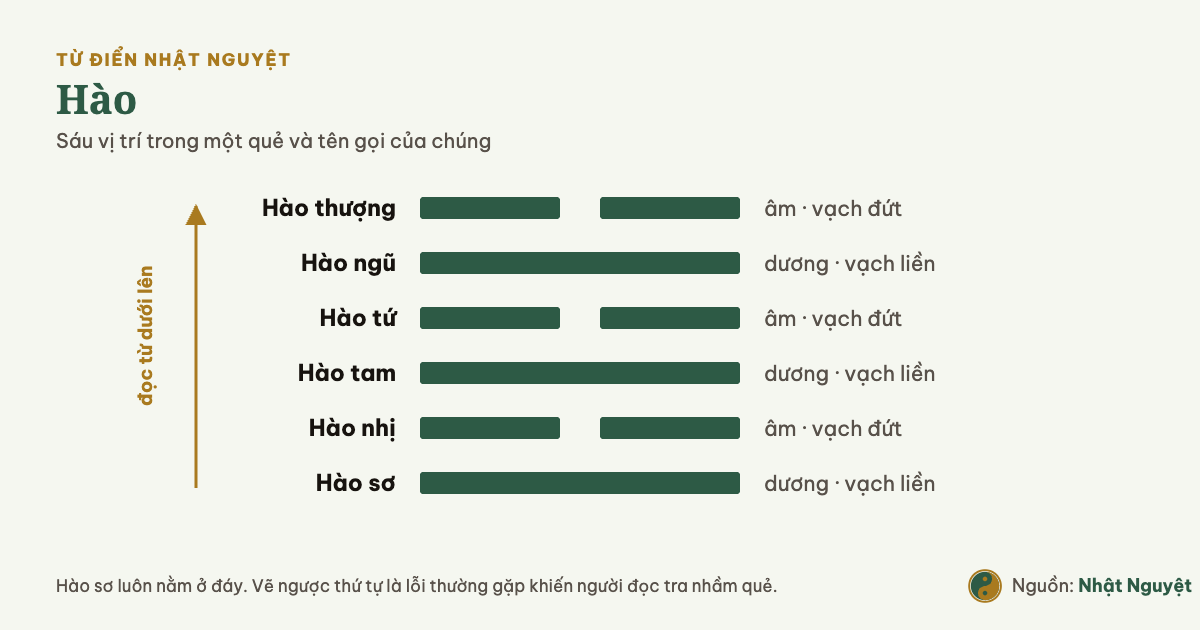
A yao (爻) is the smallest unit composing a hexagram in the I Ching. Each yao is a horizontal line, of two kinds: yang yao (a solid line, symbol ⚊) and yin yao (a broken line with a gap in the middle, symbol ⚋). Six yao stacked from bottom to top form one hexagram among the 64. Each hexagram is thus read as a sequence of six successive situations, from the bottom yao to the top yao.
Why does the yao matter in interpreting a hexagram?
If the hexagram indicates the general context, the yao indicates the specific position of the querent within that context. In the same hexagram, yao 1 and yao 5 carry very different meanings: yao 1 usually suggests a beginning, while yao 5 usually suggests a central, leading position. When interpreting, practitioners therefore often identify the moving yao (the yao that changes during divination) to focus on the situation being asked about.
How is the yao used?
In practice, the yao appears on two levels. First, the yao is a structural component: reading a hexagram means reading six yao in order from bottom to top. Second, the yao is a unit of interpretation: each yao has its own line text (yao text), describing one aspect of the situation. Depending on the method, the interpreter may use only the hexagram, only the moving yao, or both together.
Distinguishing the yao from easily confused terms
The yao differs from the hexagram: the hexagram is the whole of six yao, while the yao is each constitutive line. The yao also differs from the trigram (bagua): one trigram consists of three yao, and two trigrams stacked form a six-yao hexagram. In addition, one should distinguish the yao from the yao text: the yao is the line, while the yao text is the explanation attached to that line. Beginners often merge these two concepts, leading to confusion when looking things up.
Notes on use
The I Ching is a system of traditional knowledge of a referential nature, not scientifically verified. The ways of interpreting yao and hexagrams belong to the domain of traditional culture, philosophy, and divination, and should not replace decisions based on factual data.