What is Tử Vi Đẩu Số?
Tử Vi Đẩu Số is a traditional astrological system found in Vietnam and cultures influenced by Han culture. Practitioners use a person's birth hour, day, month and year (lunar calendar) to cast a chart of twelve palaces, then place stars into each palace to interpret personality, life tendencies and fortune over time. It should be said from the outset: this is traditional knowledge of a referential nature, not verified by science, and should not replace medical, legal or financial decisions.
How is the chart cast?
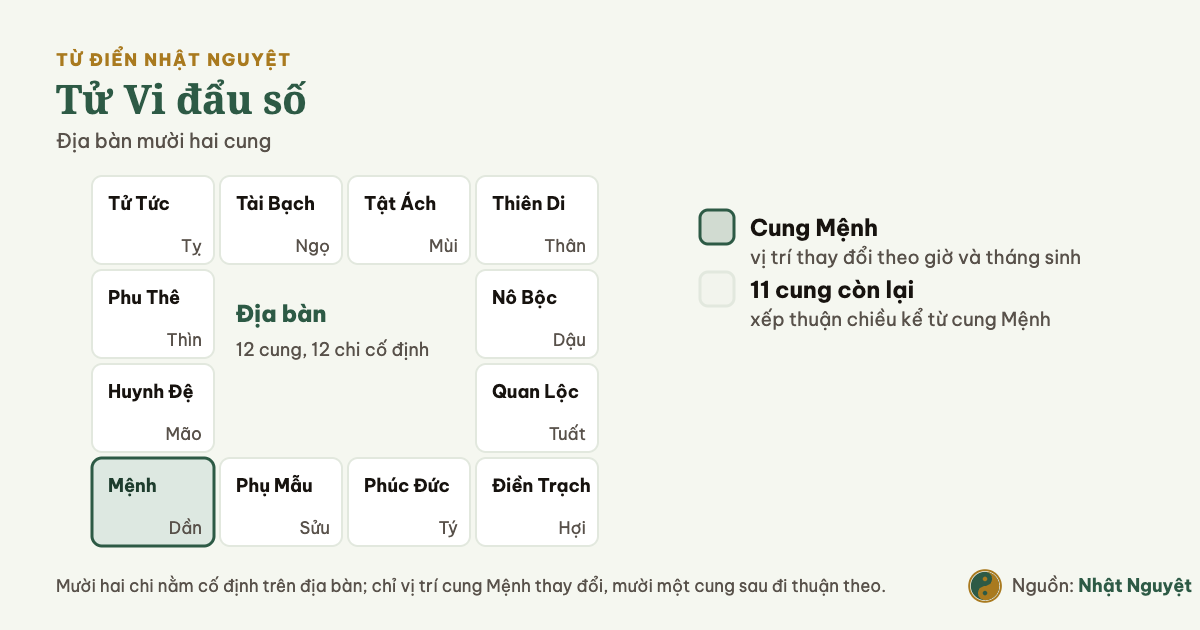
The chart is a square diagram divided into twelve cells, each a palace such as Mệnh (Self), Phụ Mẫu (Parents), Phu Thê (Spouse), Tử Tức (Children), Tài Bạch (Wealth), Thiên Di (Travel), Tật Ách (Health), and so on. Based on the sexagenary values of the birth year, month, day and hour, the caster determines the positions of the Mệnh and Thân palaces, then places the major stars (Tử Vi, Thiên Cơ, Thái Dương, Vũ Khúc, Thiên Đồng, Liêm Trinh, Thái Âm, Tham Lang, Cự Môn, Thiên Tướng, Thiên Lương, Thất Sát, Phá Quân) and the minor and annual stars. Each star has its own element, polarity and strength depending on the palace and birth hour.
Key palaces
The Mệnh palace reflects one's nature; the Thân palace shows action and later life. The Phu Thê palace concerns the spouse and marriage; the Thiên Di palace reflects social environment and how one interacts with the outside world; the Tài Bạch palace relates to money; the Tật Ách palace relates to health. Articles published on the site stress that a single palace cannot be read in isolation from the others and from the stars that conjoin it.
Distinguishing it from Bazi and other systems
Tử Vi Đẩu Số casts a chart of twelve palaces and a star system, while Bazi (Four Pillars) relies on four sexagenary columns of birth year, month, day and hour, interpreted through Five Elements and Ten Gods. Korean Saju shares roots with Chinese Bazi but has its own character. Physiognomy instead observes outer features such as eyebrows and face. Thus "reading tử vi" and "reading tứ trụ" are different methods and should not be confused.
Notes on use
A single chart can be interpreted in many ways, and results depend on the skill and viewpoint of the reader. Learners should treat it as a referential tool for self-reflection, not as an absolute truth, and certainly not as a means to pressure or stereotype others.