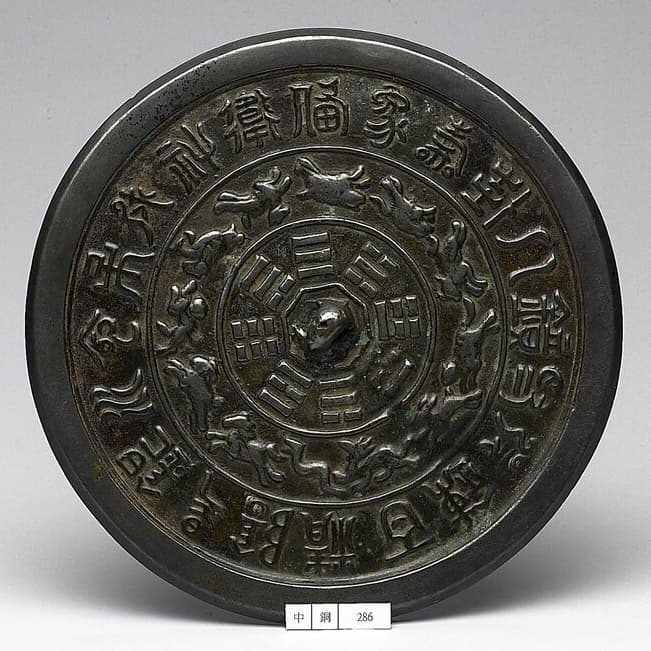
The I Ching – A Mirror for Love and Relationships
The I Ching (Book of Changes) is not merely an ancient divination tool; it is a philosophical system that describes 64 archetypal life situations. Each hexagram represents a dynamic pattern of yin and yang – the two fundamental energies of firmness and gentleness, activity and receptivity. In love, these energies manifest as the delicate balance between giving and receiving, speaking and listening, pursuing and waiting.
The 64 Hexagrams as Maps of Relational States
Carl Gustav Jung, who studied the I Ching extensively, described the 64 hexagrams as "a tool to determine the meaning of 64 different but archetypal situations." Each hexagram offers insight into a specific relational dynamic.
Hexagram 31 – Hsien (Influence/Wooing)
Hsien, composed of Lake below and Mountain above, is the only hexagram directly addressing courtship and mutual attraction. Its judgment says: "Influence: success. Perseverance furthers." It depicts the natural attraction between two people – like water seeping into a mountain. The key lesson is authenticity: love that lasts must begin with sincere feeling, not manipulation.
Hexagram 48 – Ching (The Well)
Ching teaches about sustainability in love. The well never runs dry, never overflows, and always offers water to those who need it. This is a profound metaphor for healthy love: it nourishes without depleting, gives without losing itself. A loving person, like a well, remains a source of strength for both self and partner.
Hexagrams 63 & 64 – After Completion and Before Completion
The final two hexagrams remind us that nothing in life – including love – is ever truly finished. Each ending contains the seed of a new beginning. This cyclical view helps us face breakups with hope and celebrate happy moments without clinging.
Synchronicity: What Happens When You Consult the I Ching?
Jung proposed the principle of "synchronicity" – meaningful coincidence – to explain how the I Ching works. The hexagram you receive at a given moment is not a random event but a mirror of your inner state at that time. When you ask about love, the I Ching does not predict a fixed destiny; it reveals the "essential situation" you are in, helping you see your own role more clearly.
Practical Steps for Using the I Ching in Love
- Ask precise questions about yourself, not about others. Instead of "Will he leave me?", ask "What should I cultivate in myself to create a healthier bond?"
- Read the hexagram as advice, not fate. Every hexagram has both light and shadow; the guidance lies in adjusting your behavior.
- Balance yin and yang in action. If you tend to be too assertive, practice patience and listening. If you are too passive, learn to express your needs clearly.
A Timeless Teacher for the Heart
The I Ching does not promise a perfect partner or a painless love life. It offers something deeper: self-awareness. By consulting it with sincerity, you learn to recognize your own patterns, fears, and strengths. As Vietnamese scholar Nguyễn Hiến Lê wrote, the I Ching is "the Way of the noble person" – and in love, the noble person is not the one who wins, but the one who loves with integrity and wisdom.