Introduction to the Worship of Ca Ong
The worship of Ca Ong, also known as whale worship, is one of the most representative and profound folk beliefs of coastal inhabitants in central Vietnam. It is not merely a custom but a complex system of beliefs, rituals, and taboos reflecting the special relationship between humans and the sea. Fishermen regard whales as guardian deities, calling them "Ngu Ong" or "Ca Ong," believed to possess the power to rescue boats in distress and bring peace and luck to fishing voyages.
This belief is mainly concentrated in central provinces from Thanh Hoa, Nghe An, Ha Tinh to Quang Binh, Quang Tri, Thua Thien Hue, Da Nang, Quang Nam, Quang Ngai, Binh Dinh, Phu Yen, Khanh Hoa, and extends to southern Vietnam. Each locality has its own variations and nuances, but all express the fishermen's reverence and gratitude toward the sea's benevolent deity.
Origins and Foundations of the Belief
From Natural Phenomena to Spiritual Faith
The origin of Ca Ong worship stems from fishermen's practical observations and experiences at sea. Whales (order Cetacea) are large marine mammals that often swim in groups or alone. Ancient fishermen noticed that during storms and rough seas, small boats often faced danger. However, stories tell of whales appearing and swimming around boats as if guiding them, helping them survive perilous conditions.
Several scientific hypotheses explain this phenomenon. Whales tend to swim along currents and have keen senses for weather changes and air pressure. They may move to safer waters during storms. Fishermen in small boats, seeing whales swimming in the same direction, might inadvertently follow them and escape danger. Another theory suggests whales might accidentally guide boats away from dangerous whirlpools or submerged rocks.
Regardless of the scientific reason, for ancient fishermen, being "rescued" by a whale in dire situations was a miracle beyond ordinary explanation. Gratitude and reverence gradually developed into a worship tradition.
Legends and Stories about Ca Ong
Numerous tales and legends surround this belief, passed down through generations. Many stories say Ca Ong is an incarnation of a deity or a child of the Dragon King, sent to help fishermen. Some recount Ca Ong saving a fisherman who fell overboard, carrying him safely to shore.
These captivating stories are retold and embellished over time, enhancing the sacredness and fishermen's faith. In Dien Chau district (Nghe An), 80-year-old Le Cang from Dien Thinh commune recalled a 1982 experience: "We used all our strength to hold the oars; the propeller kept turning, but the raft couldn't reach shore. The wind was so strong that the raft tilted and lost direction... But fortunately, our raft suddenly stabilized, the water calmed, and we sped back to shore. Looking back, I saw a whale about 8 meters long swimming beside the raft." Such stories reinforce the deep faith of fishing communities.
Rituals and Customs of Ca Ong Worship
Nghinh Ong Ceremony (Sea Prayer Festival)
The Nghinh Ong festival, or sea prayer festival, is one of the most important annual community cultural events for central fishermen. Usually held at the beginning of the year or after the Lunar New Year, it seeks favorable weather, abundant catches, and safe voyages.
During the festival, people hold a procession carrying a palanquin from the shrine or communal house to the sea or river mouth where a temple stands. The procession involves many locals with flags, drums, gongs, and ceremonial music. This ritual expresses reverence, inviting Ca Ong to attend and witness the fishermen's sincerity. After the ceremony, festivities include folk games, cultural performances, and sports, creating a joyful atmosphere for the entire community.
Burial and Worship Customs when Ca Ong "Dies"
A distinctive feature of Ca Ong worship is the burial and worship custom when a whale dies and washes ashore. Locals call this "Ca Ong luy" (stranded or dead whale). Upon discovering a dead whale on the beach, fishermen organize a solemn funeral akin to that of a family member.
According to customs in Dien Chau district (Nghe An), locals dig a grave to bury Ca Ong and build a dignified tomb. 85-year-old Hoang Nguyen from Dien Trung commune recalled: "As I remember, around February 1997, a dead whale washed ashore at old hamlet 9 (now hamlet 5, Dien Trung commune), 7 meters long and weighing 5 tons. Fishermen buried and worshipped it very solemnly."
Burying and building a tomb for Ca Ong is not just a ritual but a community activity. Villagers contribute labor and money to construct a dignified resting place for the guardian deity. After burial, the tomb is regularly tended with incense, care, and repairs. These tombs become important spiritual sites, where fishermen pray before each voyage.
Taboos and Prohibitions
Ca Ong worship comes with a system of taboos in fishing communities. Fishermen absolutely must not hunt or harm whales. If they accidentally encounter one, they must keep their distance and avoid any disrespectful actions. When seeing Ca Ong, people often pray for good fortune.
In daily speech, fishermen also avoid saying unlucky words or forbidden phrases at sea, fearing offense to spirits, including Ca Ong. References to death or accidents are minimized.
Architecture of Tombs and Shrines for Ca Ong
Distinctive Architectural Features of Ca Ong Tombs
Ca Ong tombs often have distinctive architecture compared to other religious structures. The most notable feature is that tombs are often shaped like a boat or a prow facing the sea. This symbolizes fishermen's aspiration to conquer the sea and their belief in Ca Ong's protection.
Hoang Nguyen (Dien Trung commune) explained: "Tombs for Ca Ong always face the sea, expressing people's wish that the sea is where Ca Ong resides, so he can face the open ocean as people face their roots." In Dien Thanh commune, Dien Chau district, a pair of Ca Ong tombs were built with boat-prow shapes facing the sea, creating a unique spiritual architectural complex. A 4-meter-long tomb shaped like a boat prow facing the sea clearly exemplifies this feature.
Worship Spaces in Villages
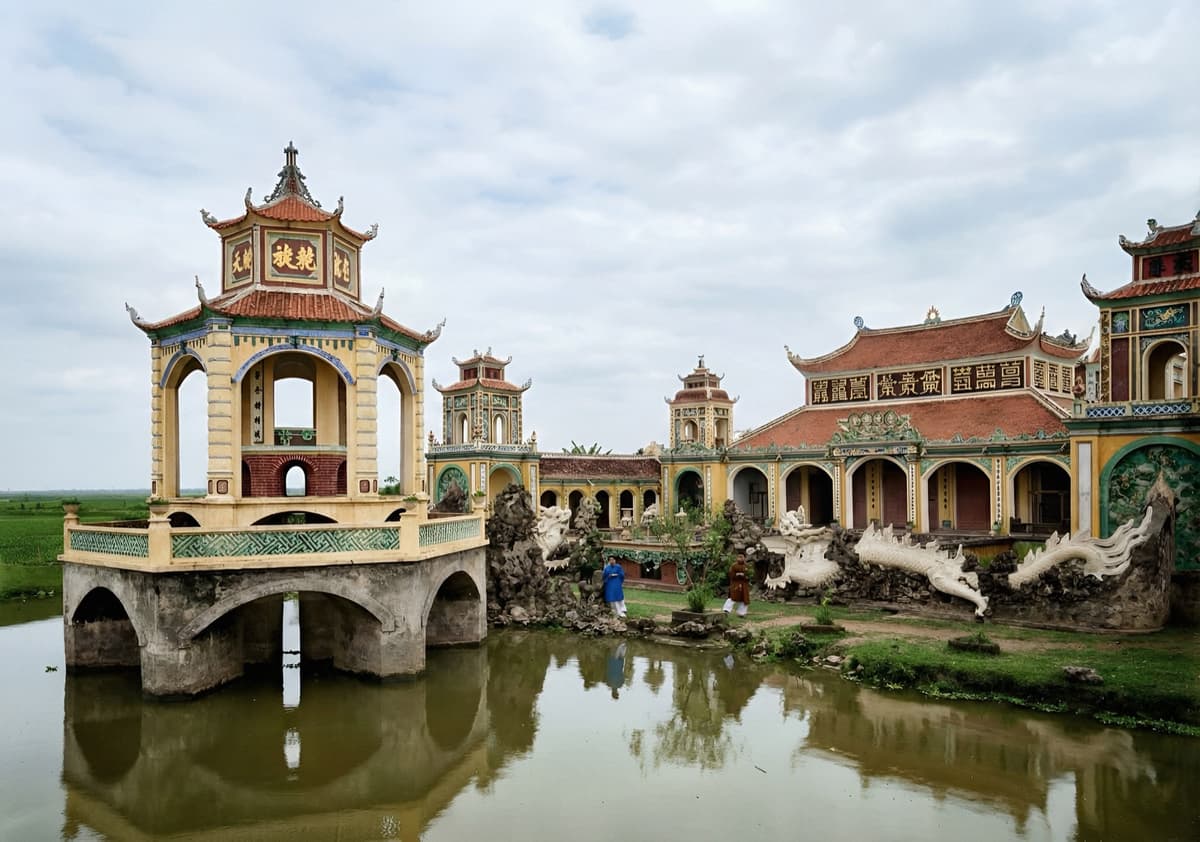
Besides individual whale tombs, many fishing villages build shrines, communal houses, or temples dedicated to Ca Ong, sometimes integrating worship into village communal houses. These are sites for major communal rituals and centers of fishermen's spiritual life. In these shrines, people often preserve remains of dead whales (after reburial) or large whale skeletons placed reverently on altars.
Ca Ong shrines are typically solidly built with beautiful architecture, reflecting people's reverence. Construction costs are raised from contributions by all village fishermen, potentially reaching hundreds of millions or billions of dong. Building a Ca Ong shrine is not only a spiritual project but also a source of pride for the entire fishing village.
The Role of Ca Ong in Fishermen's Spiritual Life
Ca Ong as a Strong Spiritual Support
For central Vietnamese fishermen, the sea is both a livelihood and a source of hidden dangers. Seafaring is a risky profession dependent on weather and luck. In this context, faith in Ca Ong becomes a crucial spiritual anchor.
Worshipping Ca Ong gives fishermen confidence, optimism, and courage when facing sea challenges. Le Cang (Dien Thinh commune) shared that after being saved by Ca Ong in 1982, he gained more faith and felt secure going to sea, believing the whale would appear to protect him in times of trouble.
A Bond Strengthening Community
Ca Ong worship is not just individual belief but a bond uniting the fishing community. Rituals like the Nghinh Ong festival and whale funerals bring the whole village together to express reverence. These activities foster solidarity and mutual support, helping communities overcome life's hardships.
Pham Van Hai (72, Dien Thinh commune), who has tended and maintained incense for Ca Ong tombs for decades, said: "Every year, people repair, clean, and visit. My family, whenever launching a boat at year's start or building a new vessel, offers gifts to Ca Ong to pray for smooth sailing." This shows the belief is deeply ingrained in fishermen's consciousness and lifestyle, becoming an indispensable part of their cultural and spiritual life.
Ca Ong from a Scientific and Marine Conservation Perspective
Explaining Whale Rescue Behavior Biologically
Scientifically, the phenomenon of whales "rescuing" fishermen can be explained by the species' biological traits. Whales are intelligent animals with complex social structures and behaviors of helping conspecifics in distress. They may exhibit similar responses when seeing humans or boats in danger.
Some scientists suggest whale behavior may stem from instinct or curiosity. Seeing an unfamiliar object (boat, raft) at sea, a whale might approach to investigate. Their presence, whether accidental or intentional, could calm waves nearby or inadvertently guide boats toward safer routes. However, asserting that whales consciously save humans cannot be definitively confirmed by science.
The Belief's Significance in Whale Conservation
Although no precise scientific explanation exists for these spiritual stories, Ca Ong worship undeniably contributes positively to whale conservation in Vietnamese waters. Thanks to this belief, fishermen absolutely refrain from hunting whales, regarding them as sacred creatures to protect. This inadvertently creates a safe environment for whales to live and thrive in Vietnamese seas.
The harmonious blend of folk belief and environmental awareness, marine biodiversity conservation, is a bright spot in Vietnamese culture's approach to nature. It demonstrates that traditional cultural values can play a vital role in protecting the environment and wildlife.
Conclusion
The Ca Ong worship of central Vietnamese fishermen is a precious intangible cultural heritage, crystallized from practical experiences, spiritual faith, and human aspirations to conquer the sea. This belief is not merely animal worship but a symbol of the deep bond between humans and nature, between communities and the sea, serving as a thread connecting fishing communities across generations.
In modern times, alongside scientific and technological progress, this belief retains immense spiritual value, providing a solid foundation for fishermen to stay at sea while helping preserve traditional cultural values and protect the marine ecosystem. Preserving and promoting the positive aspects of Ca Ong worship is a shared community responsibility, ensuring this cultural beauty endures through time.


