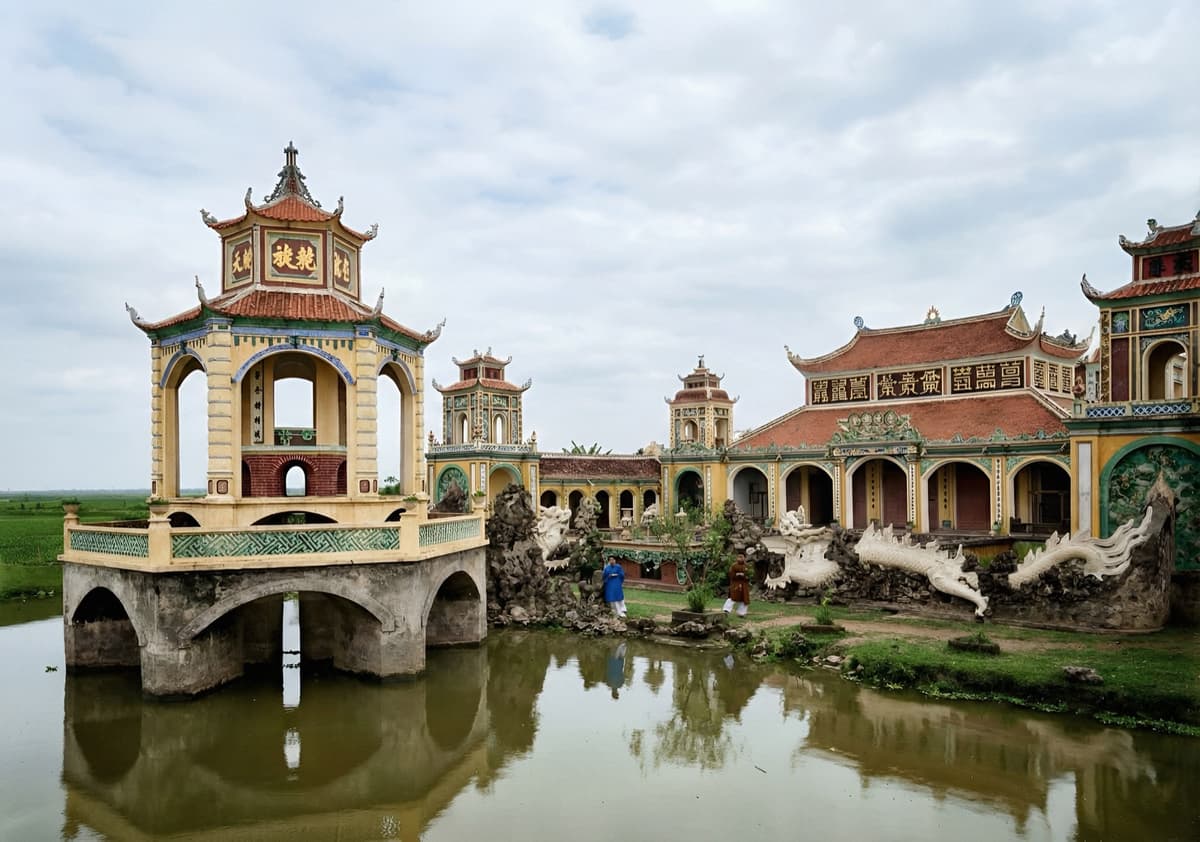
Nghinh Ong Song Doc Festival - The Largest Sea Festival in Ca Mau
The Nghinh Ong Song Doc Festival is one of the most representative traditional festivals of the Southern coastal fishing communities. It takes place annually on the 15th and 16th days of the second lunar month in Song Doc town, Tran Van Thoi district, Ca Mau province. As the largest fishing festival in Ca Mau, it serves not only as an occasion for fishermen to express gratitude to the sea deity but also as a distinctive cultural feature reflecting the spiritual life and maritime experience of the fishing community in Vietnam's southernmost region.
Origins and Historical Formation
The whale worship belief has long been ingrained in the lives of Vietnamese coastal fishermen. At Song Doc, the Nghinh Ong Festival is associated with a story passed down through generations. According to local fishermen, on July 15, 1925, after a violent stormy night, the carcass of a giant whale drifted ashore at Vam Xoay, Rach Goc area (now Ngoc Hien district). Local people respectfully brought the whale carcass to Vam Rach Ruong and built a shrine for worship.
In 1943, a tragic event occurred when a French patrol ship fired artillery shells, burning down the Whale Shrine. Despite the danger, Song Doc fishermen risked their lives to rescue the whale's remains from the fire. Since much of the remains were destroyed, people wrapped them in red cloth and built a new shrine at the Ong Doc river mouth to continue worship. By 1960, for security reasons, the fishing community had to relocate the shrine to Group 2, Song Doc town, where it remains today.
The Legend of the Whale God
Song Doc residents still preserve the legend of "the Whale God saving people," which carries strong Buddhist influences. The story tells that Buddha sent Avalokitesvara Bodhisattva to tear her kasaya robe into a hundred pieces and drop them into the sea, transforming them into a school of whales. The Bodhisattva then used elephant bones to magically create the whale's massive skeleton. Thanks to this special skeleton, the whale possessed the power of "thau duong" (shortening distances) to promptly rescue people and boats in distress at sea.
This legend reflects the fishermen's deep belief in divine protection amid the vast and dangerous ocean. For them, the whale is not merely a marine creature but a guardian deity and a solid spiritual anchor for every fishing voyage.
Main Rituals of the Festival
The Nghinh Ong Song Doc Festival comprises four main rituals performed in sequence: Nghinh Ong (Whale Procession), Te Tien Hien (Ancestor Worship), Chanh Te (Main Ceremony), and Tong On (Sending Off Ceremony). Each ritual carries its own spiritual significance and is meticulously prepared.
#### The Nghinh Ong Ritual
At noon on the 15th day, the most important ritual takes place. Members of the Management Board gather at the main hall of the Whale Shrine with ceremonial assistants and the lion dance team. The procession then forms solemnly: drums leading, lions following, ceremonial guards carrying colorful flags (water flags, five-color flags), assistants and female attendants escorting the palanquin, and finally the Management Board and crowds of people. Along the route, residents set up incense altars in front of their homes to reverently pay homage as the procession passes.
The highlight occurs when the procession reaches Song Doc fishing port. The Management Board, guards, attendants, drum team, and lions board a large beautifully decorated boat called "Nha thuy luc" (Water Palace), equipped with curtains and an incense altar. This boat is chosen from a prosperous and reputable family. Two smaller similarly decorated escort boats flank it. All other boats follow in a long line, creating a grand procession toward the Ong Doc river mouth.
When reaching the clear waters of the Western Sea, Management Board members solemnly burn incense and pay respects to the palanquin. The chief officiant then performs the "xin keo" (divination) ritual to ask for the whale's consent. If the divination is favorable or if the whale is seen spouting water (called "Ong doi"), people believe the whale has agreed to attend the festival. Otherwise, the procession must continue westward for another incense-burning period and repeat the invitation until the whale "agrees." According to fishermen's beliefs, if divination succeeds on the first attempt, the year will bring bountiful catches. Multiple attempts signal a difficult fishing year ahead.
Once the whale "accepts," members scoop clear seawater into prepared jars to bring back for worship on the altar. This sacred water symbolizes good fortune and the whale's blessing. The procession then returns to shore amid the joy of thousands of waiting people.
#### Ancestor Worship and Main Ceremony
On the evening of the 15th, the Management Board conducts the Te Tien Hien ritual at the Nam Hai deity altar in the main hall, honoring the ancestors who reclaimed this land and established the festival. Later that night, the Chanh Te ceremony is held with a solemn ceremonial text. Notably, the text mentions the names of many deities governing rivers and seas, reflecting the fusion of whale worship with local folk beliefs.
#### Tong On Ceremony
Concluding the Chanh Te ritual is the Tong On ceremony, which sends off the deities and wandering souls back to the sea after attending the festival with the people. Fishermen prepare a paper boat about 1 meter long, modeled after offshore fishing vessels, containing offerings of boiled chicken, duck, rice, salt, and votive paper. At night, a group of five carries the boat to the river wharf with a drummer leading. A small boat transports the paper boat to the Ong Doc river mouth, where participants burn incense, pray, and release the boat to drift out to sea. The chief custodian of the Whale Shrine and companions raise their hands in farewell, hoping the boat will carry the deities far out to the ocean.
Folk Activities and Cultural Significance
On the morning of the 16th, local residents, especially seafood wholesalers, boat owners, captains, and fishermen, visit the Whale Shrine to burn incense and pray for a safe, prosperous, and successful fishing year. Many boat owners from other provinces fishing in the Western Sea and the Gulf of Thailand also come to offer incense. Afterwards, everyone shares a festive meal, exchanging experiences and strengthening community bonds. During the festival, the Management Board invites traditional opera (hat boi) troupes to perform ancient plays and organizes folk games for residents and visitors.
In recent years, the festival has attracted approximately 250 to 300 boats, with fishing vessels from Bac Lieu, Ben Tre, Kien Giang, and Soc Trang provinces operating in the Western Sea also joining, creating a spectacular and vibrant scene on the ocean.
Heritage Values and Contemporary Life
The Nghinh Ong Song Doc Festival is more than a mere fishing blessing ceremony. It reflects the history of formation, survival, and development of the coastal community and mirrors the distinctive folk cultural identity of local fishermen. The festival is considered a rich historical source documenting maritime experience across generations of Ca Mau people and Vietnamese people in the past, present, and future.
The whale worship belief and the Nghinh Ong Song Doc Festival also serve as an educational environment for the moral principle of "remembering the source when drinking water," honoring the whale as a sea deity that rescues fishermen in distress and brings bountiful harvests. In the modern context, the festival is organized on an increasingly larger scale, becoming an attractive destination for tourists seeking to understand maritime culture while promoting the image of Ca Mau's people and land to domestic and international friends.
With its immense cultural values, the Nghinh Ong Song Doc Festival is truly a source of pride for Ca Mau residents and a precious intangible cultural heritage that must be preserved and promoted for future generations.