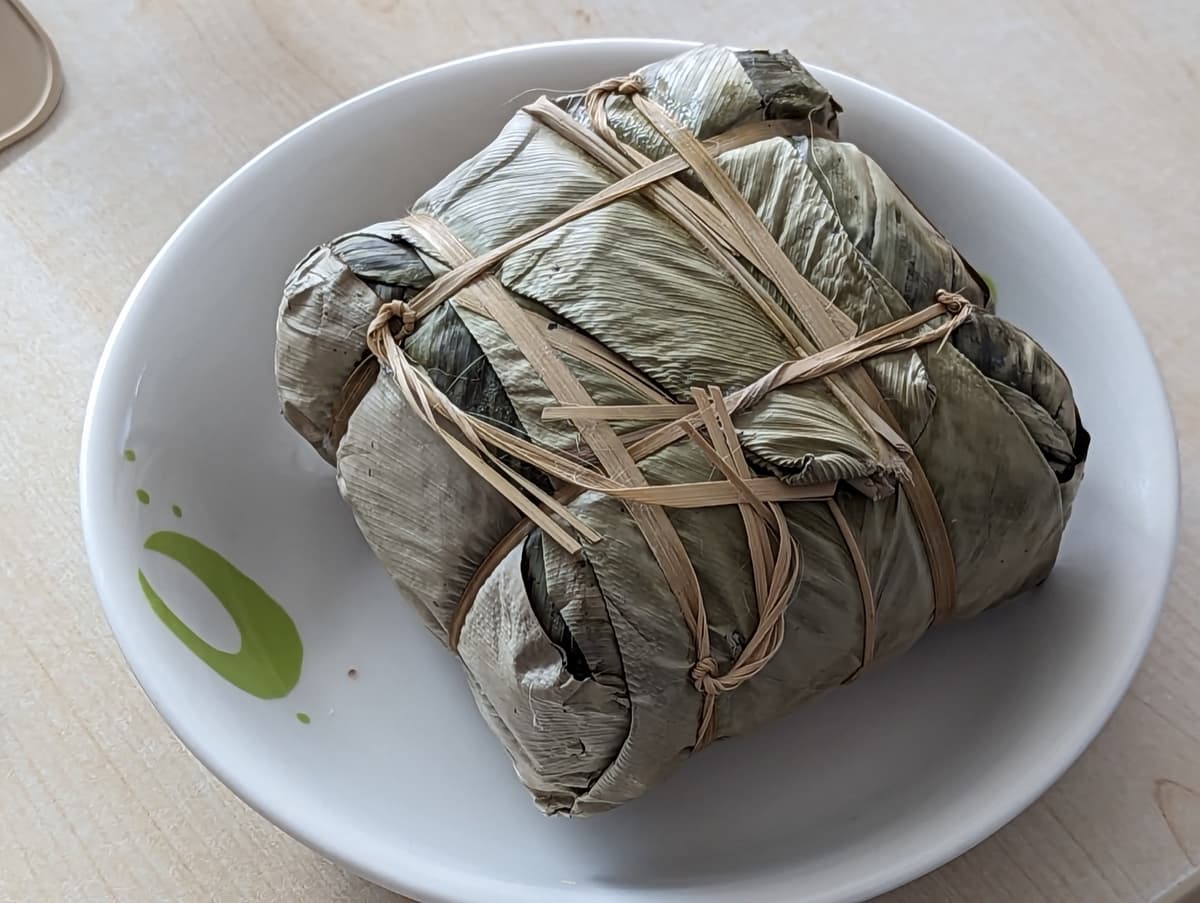
Southern Bánh Tét: A Tet Offering Wrapped with the Wish for Reunion
In the culinary picture of Vietnamese Tet, if the square green bánh chưng symbolizes the earth and sky of the Northern Delta, the southern bánh tét carries a simpler, more liberal beauty of the river region. It is not just a dish, but a sacred offering that encapsulates the hope for a prosperous and united new year of the Southern people.
Origin and Cultural Significance
Bánh tét appeared early in the life of Southerners. From the time of land reclamation, the first inhabitants knew how to wrap bánh tét with floating rice to offer to the heavens and ancestors. Similar to the North's bánh chưng, the South's bánh tét is an indispensable offering on the ancestral altar every Tet.
Southerners believe bánh tét symbolizes prosperity and abundance passed down through generations. Its round, long shape resembles a lucky sugarcane stick, carrying wishes for luck and fortune. The rich filling of mung beans and pork fat expresses a desire for a full life. Thus, bánh tét is a spiritual link connecting generations.
The Diversity of Bánh Tét
A special feature of Southern cuisine is its liberality and creativity, shown through dozens of bánh tét varieties depending on local products. The rice can be naturally white, green from pandan leaves, or purple from black glutinous rice, creating distinct flavors.
The most popular is the traditional bánh tét with mung bean and pork belly filling. Others include banana-filled, salted duck egg-filled, or sweet coconut-filled versions. Each offers a different taste, yet all show the maker's skill and heart.
Secrets to a Delicious Bánh Tét
Preparation is meticulous. Good glutinous rice is washed, mixed with salt, and then combined with coconut milk for a rich, chewy texture. Mung beans are soaked, hulled, cooked, mashed, and seasoned. Pork belly is cut into long strips and marinated with salt, sugar, and pepper.
#### Wrapping and Boiling Techniques
Fresh banana leaves are cleaned and dried. 3-4 layers are stacked and laid flat. A layer of rice is spread, and the filling is placed in the center. The wrapping technique requires skill to form a firm, even cylinder. The cake is tied with strings lengthwise first, then with crosswise loops to secure it.
Cakes are often boiled in pairs. Water should cover them and be kept at a steady boil. Traditionally, they are boiled with wood for about 12 hours, adding more water as needed. Once cooked, they are removed, the ends are opened to drain, and then re-wrapped to preserve them longer.
Bánh Tét in Modern Life
Today, bánh tét is not only for Tet but also for death anniversaries and festivals. It is sliced into beautiful rounds and served with pickled vegetables to balance the rich flavor.
Despite modern changes, many Southern families still maintain the tradition of wrapping bánh tét at home during the days before Tet. It is precious time for family members to gather, converse, and preserve cultural traditions. The flavor of bánh tét is not just the taste of Tet, but the taste of family love and childhood memories.


