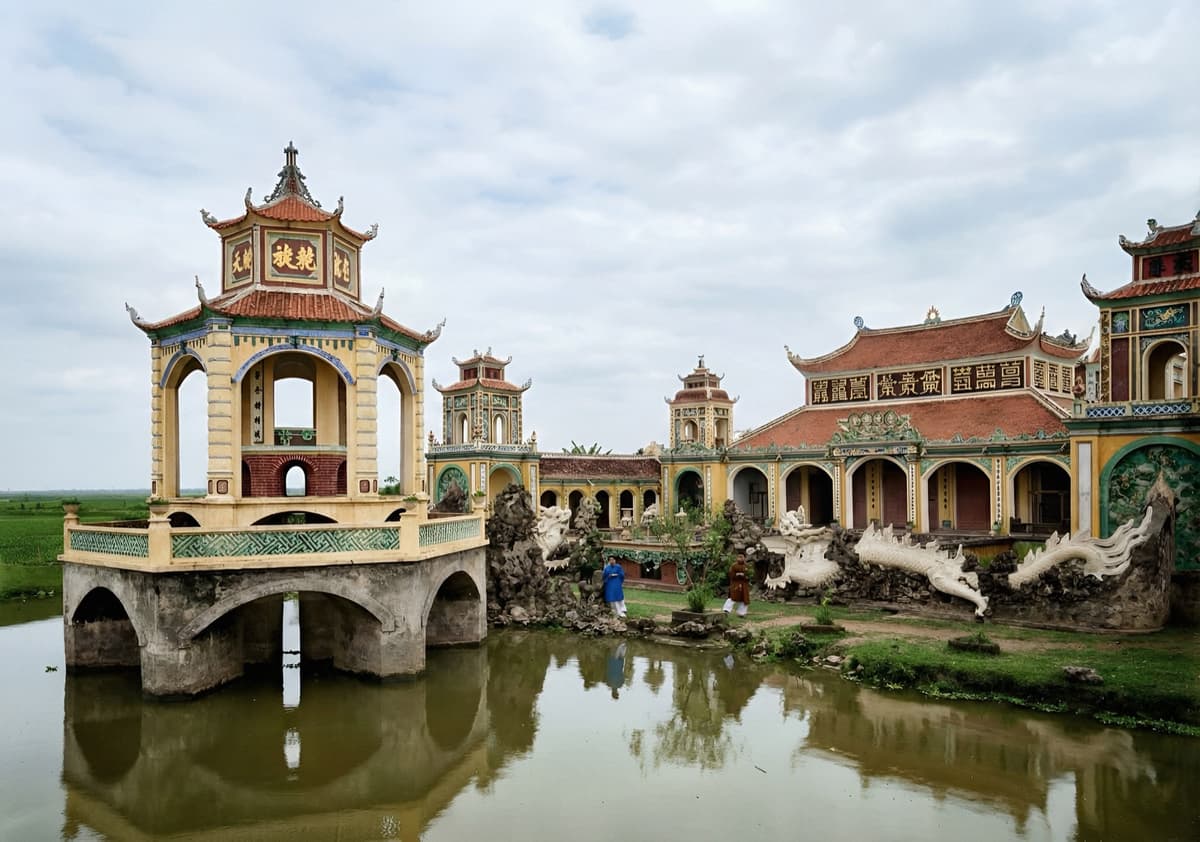
Quan The Am Festival at Ngu Hanh Son: A Spiritual Gem
The Quan The Am Festival at Ngu Hanh Son, also known as the Quan Am Festival, is one of the largest and most attractive Buddhist festivals in Da Nang, Vietnam. Held annually from the 17th to the 19th of the second lunar month at Hoa Hai ward, Ngu Hanh Son district, the festival is both a religious occasion to honor Bodhisattva Avalokitesvara and a vibrant display of local cultural heritage. On February 3, 2021, it was recognized as a National Intangible Cultural Heritage.
Origins: A Natural Stalactite Statue
The festival's origin is linked to a remarkable discovery by Venerable Thich Phap Nhan, the founder of Quan The Am Pagoda. He found a life-size, naturally formed stalactite statue of Quan The Am holding a cam lo vase in a cave on Kim Son mountain, part of the Ngu Hanh Son range. The cave was named Quan Am cave, and a pagoda was built nearby, also named Quan The Am.
Over time, many pilgrims came to worship, and Buddhist leaders chose the 19th day of the second lunar month, the birth anniversary of Bodhisattva Avalokitesvara, as the main celebration day. A pivotal moment came on February 19, 1956, when Venerable Thich Phap Nhan founded the Quan Am Pho Association and organized the first large-scale festival, attracting tens of thousands of monks, nuns, and laypeople.
From 1991, the festival was expanded to three days, and since 2023, it has been organized at the city level by the Da Nang People's Committee.
The Ritual Section: Solemn Buddhist Ceremonies
The festival is divided into two parts: rituals and festivities. The ritual part includes:
Opening Ceremony: Khai Kinh, Thuong Phan
On the first day (17th of the second lunar month), a ceremony is held to offer prayers to Buddhas and Bodhisattvas for peace and prosperity.
Light Procession (Ruoc Anh Sang)
On the evening of the 18th, hundreds of participants, including monks, Buddhists, and pilgrims, form a procession with a palanquin, flower displays, music, and lion dances. The torchlight symbolizes the wish for wisdom to illuminate the path of all beings.
Dharma Talk and Meditation Sessions
Throughout the festival, especially on the evening of the 18th and afternoon of the 19th, large audiences gather to listen to teachings on Buddhist philosophy, compassion, and practical applications of the Dharma.
Main Ceremony: Le Via Duc Phat Quan The Am
Held on the 19th, this is the heart of the festival. A high-ranking monk presides over prayers and incense offerings, attracting hundreds of thousands of attendees, all praying for national peace and well-being.
Procession of the Bodhisattva Statue
Following the main ceremony, the statue of Quan The Am is carried from Quan Am cave to Quan The Am Pagoda, then placed on a boat that circles Co Co river. This ritual seeks blessings for fishermen and those working on waterways.
Reenactment of Bodhisattva Quan The Am
A distinctive feature is the reenactment of one of the 32 manifestations of Avalokitesvara each year, such as Thousand-Armed Quan Am or White Robe Quan Am. A virtuous female Buddhist devotee is chosen to portray the Bodhisattva. She undergoes 6-8 months of training in meditation, posture, and the Bodhisattva's vows, including three months of vegetarianism before the festival.
Closing Ceremony: Ta Phat Dan Hoa Dang
On the evening of the 19th, a thanksgiving ceremony is held, and lotus-shaped lanterns are released on the river, symbolizing the eternity of wisdom.
Folk Rituals and Festivities
Interspersed with Buddhist rituals are local traditions honoring ancestors and craftsmen, including ceremonies for Princess Huyen Tran and the founding master of the Non Nuoc stone carving craft. The festive part features folk games, Bai choi singing, tuong opera, calligraphy demonstrations, boat races, and lion dances.
Heritage Value and Contemporary Life
The festival embodies the fusion of Buddhist and traditional Vietnamese culture, linked to the special national heritage site of Ngu Hanh Son. It meets the spiritual needs of the community, promotes goodness, and strengthens social cohesion. Attracting thousands of visitors annually, the festival significantly promotes Da Nang's tourism and cultural identity.
