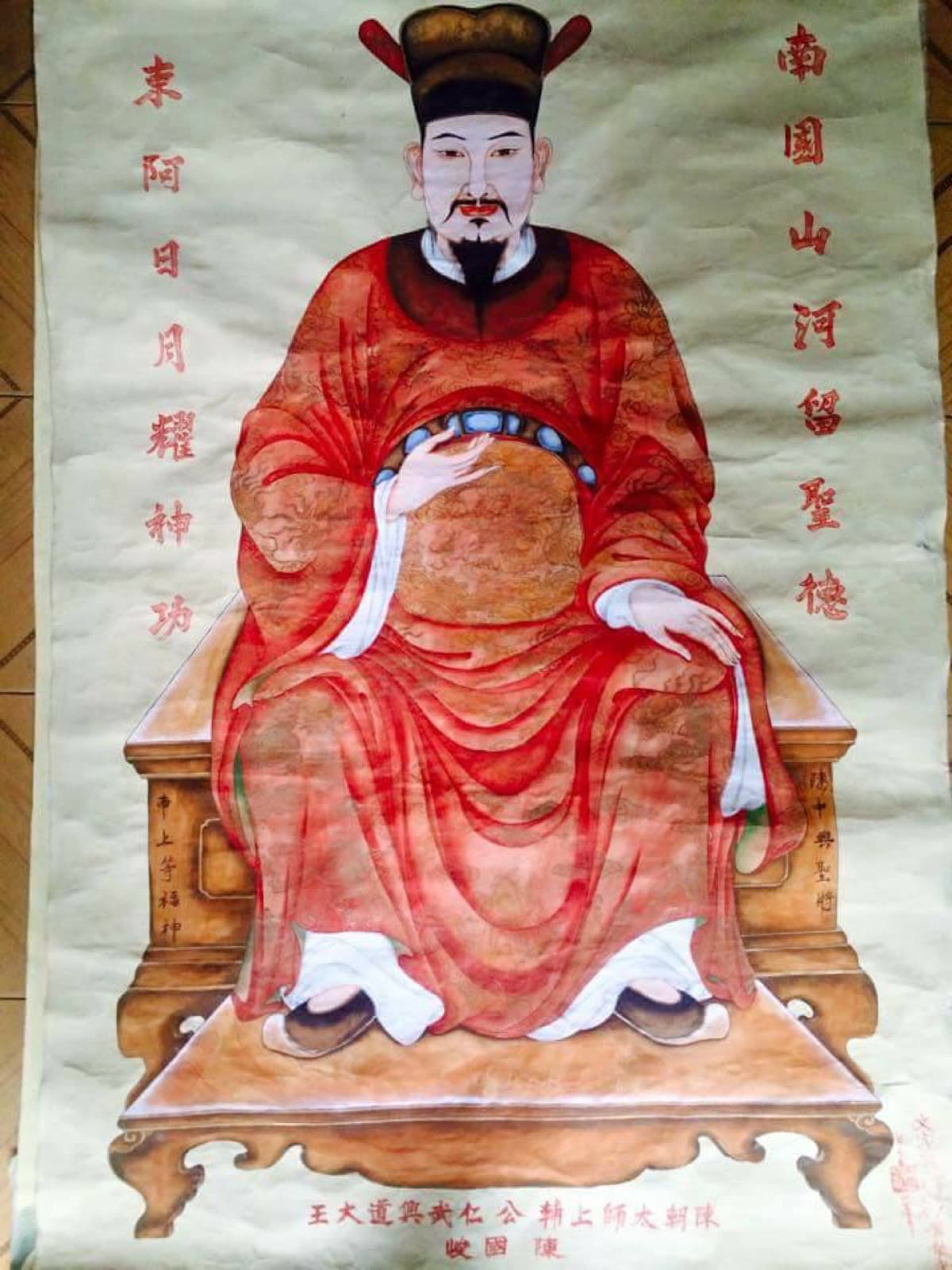
Historical Context and the Lam Son Uprising
In 1407, after the failure of the Ho dynasty's resistance, Dai Viet fell under the domination of the Ming dynasty. The nation's fate and cultural heritage were at risk of destruction. In this context, Le Loi, a wealthy and influential leader in the Lam Son region (now Tho Xuan district, Thanh Hoa province), harbored the ambition to expel the invaders.
In 1416, at Lung Nhai, Le Loi and 18 trusted generals held a solemn oath ceremony, pledging to fight against the Ming. This sacred oath spread, attracting heroes from across the country to gather at Lam Son. In early spring 1418, at Lam Son, Le Loi officially raised the flag of uprising.
Progress and Victory of the Uprising
The Lam Son uprising lasted 10 years with immense hardships. The insurgents endured many difficulties, at times retreating to the western mountains to preserve their forces. Thanks to the resilient spirit and military talent of Le Loi and his generals like Nguyen Trai, Tran Nguyen Han, Le Lai, they gradually strengthened.
Using unique military tactics, defeating a stronger enemy with weaker forces, the Lam Son army shifted from defense to offense. Key battles such as Tot Dong - Chuc Dong (1426) and Chi Lang - Xuong Giang (1427) destroyed or captured hundreds of thousands of Ming troops. In 1428, the uprising achieved complete victory, ending 20 years of Ming domination.
Le Loi's Reign and the Later Le Dynasty
In April 1428, Le Loi ascended the throne, taking the reign name Thuan Thien, restoring the national name Dai Viet, and founding the Later Le dynasty, which lasted over 360 years. In his 6 years as emperor, Le Thai To built a strong centralized state, issued progressive land policies, developed industry and commerce, promoted education, and maintained peaceful borders. Dai Viet became one of the most prosperous countries in Southeast Asia.
Lam Kinh: The Second Capital and Ancestral Worship Site
After ascending the throne, Le Thai To chose Lam Son as the site for ancestral worship, building palaces, mausoleums for kings and queens. This place, called Lam Kinh or Tay Kinh, coexisted with Dong Kinh (Thang Long). Today, Lam Kinh is a Special National Historical Site, with many structures restored including Thai Mieu, Nghinh Mon, Chinh Dien, and various tombs.
Lam Kinh Festival: A Cultural and Spiritual Beauty
The Lam Kinh Festival is held annually in August (lunar calendar) at the Lam Kinh Historical Site to honor Le Loi, the Le kings, generals, and people who contributed to the nation's history. The festival includes ceremonial rites such as the palanquin procession of King Le Thai To and Trung Tuc Vuong Le Lai, and offerings at temples. The festive part features staged performances recreating the Lam Son uprising, folk games, and cultural activities.
Le Loi's Imprint in the Northwest Region
Le Loi's legacy also extends to the far northwest. In 1431, after pacifying the region, he had an inscription carved on a cliff at Pu Huoi Cho in Nam Nhun district, Lai Chau province. This stele was recognized as a National Treasure in 2016. The annual Le Thai To Temple Festival held here in early spring demonstrates the deep gratitude and reverence of the Vietnamese people for their national hero across all regions.