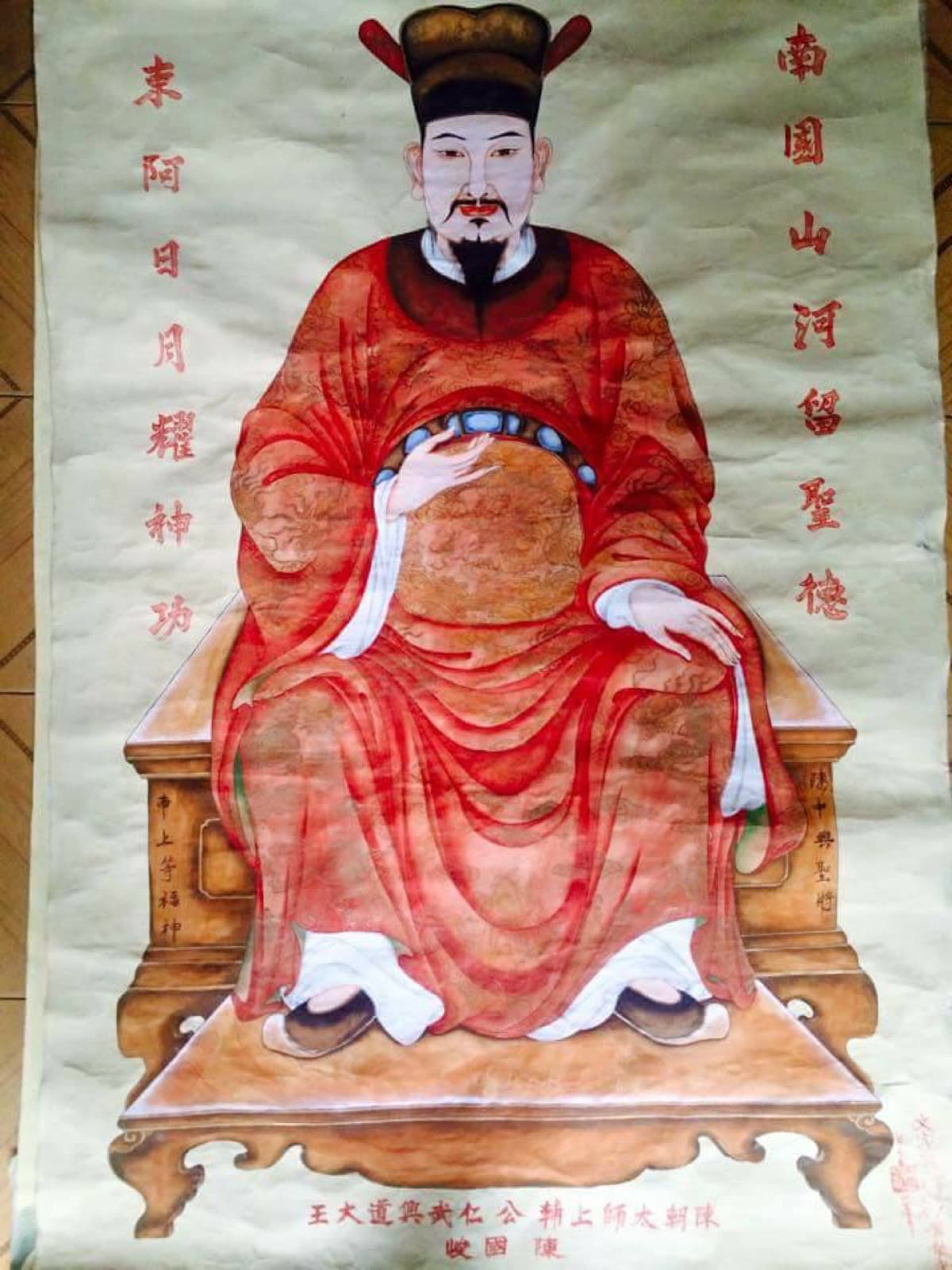
Nguyen Trai: An Overview of His Life and Career
Nguyen Trai (1380-1442), pen name Uc Trai, is one of the greatest and most versatile historical figures of the Vietnamese nation. He was not only a brilliant military strategist and a major thinker but also an outstanding writer and poet. In 1980, on the 600th anniversary of his birth, UNESCO officially honored Nguyen Trai as a World Cultural Celebrity, affirming his contributions to human culture that transcend time and space.
Nguyen Trai's life was a turbulent tapestry, intertwined with the ups and downs of national history in the 15th century. He was born into a family with a tradition of scholarship and patriotism. His childhood was spent with his maternal grandfather in Thang Long and in the land of Con Son, which would later become an important part of his soul and creative career. In 1400, he passed the doctoral examination and served the Ho dynasty. However, in 1407, when the Ho dynasty weakened and the country fell under Ming rule, Nguyen Trai refused the path of officialdom and sought out Lam Son, dedicating himself to supporting Binh Dinh Vuong Le Loi. From then on, he became the soul of the Lam Son uprising, contributing his intellect and exceptional military talent to the cause of national liberation.
Role in the Lam Son Uprising and the Great Proclamation upon the Pacification of Ngo
Nguyen Trai's role in the resistance against the Ming was not limited to strategic counsel. He also wrote diplomatic letters, collected in the work "Quan trung tu menh" (Letters from the Military Headquarters), to inspire troops, win popular support, and undermine the enemy's will. His combination of military strength with political and diplomatic power is considered one of the key reasons for the Lam Son forces' victory.
The pinnacle of Nguyen Trai's political and literary career was the "Binh Ngo dai cao" (Great Proclamation upon the Pacification of Ngo), written in 1428, right after the country regained independence. This is not only an important political document declaring victory and affirming national sovereignty but also a "thien co hung van" (a heroic text for a thousand ages), a grand summary of the nation's history and spirit. It is regarded as Vietnam's second declaration of independence. The work expresses deep national pride and the noble ideal of benevolence and righteousness, and it is a model of argumentation, rhetoric, and political writing. Through this work, Nguyen Trai laid the foundation for a solid national ideology based on righteousness and the just cause of the resistance.
Years at Con Son: A Place That Nurtured His Soul and Spirit
Con Son, in present-day Hai Duong province, is not only a scenic spot but also a historical witness, closely tied to Nguyen Trai's life. Here stands Con Son Pagoda, a center of the Truc Lam Zen sect. It was in this land that Nguyen Trai spent his childhood with his maternal grandfather and later, after achieving success or facing setbacks in his official career, he would return to Con Son to live in seclusion and nurture his soul.
Con Son in Nguyen Trai's Poetry
Con Son appears in Nguyen Trai's poetry as a serene space where one merges with nature to find peace and reflection. The poem "Con Son ca" (Song of Con Son) is one of his most representative works, expressing his love for nature and his desire for a pure life. In the poem, the murmuring stream is likened to a zither, the pine forest to green canopies, and the author appears as a hermit wandering among the vegetation. The image of Con Son is not just a backdrop but a symbol of a lifestyle and philosophy: seeking inner stillness to preserve noble integrity amidst the turmoil of official life.
However, his attachment to Con Son did not mean Nguyen Trai abandoned his ideals. On the contrary, it was during these years that he had the opportunity to reflect more deeply on human fate, the ways of the world, and the ideal of benevolence. Con Son became an endless source of inspiration, a place where he confided his feelings and concerns about the country. This site is also part of the Yen Tu - Vinh Nghiem - Con Son, Kiep Bac relic and landscape complex, a dossier currently under UNESCO review for World Heritage status, highlighting the great cultural and historical value of this land.
Vast Literary Legacy and the Philosophy of Benevolence
Nguyen Trai was not only a politician and military leader but also a great cultural figure with a vast legacy. He left behind many valuable works in various fields, from military and political to geographical and literary.
Major Works and Ideological Value
Besides "Binh Ngo dai cao" and "Quan trung tu menh," Nguyen Trai wrote "Du dia chi" (Geographical Treatise), considered the first historical geography book of the country. This work demonstrates his extensive knowledge of the nation, from terrain and rivers to products and customs of different regions. He also wrote "Phu nui Chi Linh" (Ode on Chi Linh Mountain) and "Van bia Vinh Lang" (Inscription on Vinh Lang Stele) to praise the merits of Le Loi and the Lam Son forces. In literature, he composed hundreds of poems in Chinese in "Uc Trai thi tap" and, notably, hundreds of poems in Nom in "Quoc am thi tap" (Collected Poems in the National Language). "Quoc am thi tap" is considered one of the earliest and most artistically valuable collections of Nom poetry extant, marking an important development in Vietnamese-language literature.
Throughout Nguyen Trai's career and thought runs the philosophy of benevolence and righteousness. He elevated the traditional concept to a new level. For him, benevolence was not just about interpersonal conduct but also about bringing peace to the people and serving the people. This is clearly expressed in "Binh Ngo dai cao": "The core of righteous deeds is to bring peace to the people." This progressive idea, ahead of its time, places the people's welfare first and considers it the highest goal of any just war. It was this philosophy that gave great spiritual strength to the Lam Son uprising and laid the foundation for a prosperous nation after the war.
Con Son and Memorial Festivals: Enduring Cultural Values
Today, Con Son is not only a historical relic but also an important cultural and spiritual space. Every year, the Con Son - Kiep Bac autumn festival is held to commemorate national heroes, including Nguyen Trai. On September 18, 2024 (the 16th day of the 8th lunar month), Hai Duong province solemnly held a ceremony to mark the 582nd anniversary of his death at the Nguyen Trai temple within the Con Son relic site. This ritual is not only an occasion to express gratitude and admiration of current generations for a predecessor but also a chance to educate the youth in patriotism and national pride.
Historical and Cultural Value of the Con Son Relic Site
The Con Son - Kiep Bac relic site marks many important historical events, linked to the Lam Son uprising and the lives of figures like Nguyen Trai and Tran Hung Dao. It is not just a scenic spot but also a center of Truc Lam Buddhism, with Con Son Pagoda being one of its major centers. The combination of natural, historical, and spiritual values creates an exceptionally precious heritage complex. Therefore, UNESCO's current review of the nomination for the Yen Tu - Vinh Nghiem - Con Son, Kiep Bac complex as a World Heritage site is a well-deserved recognition. It also shows that the enduring values of the thoughts and culture left by Nguyen Trai and previous generations remain relevant and continue to spread in contemporary life.
Conclusion
Nguyen Trai is a rare cultural phenomenon in Vietnamese history. Although his life ended in a tragic incident (the Le Chi Vien case), his contributions to the nation are undeniable. His life and career offer great lessons in patriotism, wisdom, talent, and profound benevolence. His years at Con Son are not just a part of his life but have become part of the national cultural heritage. UNESCO's recognition of him as a World Cultural Celebrity affirms the global value of his thought and work, reminding current generations to always cherish and preserve these noble values.