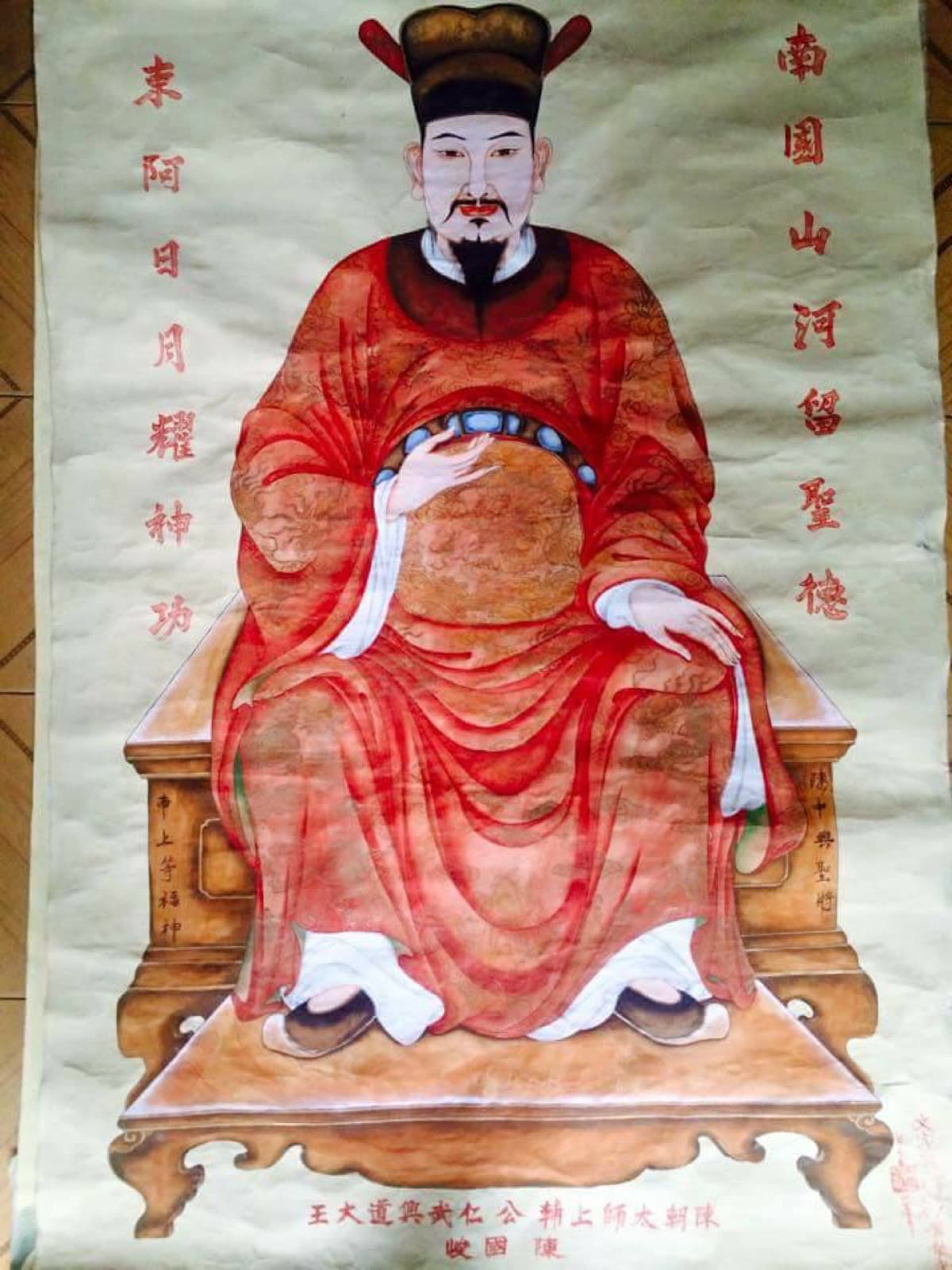
Ngo Quyen and the 938 Battle of Bach Dang: From Tu Luong Xam to the New Temple in Co Loa
Ngo Quyen is one of the most iconic national heroes in Vietnamese history, who ended more than a thousand years of Northern domination and opened a long era of independence and self-rule for the nation. The resounding victory on the Bach Dang River in 938 was not only a brilliant milestone in military history but also a symbol of resilient will and Vietnamese intellect. To honor his immense contributions, numerous relics and festivals have been established and preserved through generations, from the special national relic complex of Tu Luong Xam in Hai Phong to the commencement of building a new temple in Co Loa (Hanoi).
Historical Context and Background of Ngo Quyen
In the early 10th century, the Tang dynasty's colonial government in the North was weakening and disintegrating. In Giao Chau, local separatist forces rose strongly, notably the Khuc family, which advocated for autonomy. However, in 930, the Southern Han army (one of the Ten Kingdoms during the Five Dynasties period), led by Liu Yan, invaded, defeated Khuc Thua My's forces, and captured Tong Binh.
In this context, Ngo Quyen was born in Duong Lam village (now in Son Tay town, Hanoi), as the adopted son of Duong Dinh Nghe, the governor of Ai Chau. A man of military talent and great ambition, Ngo Quyen joined Duong Dinh Nghe in rising up to expel the Southern Han forces for the first time in 931, regaining national autonomy. After Duong Dinh Nghe was assassinated by Kieu Cong Tien in 937, Ngo Quyen quickly marched from Ai Chau to the North to punish the traitor and prepare to counter the new invasion threat from the Southern Han.
The 938 Battle of Bach Dang: Peak Military Art
Seizing the chaotic situation in Giao Chau, Southern Han king Liu Yan decided to send his son, Liu Hongcao, to command a large force to invade our country by sea. Facing this, Ngo Quyen demonstrated exceptional strategic skill by choosing the Bach Dang River as the decisive battlefield.
Terrain and the Hidden Stake Strategy
The Bach Dang River held strategic importance as the shortest waterway from the sea to the central plains of Northern Vietnam. A notable feature of this river is its strong and complex tidal regime. Ngo Quyen maximized these topographical and natural factors to build a perfect ambush formation.
According to historical sources, he had soldiers carve thousands of large wooden stakes, tipped with sharpened iron, and drive them into the riverbed at strategic positions at the Bach Dang estuary, forming a hidden stake field. When the tide rose, the water covered the stake field, making it invisible to the enemy. This meticulous preparation, with detailed calculations of time and location, demonstrated Ngo Quyen's superior strategic vision.
Developments and Outcome
In late 938, the Southern Han warship fleet, commanded by Liu Hongcao, entered our coastal waters. Ngo Quyen deployed elite troops with light, maneuverable warships to provoke the enemy. As the tide was rising, Ngo Quyen had his troops feign defeat and retreat to lure the enemy deep into the hidden stake field.
Falling for the ruse, the Southern Han forces aggressively pursued, venturing deep into the Bach Dang estuary. Just as the tide began to ebb, Ngo Quyen ordered a full-scale counterattack. The rapidly receding water caused the enemy's bulky warships to collide with the sharpened iron-tipped stakes, puncturing and shattering them. The Southern Han troops fell into utter chaos, unable to react. Liu Hongcao was killed in battle, and more than half of their soldiers were either eliminated or captured. Upon hearing of the great defeat, Southern Han king Liu Yan had to retreat with his remaining forces back to their country.
Tactical Significance and Historical Stature
The 938 Battle of Bach Dang was not merely a military victory but the pinnacle of Vietnamese military art at that time. The flexible use of tidal patterns, combined with the hidden stake field and the "lure the enemy" tactic, created an inescapable net that the enemy could not foresee. This victory carried immense strategic significance:
- Ending Northern feudal domination: This was the first time a Northern feudal monarchy had to acknowledge complete failure in its invasion ambitions, opening a new era for the nation.
- Affirming independence and self-rule: This victory crushed all Southern Han ambitions to recolonize our country, laying a solid foundation for building a long-lasting independent and self-governing state.
- Leaving valuable lessons: The Bach Dang battle became a classic model of defensive military art, later inherited and developed by generations such as Le Hoan (981) and Tran Hung Dao (1288).
From Tu Luong Xam to the New Temple in Co Loa: A Journey of Gratitude
After the glorious victory, in 939, Ngo Quyen ascended the throne, styling himself as Ngo Vuong, and established his capital at Co Loa (now in Dong Anh district, Hanoi), officially founding the Ngo dynasty in Vietnamese history. He ruled for six years before passing away in 944, leaving boundless grief for the people.
The Special National Relic Complex of Tu Luong Xam
One of the primary and most sacred places of worship for Ngo Quyen is the Tu Luong Xam special national relic complex, located in Dong Hai ward, Hai An district, Hai Phong city. Tu Luong Xam is considered where Ngo Quyen once stationed troops and trained soldiers before advancing to Bach Dang. Every year, on the 15th day of the first lunar month, the traditional Tu Luong Xam festival is held grandly to commemorate the Bach Dang victory and the death anniversary of King Ngo Quyen.
The Tu Luong Xam festival is organized with two main parts. The ceremonial part follows ancient rituals, with the highlight being a palanquin procession, featuring processional groups, unicorn and dragon dances, ceremonial regalia, and a large number of local residents, creating a solemn and spectacular atmosphere. The festive part is an occasion to recreate distinctive folk cultural features of the region. In recent years, organizers have continuously expanded activities toward enhancing community experiences, such as traditional stage performances, calligraphy writing, chess competitions, and tug-of-war, attracting many locals and tourists from afar. This is not only a time to honor the national hero but also an opportunity to educate patriotic traditions and evoke national pride in younger generations.
The Project to Build a Temple for Ngo Quyen in Co Loa
If Tu Luong Xam marks the preparation of forces, Co Loa is where Ngo Quyen chose as his capital after ascending the throne. Co Loa is a land associated with the capital of the Au Lac state under King An Duong Vuong and is now the seat of Dong Anh district, Hanoi.
To honor the king who contributed to nation-building, a major project commenced on June 26, 2025: the temple dedicated to King Ngo Quyen at the Co Loa Relic Site. The choice to build the temple in Co Loa carries profound symbolic meaning. It not only affirms Co Loa's status as a historical center of national power but also creates a significant spiritual and cultural space connecting the glorious past with the present. This project is a clear testament to the nation's principle of "remembering the source when drinking water," while enriching the especially important historical and cultural relic complex of the capital.
Conclusion
Ngo Quyen and the 938 Battle of Bach Dang are among the most glorious pages in Vietnamese history. From a talented general born in Duong Lam, he achieved a brilliant feat, laying a solid foundation for the nation's long-lasting independence and self-rule. Maintaining traditional festivals at Tu Luong Xam and commencing the construction of a new temple in Co Loa are not merely cultural and religious activities. They represent the continuity of historical heritage, a vivid expression of gratitude and respect from today's generations for the timeless values left by ancestors, contributing to nurturing patriotism and national pride for future generations.


