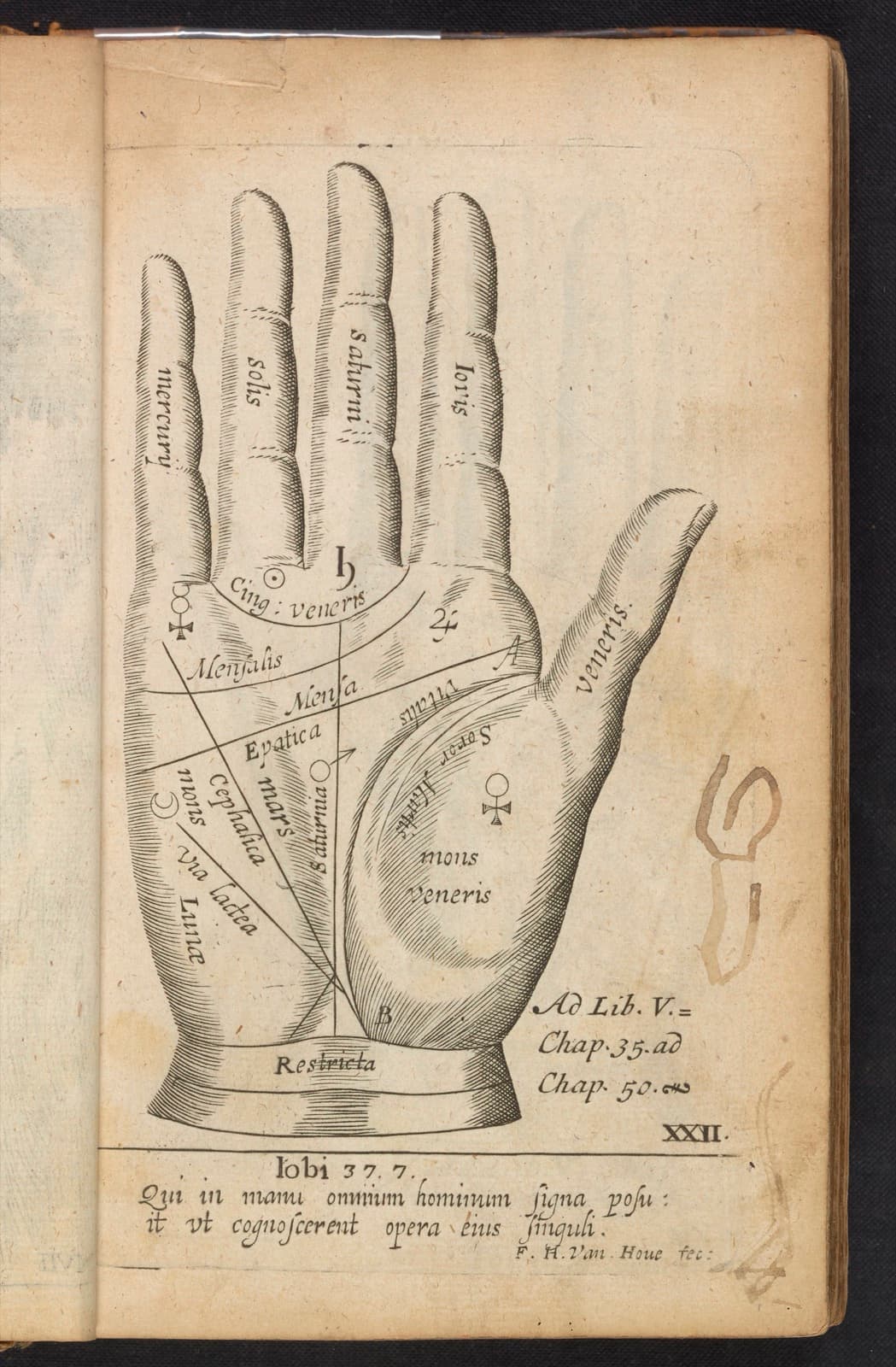
Introduction to Palmistry
Palmistry is a branch of physiognomy that studies and interprets the lines and shapes of the hand to infer a person's character, abilities, and destiny. Unlike highly spiritual forms of divination, palmistry relies on observing specific physical features, making it an art of interpretation rooted in experience and culture.
Origin and Spread
According to popular sources, palmistry originated in India, then spread to China, where it flourished and became integrated with Eastern philosophical doctrines. From China and India, it continued to Greece and Ancient Egypt. Each culture developed its own interpretations, creating diverse schools of palmistry worldwide.
Left Hand vs. Right Hand
There are two main beliefs regarding which hand to read:
- Belief 1: The left hand represents past life, while the right hand speaks about the present life.
- Belief 2: This convention depends on the dominant hand. For right-handed people, the right hand represents the past, while for left-handed people, the left hand represents the past. In other words, the non-dominant hand shows innate traits, while the dominant hand shows what one has created in this life.
The Three Major Lines
Folk belief holds that there are 12 palm lines in total, but only 3 are considered major:
Heart Line
This line runs horizontally across the upper palm, below the fingers. It is used to infer emotional life and relationships. A long, clear, unbroken heart line indicates emotional stability and empathy, while a broken or faint line may suggest complex emotional experiences.
Head Line
The head line runs across the middle of the palm, representing intellect, thinking ability, and problem-solving. A long, deep line suggests strong focus and logical thinking. A shorter line may indicate quick decision-making but less patience. The slope can also reveal creativity or practicality.
Life Line
The life line curves around the thumb mount. It is often misunderstood as predicting lifespan. In many schools, it reflects vitality, physical health, and major life changes. A clear, deep, long life line indicates good health and energy, while a broken one may suggest major transitions.
Hand and Finger Shapes
- Wide and large hands: People who spend much time thinking and deliberating.
- Small hands: Active, spontaneous, and restless individuals.
- Long fingers: Perfectionists who may quit when tasks become too simple.
- Short fingers: Impulsive people who start new things before finishing old tasks.
Changes and Timing
Palm lines are not entirely fixed. Some believe they change every six months, reflecting shifts in thinking and lifestyle. However, the lines on the thumb are said to remain unchanged. Therefore, many suggest reading palms only after age 18, when lines have stabilized. The best time is in the morning, after waking and before breakfast.
Objective Perspective
Belief in palmistry is a personal choice. Culturally and psychologically, it can serve as a tool for self-reflection. Descriptions based on palm lines are often general and applicable to many, so they should be taken as suggestions, not absolute judgments. One should not let palm readings dictate major decisions regarding finances, health, or career. Positive thinking and right actions are what truly shape one's destiny.


