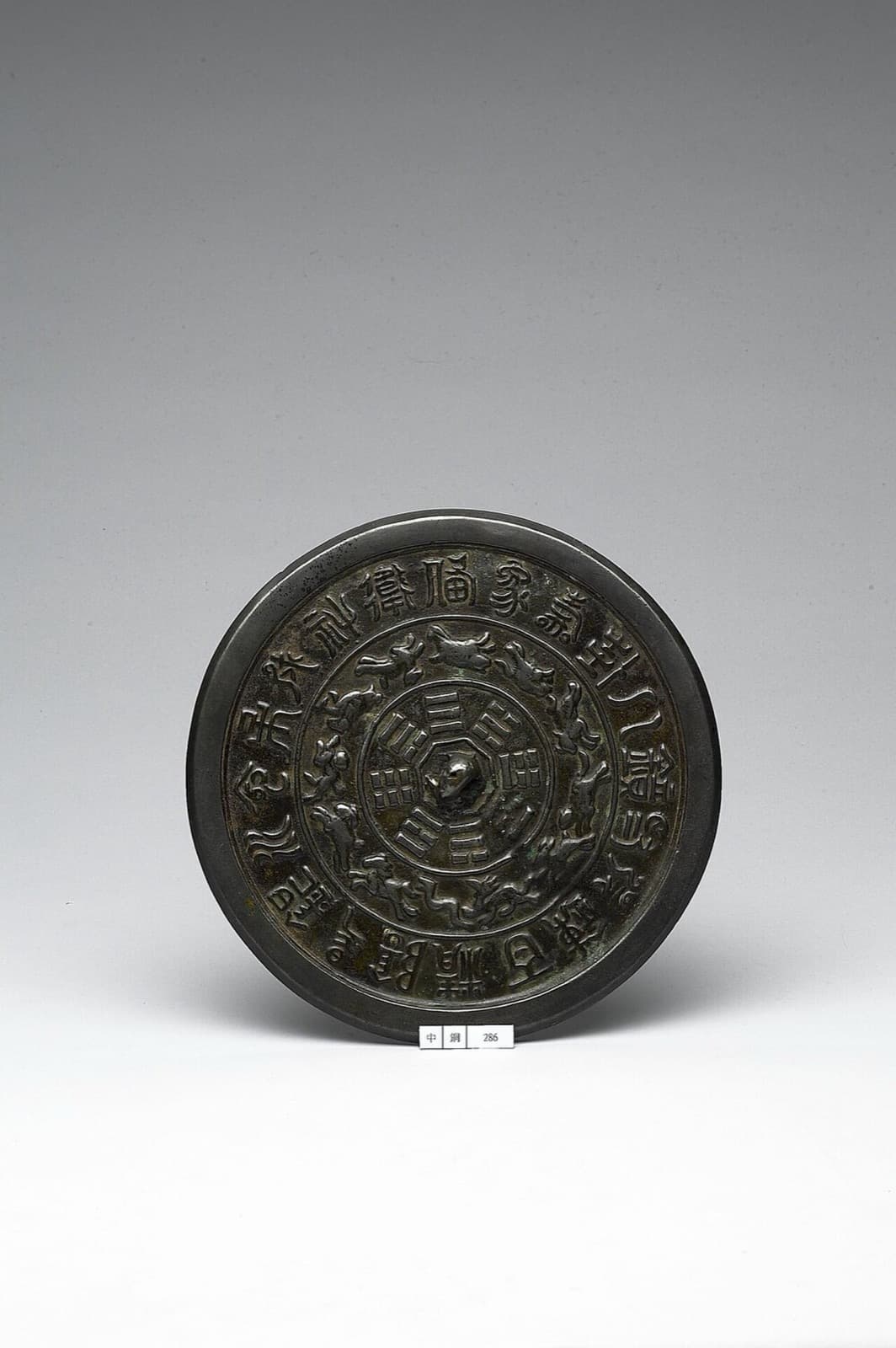
Introduction to the San He Luo Pan
The San He Luo Pan, or Three Harmonies Compass, is one of the most complex and accurate direction-finding tools in traditional Eastern Feng Shui. Unlike a standard compass that only identifies basic cardinal directions, the San He Luo Pan is designed to deeply analyze the relationship between space, time, and energy (Qi) at a specific location.
Origin and Philosophy
The name "San He" (Three Harmonies) originates from three harmony groups in the Earthly Branches:
- Water Group: Shen - Zi - Chen
- Wood Group: Hai - Mao - Wei
- Metal Group: Si - You - Chou
Each harmony group represents a cycle of vital energy and the movement of the Five Elements in nature. The San He Luo Pan is built on this principle, allowing users to determine not just direction but also understand the energetic nature of a specific point.
Detailed Structure
The San He Luo Pan has a complex structure with multiple concentric rings, each containing distinct Feng Shui information.
Main Components
- 24 Mountains Layer: The most important layer, dividing the 360-degree circle into 24 sectors of 15 degrees each. The 24 mountains combine 12 Earthly Branches, 10 Heavenly Stems (excluding Wu and Ji), and 4 Trigrams from the Eight Trigrams (Qian, Kun, Xun, Gen).
- Earth Plate Main Needle: Used for measuring house direction, identifying sitting mountain and facing mountain.
- Human Plate Central Needle: Used for examining elements related to people, especially for determining main door positions and demographic factors.
How to Use the San He Luo Pan
Preparation Before Measuring
To ensure measurement accuracy, follow these principles:
- Avoid magnetic interference: Stand at least 1-2 meters away from electronic devices, cars, and large metal structures.
- Remove metallic objects: Take off watches, rings, necklaces, mobile phones, and other metal items.
- Choose measurement time: Avoid measuring during strong geological activity or geomagnetic storms.
House Direction Measurement Process
According to Feng Shui experts, the measurement process involves:
1. Standing position: Stand with your back to the house, about 1 to 1.5 meters away. 2. Posture: Keep feet shoulder-width apart, hold the compass at waist level. 3. Orient the arrow: The arrow on the plastic ruler points straight ahead (house direction). 4. Rotate the compass: Turn the compass dial until the colored needle aligns with the N (North) mark. 5. Read the measurement: Read the number on the outermost ring aligned with the arrow.
Handling Measurement Errors
Take at least 3 measurements, shifting slightly left or right each time. If results differ:
- Error under 15 degrees: Calculate the average of all readings.
- Error over 15 degrees: You may be affected by electrical devices or underground metal; change position and remeasure.
Practical Applications
Measuring Main Door Direction
Stand at the center of the entrance, back to the interior, facing outward. Steps are similar to house measurement but from a different reference point.
Determining High-Rise Apartment Direction
- Floors 1 to 9: Apartment direction matches the building's overall direction.
- Floors 10 and above: Direction is determined by the widest view, where the main Yang Qi source enters (usually large glass windows).
Direction Reference Table
| Direction | Degree Range |
|---|---|
| North | 337.5 - 22.5 |
| Northeast | 22.5 - 67.5 |
| East | 67.5 - 112.5 |
| Southeast | 112.5 - 157.5 |
| South | 157.5 - 202.5 |
| Southwest | 202.5 - 247.5 |
| West | 247.5 - 292.5 |
| Northwest | 292.5 - 337.5 |
Conclusion
The San He Luo Pan is not just a direction-measuring tool but a symbol of classical Feng Shui wisdom. Mastering this instrument requires combining theoretical knowledge, practical experience, and environmental sensitivity. For beginners, understanding basic compass usage and the core principles of the 24 mountains provides a solid foundation for deeper Feng Shui study.

