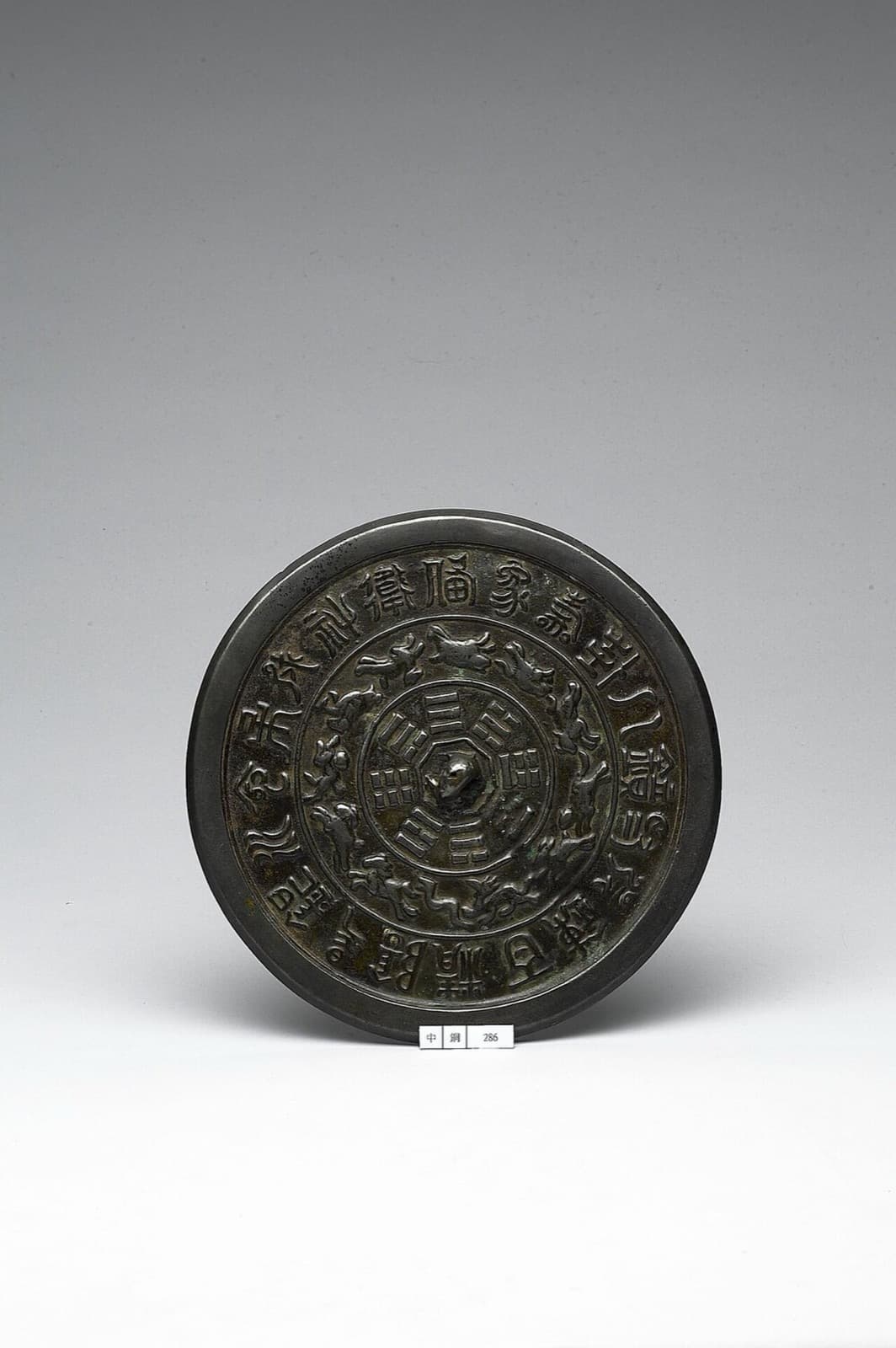
Introduction to the 24 Mountain Directions System and the Position of Giap Mountain
The 24 mountain directions system is a core foundation of geomantic feng shui, widely used to determine the orientation of houses, graves, and architectural structures. This system divides the 360-degree circle into 24 equal sectors, each covering 15 degrees, named by combining the 12 earthly branches, 10 heavenly stems (excluding Wu and Ji, which represent the central Earth palace), and 4 trigrams from the Bagua (Qian, Kun, Gen, Xun).
In this system, Giap mountain (甲) occupies the position from 67.5 to 82.5 degrees on the compass, i.e., in the due East, slightly leaning toward the northeast. Specifically, the Giap sector lies between the Gen trigram (northeast, from 52.5 to 67.5 degrees) and Mao mountain (due East, from 82.5 to 97.5 degrees). Thus, geographically, Giap mountain belongs to the East but sits at the transitional boundary between northeast and due East, giving it distinctive feng shui characteristics.
Basic Attributes of Giap Mountain
Five Elements and Yin-Yang
Giap mountain belongs to the Wood element and carries yang nature. In the heavenly stems system, Giap is the first stem among the ten, representing beginnings, growth, and development of all things. Seasonally, Giap corresponds to spring, when everything sprouts. In color, Giap aligns with the green of plants, a deep green tone.
As a yang Wood stem, Giap mountain carries strong, outward energy, governing growth, expansion, and advancement. Its yang nature makes this mountain inclined toward action, decisiveness, and rarely yielding to difficulties.
Trine and Triple Yuan Relationships
In feng shui, Giap mountain has important relationships with other mountains through the trine bureau and triple yuan dragon. In the trine, the Wood bureau is formed by the trio Hai-Mao-Wei, where Giap lies in the middle sector, closely linked to these two mountains. Specifically:
- Hai mountain (Hai) belongs to Water, is the growth stage of Wood, providing vital energy for the Wood bureau.
- Mao mountain (Mao) belongs to Wood, is the peak prosperity of Wood, representing the height of energy.
- Wei mountain (Wei) belongs to Earth, is the storage vault of Wood, where energy is accumulated.
Giap mountain sits between Hai and Mao in the trine cycle, serving as an intermediate mountain that can connect the energy of these two sectors. In practice, when using Giap mountain, one often examines its relationship with the Water bureau (Hai) and the Wood bureau (Mao) for interpretation.
Regarding the triple yuan dragon, Giap mountain belongs to the Heavenly Yuan dragon (along with Qian, Hai, Mao, At, Xun, Ty, Ty, Nham). Mountains in this group are often prioritized for special uses, especially when combined according to the green dragon principle.
Significance of Giap Mountain in Different Feng Shui Schools
In the Eight Mansions School
The Eight Mansions school divides the 24 mountains into 8 large palaces according to the Bagua, each containing 3 mountains. Giap mountain belongs to the Zhen palace (震), along with Mao and At. Zhen trigram symbolizes thunder, shock, awakening, and new beginnings. Zhen also relates to the eldest son in a family; thus, Giap mountain has particular influence on the eldest son or the male head of the household.
In Eight Mansions, the Zhen palace is an East group house, so Giap mountain is considered part of the East group. People whose ming gua belongs to the East group (Zhen, Xun, Li, Kan) are deemed compatible with building houses facing toward Giap. Conversely, those of the West group (Qian, Kun, Gen, Dui) are generally not encouraged to use this direction as the main house facing.
In the Xuan Kong Flying Star School
The Xuan Kong school uses the 24 mountains to determine the house's fortune over each 20-year period (a period). Each mountain direction has its own flying star pattern, creating different star combinations. Giap mountain belongs to period 3 in the triple yuan nine periods system; thus, when a house sits or faces Giap, the Xuan Kong chart is calculated uniquely.
In Xuan Kong, distinguishing between mountain and facing is crucial. A house facing Giap (i.e., the front faces the Giap direction) is interpreted differently from one sitting Giap (backing onto Giap). Accurately determining the degree within the 15-degree sector decides whether it belongs to the mountain or facing, affecting the entire auspiciousness interpretation.
In the San He School
The San He school emphasizes the relationship among dragon vein, water method, and mountain direction. For Giap mountain, this school examines the Wood bureau in connection with the dragon arriving from the Hai direction and water gathering at Wei. The key principle is that where the dragon comes from, water gathers there, and the mountain direction must correspond to achieve harmony.
Specifically, when the dragon vein enters from the Hai direction (Wood bureau), the mountain direction should face Giap or Mao to form a complete trine. Conversely, if the dragon comes from a direction not of the Wood bureau, using Giap may create conflict and reduce feng shui effectiveness.
Practical Interpretation of Giap Mountain Direction
Determining Sitting Mountain and Facing Direction
In feng shui, the terms sitting mountain (i.e., mountain) and facing direction (i.e., direction) always go together. A house sitting Giap and facing Canh (i.e., back to Giap, front to the opposite Canh) is a common combination. Conversely, a house sitting Canh and facing Giap also exists but is less common.
To determine precisely, a specialized compass is used, placed at the center of the house, and the degree is measured. If the degree falls between 67.5 and 82.5, it is Giap mountain. However, the boundary between mountains (about 3 degrees on each side) is called the void line, often avoided because it is considered an unstable energy zone.
Interpretation Based on Relationship with Dragon Vein and Water Method
Giap mountain is considered good when it meets the following conditions:
- Has an affectionate dragon vein coming from the northeast or due north (Water or Earth generating/supporting Wood).
- Has water gathering or flowing toward the south or southwest (Fire drains Wood energy, creating circulation).
- Has a spacious, open bright hall in front.
Conversely, Giap mountain is deemed poor when encountering:
- A dragon vein from the west (Metal controls Wood).
- Water rushing straight or turning its back at the opposite direction.
- Sharp, pointed objects of Metal nature pointing directly at it.
Impact on Health and Career
In feng shui interpretation, each mountain direction is linked to certain body parts and life areas. Giap mountain, belonging to Wood, relates to the liver, gallbladder, tendons, and eyes. Thus, when Giap is violated or weakened, practitioners often predict issues with the liver, eyes, or tendon-related diseases.
Regarding career, Giap governs growth, entrepreneurship, and expansion. People living in a house with a prosperous Giap mountain often succeed in fields like education, culture, greenery, wooden furniture, or Wood-related industries. They tend to be leaders, pioneers, and enjoy exploring new things.
Giap Mountain in Relation to Other Mountains
Harmony and Conflict
In the 24-mountain system, each mountain has harmonious or conflicting relationships with others. Giap has special harmony with:
- Hai mountain: part of the Wood trine, Hai generates Giap.
- Mao mountain: same Wood element, same trine, mutually reinforcing energy.
- At mountain: same Zhen palace, but At is a yin stem, creating yin-yang complementarity.
Conversely, Giap conflicts with Canh mountain (庚) because Canh belongs to Metal, controlling Giap's Wood, and these two sit opposite on the compass (180 degrees apart). In practice, combining Giap and Canh in the same structure is often avoided due to inherent conflict.
Giap Mountain in Relation to House Facing According to Age
Many people, when checking house feng shui, care whether the facing matches the homeowner's age. The most common method is based on the Eight Mansions mirror, combining the homeowner's ming gua and the house facing. With Giap facing belonging to the East group, homeowners with Chien, Xun, Li, or Kan ming gua are considered compatible. However, this is just one perspective among countless feng shui factors to consider.
Practice and Notes for Using Giap Mountain
Basic Steps for Interpretation
To fully interpret Giap mountain, a feng shui practitioner should follow these steps:
- Measure the exact degree of the mountain direction with a specialized compass, ensuring accuracy within 0.5 degrees.
- Determine the current period (from 2024 to 2043 is period 9, of the Lower Yuan).
- Analyze the dragon vein from far to near, assessing the terrain, water flow, and water gathering points.
- Create a Xuan Kong flying star chart for the current and future periods.
- Consider the ming gua of the homeowner and family members.
- Cross-check with surrounding landscape features like roads, utility poles, large trees, and neighboring structures.
Common Mistakes to Avoid
Several common errors when interpreting Giap mountain include:
- Relying only on the facing while ignoring the sitting mountain, though feng shui always considers both simultaneously.
- Failing to distinguish boundaries between Giap and Mao or Gen, leading to misidentification.
- Rigidly applying rules about which ages suit Giap without considering each house's specific context.
- Overfocusing on choosing a good direction while neglecting dragon vein and water method, which many schools consider more important than direction.
Conclusion
Giap mountain in the 24-mountain system carries multiple layers of meaning, from its geographic position at the northeast-east boundary to its yang Wood nature with strong initiating energy. Interpreting Giap requires combining methods from different feng shui schools, along with understanding the dragon vein, water method, and specific context of each structure.
The key point is that feng shui is not an absolute exact science, and applying its principles should be done flexibly, integrating modern science and understanding of the actual living environment. Mountain direction is only one of many factors influencing life quality, and its role in determining fortune or wealth should not be absolutized.