What is feng shui and where does it come from?
Feng shui is a traditional body of knowledge about how people choose and arrange living, working and dwelling spaces in harmony with the surrounding landscape and with the flow of qi believed to move through the environment. The name combines "wind" and "water," two natural elements considered highly influential for settled life. On Nhat Nguyet, this topic is presented as a branch of cultural and reference knowledge, not a scientifically verified discipline, and any conclusions about wealth, health or marriage are relative.
Feng shui took shape and developed in the East Asian cultural context, tied to the need to choose land for houses, villages, tombs and daily activity. Over centuries it branched into several schools with different approaches, from observing mountain and river landforms to calculating directions and time cycles. Learners today often approach feng shui as a way to read space and balance a sense of ease, rather than as a tool to guarantee outcomes.
What foundational principles does feng shui rest on?
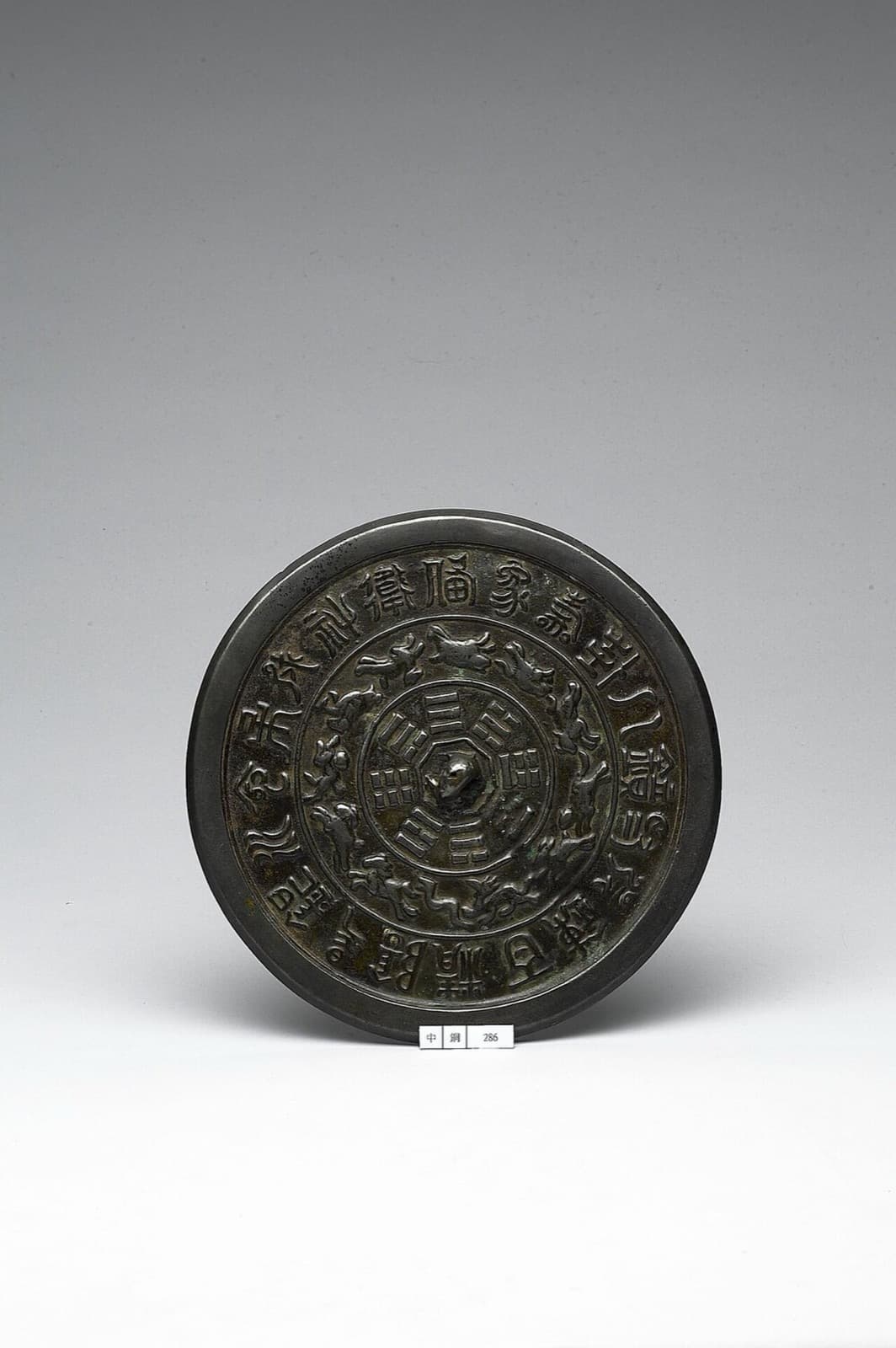
Four pillars are commonly cited: yin-yang, the five elements, the bagua and the theory of qi. Yin-yang describes two opposing yet complementary sides: light and dark, movement and stillness, hot and cold. The five elements are Metal, Wood, Water, Fire and Earth, operating through generating and controlling cycles, used to explain relationships between spatial factors and between people and their environment. The bagua consists of eight trigrams, Qian, Kan, Gen, Zhen, Xun, Li, Kun and Dui, each linked to a direction and a set of qualities. The theory of qi views the environment as carrying a flow of energy, and feng shui as the art of gathering qi where needed and avoiding its dispersal or clash.
These principles are not separate. When assessing a house, practitioners usually combine all four rather than relying on one factor. This is also why the same house direction may be read as favorable for one person and less so for another, depending on personal gua, time cycles and specific context.
How are the generating and controlling cycles of the five elements applied?
The five elements are the most common classification tool in applied feng shui. The generating cycle runs Wood generates Fire, Fire generates Earth, Earth generates Metal, Metal generates Water, Water generates Wood. The controlling cycle runs Wood controls Earth, Earth controls Water, Water controls Fire, Fire controls Metal, Metal controls Wood. From these two cycles, people derive suitable colors, materials, shapes, plants and layouts for each element.
In daily life, the five elements appear in many sub-topics: identifying traits of people of Metal, Wood, Water, Fire or Earth destiny; choosing car colors, wedding dates, or balancing marital relationships; or coordinating colors and materials for a home. Note that this is a traditional interpretation, not a scientific diagnosis or forecast. Its practical value often lies in giving householders another frame of reference to observe and adjust their living space.
What are the eight-mansion school and East/West destiny groups?
The eight-mansion school, or Bat Trach, is based on the personal gua number calculated from birth year and gender. Under this classification, people fall into two groups: East Four Destinies, comprising Kan, Li, Zhen and Xun, and West Four Destinies, comprising Qian, Kun, Gen and Dui. Each group favors four directions and avoids the other four. The eight mansions are Kan, Li, Zhen, Xun, Qian, Kun, Gen and Dui, each with its own characteristics and compatible directions.
Bat Trach is often used when choosing house orientation, kitchen direction, altar direction or desk direction. In practice, however, a house direction also depends on the land, traffic, light and climate, so Bat Trach is only one part of the whole picture. Readers should treat it as a reference suggestion, not a mandatory condition for a good living space.
What are the 24 mountains and the feng shui compass used for?
The 24 mountains divide the 360-degree circle into 24 sectors of 15 degrees each, used to identify directions more precisely than the eight basic ones. Each mountain is linked to an element, a trigram and a specific degree range; for example, the Zi mountain sits due north, Wu due south, Mao due east and You due west. The others, such as Jia, Yi, Yin, Shen, Si, Hai, Chen, Xu, Chou, Wei, Geng, Xin, Ren, Gui, Qian, Kun, Gen, Xun and Ding, each have their own traits and are interpreted according to combinations.
To measure these mountains, practitioners use the feng shui compass, also called luopan. At least two common lines exist, the San Yuan compass and the San He compass, differing in the number of rings and information layout. Reading the compass requires background knowledge of the bagua, the five elements and degrees, so it is usually considered advanced and suited to those with basics.
How do the landform school and Flying Star differ?
The landform school, or Loan Dau, focuses on geographical shape. It observes dragon veins, acupuncture points, surrounding hills and water to assess a site, often tied to choosing a dwelling, construction or burial place. The Five Secrets system is one of its classic frameworks, comprising Dragon, Point, Sand, Water and Direction. This approach leans toward observing landscape, terrain and water flow.
Flying Star, by contrast, leans toward calculating time cycles. It uses nine stars from One White to Nine Purple, each with an element and a set of auspicious or inauspicious meanings, flying into palaces by period. Stars such as Five Yellow, Two Black and Three Jade are often seen as inauspicious and needing remedies, while One White, Six White, Eight White and Nine Purple are often linked to favorable qi when well placed. The two schools are not mutually exclusive and can complement each other depending on purpose and level.
How is feng shui applied to homes and living spaces?
In homes, feng shui is usually applied in five main areas: choosing orientation, arranging doors and pathways, placing the kitchen and bedrooms, positioning the altar and worship space, and handling various forms of sha qi. Directions such as Southeast, Northwest, Northeast, Southwest, North, South, East and West each have their own traits and are assessed for compatibility through Bat Trach. Common sha qi patterns such as Heaven Chopping Sha or Piercing Heart Sha typically involve straight roads, corridors or gaps aimed directly at a house, and remedies usually involve adjusting obstacles, plants or layout.
Beyond homes, feng shui extends to offices, gardens and even cars. A common thread is aiming for balance, openness and a sense of safety, rather than a fixed formula for every case. Each space has its own traits, so application should be flexible and consciously treated as reference.
Where should beginners start when studying feng shui?
A sensible path for beginners is to first grasp the foundational concepts: yin-yang, the five elements, the bagua and qi. Then study Bat Trach to learn how to determine personal gua and destiny group, since this part is closest to the needs of choosing house or desk orientation. Once familiar, one can expand to the 24 mountains, the compass, and then to advanced schools such as Loan Dau and Flying Star.
It is important to stay clear-headed. Feng shui is traditional knowledge with cultural and reference value, but it does not replace practical factors such as structural integrity, lighting, ventilation, safety and budget. It should not be seen as a way to guarantee wealth, health or marriage, nor should it dominate major decisions in an extreme way. Read to understand, select to apply; that is the most appropriate approach.