


Offering on the 2nd and 3rd days of Tết
Also called: Cúng cơm ba ngày Tết, Mùng 2 Tết mẹ, Mùng 3 Tết thầy
- Lunar New Year (Tết)
Culture and belief A record of custom.
By custom, on each of the three days of Tết there is a meal offering to ancestors. Many guides post separate prayer texts for ancestors, deities, and Thần Tài for the 2nd and 3rd days; the farewell ceremony for the ancestors on the 3rd day belongs to the category of burning votive paper.
At a glance
- When it is held
- The 2nd and 3rd days of the first lunar month
- For whom
- Ancestors, deities, Thổ Công (Earth God of the house); some households also pray to Thần Tài (God of Wealth) and Táo quân (Kitchen Gods)
- Where
- Ancestral altar, Thổ Công altar, Thần Tài altar
Each family and each region may do it differently.
The offering tray
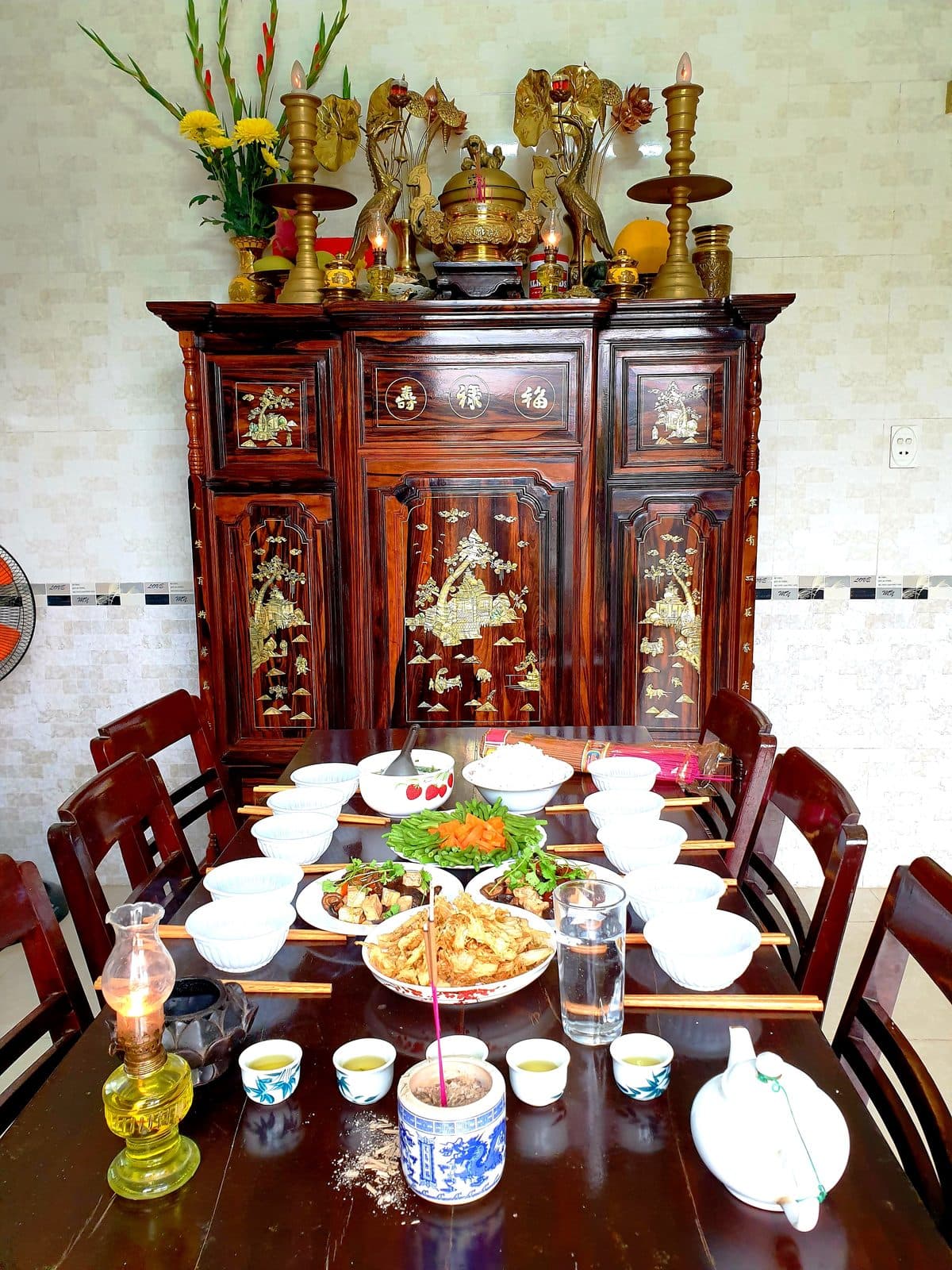
.jpg)
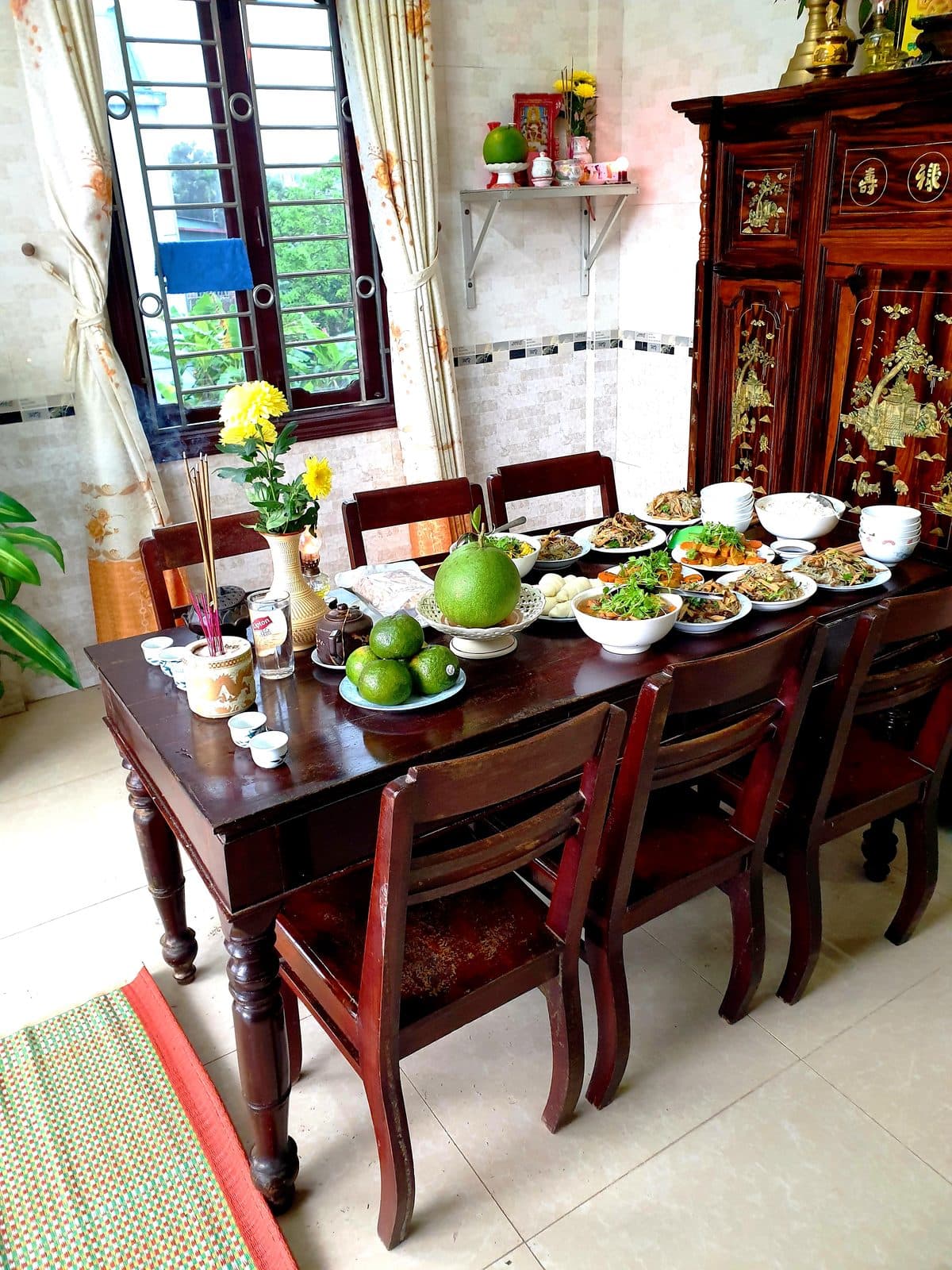
_(3).jpg)
- When
- The 2nd and 3rd days of the first lunar month; on the 3rd day, the offering should be made in the morning, before 12 noon
- Customary hour
- the offering on the 3rd: early morning or before 12:00 noon
| Offering | Vegetarian or not | Notes |
|---|---|---|
| Incense, lamps, candles | ||
| Incense, fresh flowers, lamps and candles | Hoa đào (peach blossoms) in the North, hoa mai (apricot blossoms) in the South | |
| Tea, rice wine, water | ||
| Five-fruit tray, tea, wine, water | Vegetarian | |
| Xôi (steamed sticky rice) and cakes | ||
| Bánh chưng (square sticky rice cake) or bánh tét (cylindrical sticky rice cake), mứt (candied fruits), xôi chè (steamed sticky rice and sweet soup) | Meat or fish | Bánh chưng in the North, bánh tét in the South |
| Meat and savoury dishes | ||
| Boiled chicken, pork, giò chả (Vietnamese ham and sausage) | Meat or fish | In the North, add dưa hành (pickled onions); in the South, add canh khổ qua nhồi thịt (bitter melon soup stuffed with meat) |
Steps of the rite
- Reciting the prayerPray to deities, Thổ Công
- Reciting the prayerPray to ancestors
- Reciting the prayerPray to Thần Tài; on the 3rd day, some households also pray to Ông Táo
Good to know
- Where the household deities have their own altar, they are prayed to separately, or incense is lit there first and one combined prayer is said at the ancestral room
What is avoided
No source we have found describes what is avoided for this rite.
The custom
By custom, on each of the three days of Tết the ancestors receive one offering. The book Việt Nam phong tục (1915) notes that most households keep Tết for three days; younger sons whose parents have died bring a feast to the eldest son's house on the 2nd day to offer to their parents, poorer people bring betel, areca, votive paper and incense, and the 3rd day is like the 2nd.
The saying 'the 1st day of Tết for father, the 2nd for mother, the 3rd for teachers' describes how the first days are divided: on the 2nd descendants visit the maternal grandparents and mother's relatives, on the 3rd they visit their teachers. Many households combine the offering on the 3rd with the thanksgiving rite that sees off the ancestors.
Where the sources differ
- Order of prayers when deities and ancestors share one altar: Báo Hà Tĩnh writes to pray to deities first, then ancestors; the article for the 2nd day in this same newspaper places the ancestor prayer text first
Questions
Who is honoured on the 2nd day of Tết?
On the 2nd day the family offers a feast at home to the ancestors, the deities, Thổ Công (Earth God of the house) and Thần Tài (God of Wealth); each has its own prayer text.
Is a meal offered on the 2nd day of Tết?
By custom, yes: on each of the three days of Tết the ancestors receive one offering. The book Việt Nam phong tục (1915) records that younger sons whose parents have died bring a feast to the eldest son's house on the 2nd day to offer to their parents, and the same on the 3rd.
What time is the offering on the 3rd day of Tết made?
By custom, the offering on the 3rd is made early in the morning or before 12 noon. For Tết Đinh Mùi, the 3rd day falls on 8 February 2027 (8/2/2027).
What is the offering on the 3rd day of Tết called?
The offering on the 3rd is usually called the thanksgiving to the ancestors (lễ tạ ông vải) or the hóa vàng rite, seeing the ancestors off after the Tết days. The North calls it the offering of hóa vàng to the ancestors, the Centre the farewell to the grandparents, and the South cúng tất.
What is the 2nd day of Tết for?
Following the saying 'the 1st day of Tết for father, the 2nd for mother, the 3rd for teachers', the 2nd is the day descendants visit the maternal grandparents and mother's relatives, while at home the ancestors and deities still receive offerings. A Dân trí article notes this is a familiar northern custom.
Communities and regions
More about Offering on the 2nd and 3rd days of Tết
Sources
- Văn khấn mùng 2 Tết Bính Ngọ 2026 (baohatinh.vn)
- Văn khấn mùng 3 Tết Bính Ngọ 2026: hóa vàng, cúng gia tiên, Thần Tài, ông vải (baohatinh.vn)
- Văn khấn mồng 1 Tết Bính Ngọ 2026 theo Văn khấn cổ truyền Việt Nam (baohatinh.vn)
- Việt Nam phong tục, mục XII Tứ thời tiết lạp, Phan Kế Bính, 1915 (vi.wikisource.org)
- Sự khác biệt thú vị trong văn hóa Tết 3 miền (dantri.com.vn, 18/01/2017)
- “Cúng tất” trong ngày Tết cổ truyền ở ba miền (Pháp Luật TP.HCM, tuoitre.vn/plo)
Part of the open datasets Types of Vietnamese offering rites and Vietnamese offering procedures, licensed CC BY 4.0.
More ritesDeath anniversaries, Tết, the home, business, the life cycle, village and ethnic rites.Open