


Lễ cúng xe (vehicle offering ceremony)
Also called: Cúng xe mới, Cúng xe đầu năm, cuối năm, Cúng xe hàng tháng
- Work and trade
Culture and belief A record of custom.
According to folk belief, when buying a new vehicle or at the beginning or end of the year, the vehicle owner sets up an offering in front of the vehicle to present it to the deities and to pray for safe travel. People who use vehicles for business often make offerings every month.
At a glance
- When it is held
- The day of receiving the new vehicle; the beginning of the year, the end of the year; people who use vehicles for business make offerings on the 1st and the full moon, in the South on the 2nd and the 16th
- Where the date differs
- The South makes the offering on the 2nd and 16th of every lunar month
- For whom
- Thần linh (deities), Thổ địa (Earth God), Thành hoàng bản cảnh (tutelary deity of the place where the vehicle is parked); gia tiên (ancestors); các vong linh quanh vùng (spirits of the surrounding area)
- Where
- Courtyard or outdoors
- Who makes the offering
- The vehicle owner
Each family and each region may do it differently.
The offering tray
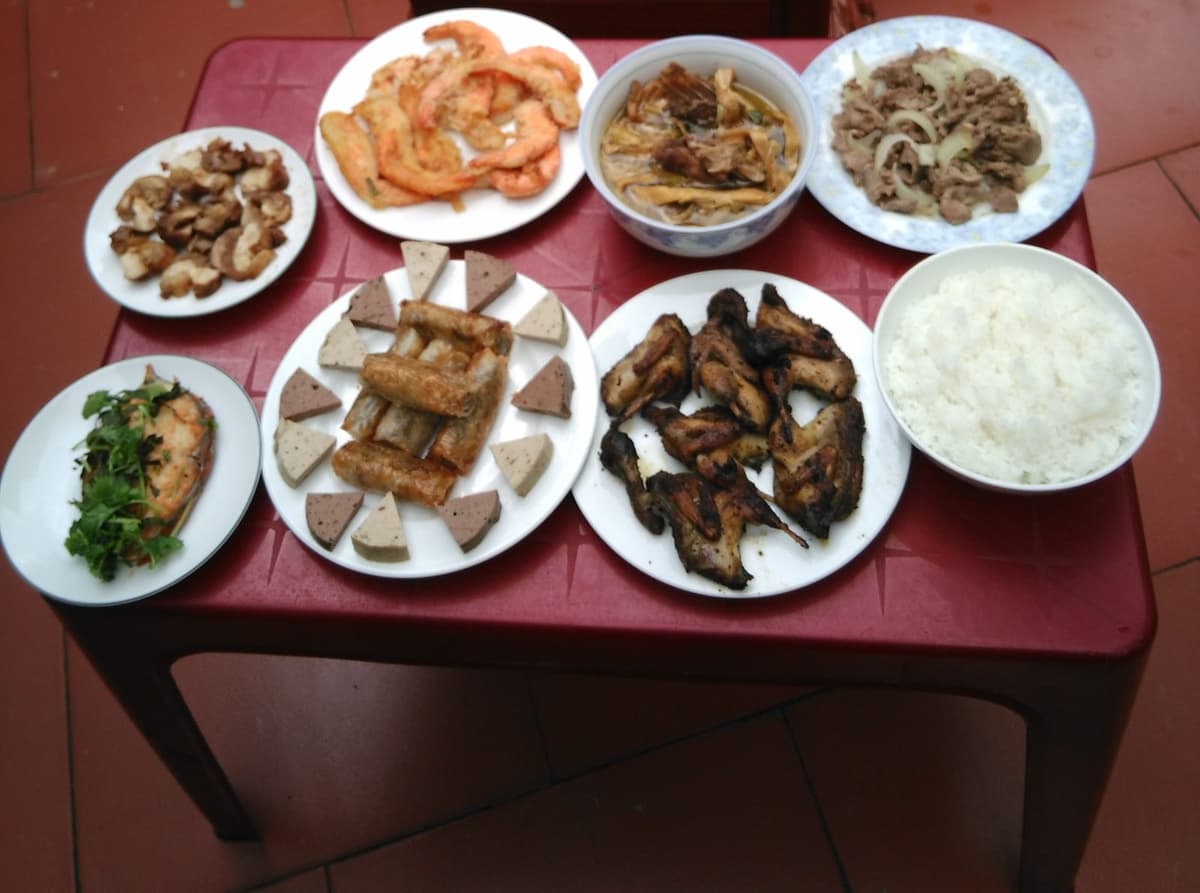
.jpg)
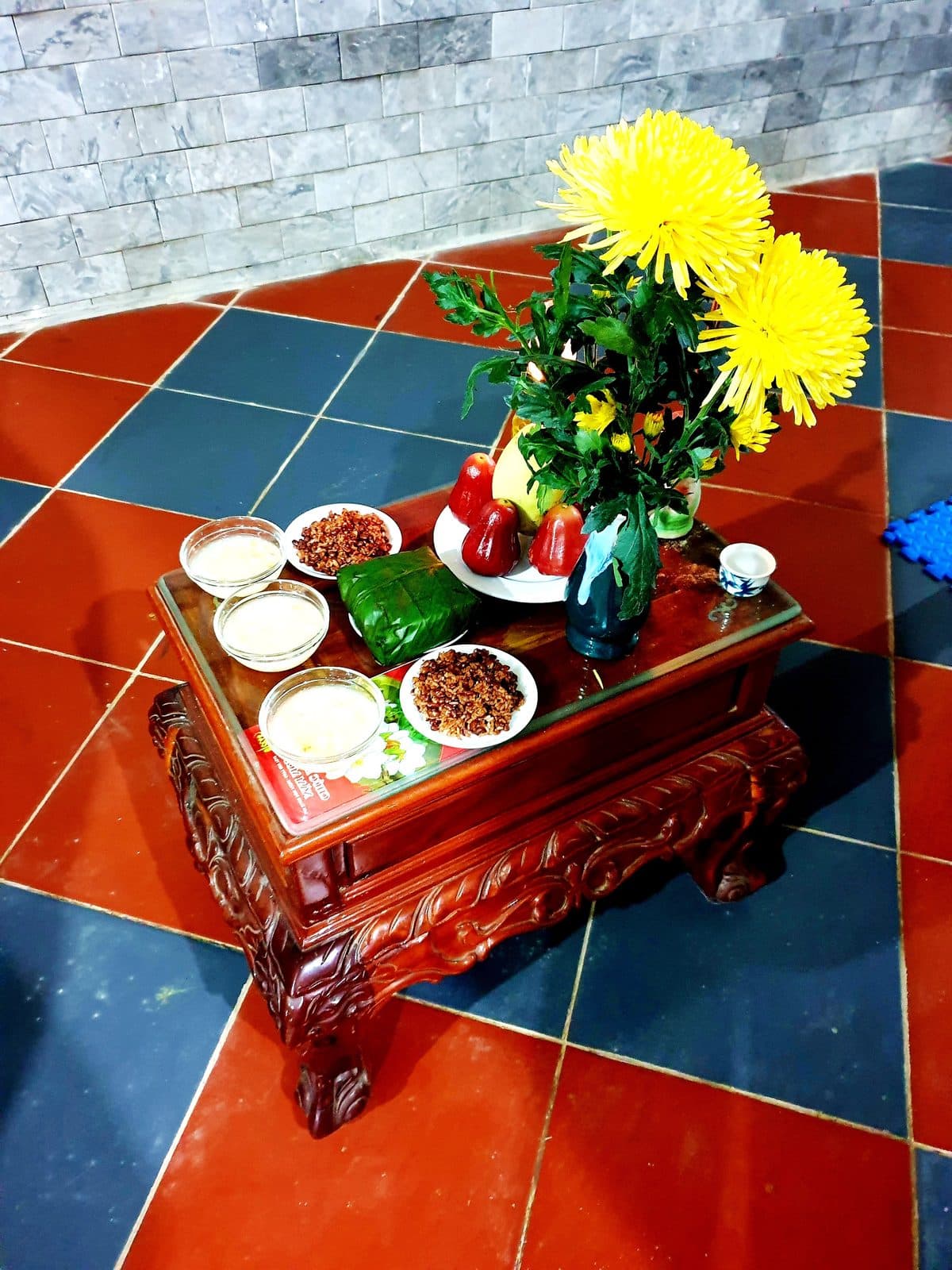
_(1).jpg)
Nationwide
- When
- The day of receiving the new vehicle; people who use vehicles for business make additional offerings on the 1st and the full moon of each month, at the beginning of the year and at the end of the year (the end of the year is usually on the 23rd of the twelfth lunar month)
- Where the offerings are set
- Outdoors in the yard, in front of the vehicle; the front of the vehicle faces the road. If the space is narrow, the offering is made inside the house
| Offering | Quantity | Vegetarian or not | Notes |
|---|---|---|---|
| Flowers | |||
| Flower vase | 1 vase | Yellow chrysanthemums, cát tường (lucky flowers), coins | |
| Fruit | |||
| A plate of fruit | 1 plate | Vegetarian | |
| Meat and savoury dishes | |||
| Savory dishes: heo quay (roast pig), gà luộc (boiled chicken); or vegetarian dishes | 1 plate | Meat or fish | |
| Votive paper | |||
| Giấy tiền vàng bạc (paper money and votive paper) | 1 stack | ||
| Rice and salt | |||
| Rice and salt | 1 plate | Vegetarian | |
| Tea, rice wine, water | |||
| rice wine | 3 or 5 cups | ||
| Tea | 3 or 5 cups | Vegetarian | |
| Nước lọc (purified water) | 1 glass | Vegetarian | |
| Incense, lamps, candles | |||
| Nhang (incense) | |||
| Đèn cầy đỏ (red candles) | 2 sticks | ||
| Xôi (steamed sticky rice) and cakes | |||
| Xôi (steamed sticky rice), chè (sweet soup) | Vegetarian | According to some guides | |
South
- When
- People providing transport services in the South make regular vehicle offerings on the 2nd and the 16th of the lunar month each month (other places: the 1st and the full moon)
- Where the offerings are set
- On ordinary days incense is lit at a small altar set behind the windscreen inside the vehicle (Báo Tin tức)
| Offering | Vegetarian or not | Notes |
|---|---|---|
| Tea, rice wine, water | ||
| Salt, tea, plain water, white rice wine and votive paper money | Vegetarian | Required. Báo Tin tức: included whichever way the offering is made |
| Xôi (steamed sticky rice) and cakes | ||
| Savoury tray: shredded chicken, roast pork, bread, bánh hỏi (thin rice vermicelli) and chicken xôi | Meat or fish | Optional. Larger businesses |
| Vegetarian tray: rice porridge, sugar and sweet cakes | Vegetarian | Optional |
| Meat and savoury dishes | ||
| Boiled pork, shrimp and duck eggs | Meat or fish | Optional |
| Offering for a new vehicle: 1 vase of fresh flowers, 1 plate of fruit, 1 plate of roast pork or boiled chicken or boiled pork, 1 stack of votive paper money, 3 cups of rice wine, 3 cups of tea and 1 plate of white salt | Meat or fish | |
| Flowers | ||
| A vase of red ixora flowers (countryside); in towns various flowers such as marigold, chrysanthemum and white tuberose | ||
| On ordinary days: flowers and a plate of fruit on the altar in the vehicle | Vegetarian | |
Steps of the rite
Used across Vietnam, Folk practice
- Laying out the offeringsPrepare the place for the ceremony, park the vehicle with its front facing out, set up the offering tray in front of the vehicle
- Reciting the prayerPour tea, pour wine, light the lamps and incense, read the prayer text
- Burning votive paperWhen the incense has burned about two thirds, burn the votive paper
- Scatter salt and rice around the vehicle
Southern Vietnam, Folk practice
- PreparationAccording to a truck driver in Cần Thơ (Báo Tin tức): before the offering the vehicle is washed clean and the offerings neatly arranged on the tray
- The vehicle's lights stay on throughout the offering; afterwards the horn is sounded 3 times before the tray is cleared (same account)
Good to know
Used across Vietnam, Folk practice
- Safety (fire, burning votive paper)Trần Thị Kim Hoa (VnExpress) cautions against placing fierce-animal statues, sharp objects, oversized items that block the view, or flammable bottles in the vehicle
Southern Vietnam, Folk practice
- Safety (fire, burning votive paper)According to Báo Tin tức, many owners no longer burn incense at the altar inside the vehicle as before, to guard against fire
What is avoided
- Before lighting the fire to burn incense, one should check whether there is a smell of petrol (according to some guides)
The custom
According to Báo Tin tức (Vietnam News Agency), in the South road-transport operators keep the custom of making offerings for their vehicles on the 2nd and 16th of every lunar month; many southern residents also hold an offering for a newly bought vehicle, as a way of presenting the family's new possession to the supernatural powers.
Vietnamese-studies scholar Trần Thị Kim Hoa (VnExpress) says the vehicle offering is not a request for protection from the vehicle itself but a report to the ancestors on the fruits of one's labour, a thanksgiving and a prayer for safety, together with the hope that the deities will protect the family on the road.
Where the sources differ
- Number of trays: one guide notes that many places set out two trays, one facing into the house to present to the deities and ancestors, one facing out for the wandering spirits on the road; another guide notes one tray at the altar inside the house, one tray outdoors in front of the vehicle; VOH describes only one tray.
Questions
On which days of the month is the vehicle offering made?
Transport workers usually make the offering on the 1st and the full moon of every month; in the South it is on the 2nd and the 16th (VOH). Báo Tin tức (Vietnam News Agency) also notes that road-transport operators in the South keep the custom of offering on the 2nd and 16th of the lunar month.
In the South, what is offered for a newly bought vehicle?
According to Báo Tin tức, the offering for a new vehicle in the South usually has 1 vase of fresh flowers, 1 plate of fruit, 1 plate of roast pork or boiled chicken or boiled pork, 1 stack of votive paper money, 3 cups of rice wine, 3 cups of tea and 1 plate of white salt.
Where is the vehicle offering made, and which way does the vehicle face?
Usually in the yard; where space is limited it is done indoors. The front of the vehicle usually faces the main road (VOH).
Can the vehicle offering be vegetarian?
According to Báo Tin tức, some vehicle owners in the South make a vegetarian offering of rice porridge, sugar and sweet cakes; there is no fixed rule for the offerings, but whichever way it is made it includes salt, tea, plain water, white rice wine and votive paper money.
Communities and regions
Sources
- Văn khấn cúng xe cuối năm, đầu tháng, cúng xe mới (voh.com.vn)
- Bài cúng xe mới, bài cúng xe hàng tháng (hoatieu.vn)
- Mâm cúng xe (docungtamlinh.com.vn)
- Văn khấn cúng xe máy mới mua (docungtamlinh.com.vn)
- Nên cúng ôtô mới như thế nào? (vnexpress.net)
- Tục cúng xe ở Nam Bộ (baotintuc.vn, Thông tấn xã Việt Nam)
Part of the open datasets Types of Vietnamese offering rites and Vietnamese offering procedures, licensed CC BY 4.0.
More ritesDeath anniversaries, Tết, the home, business, the life cycle, village and ethnic rites.Open