


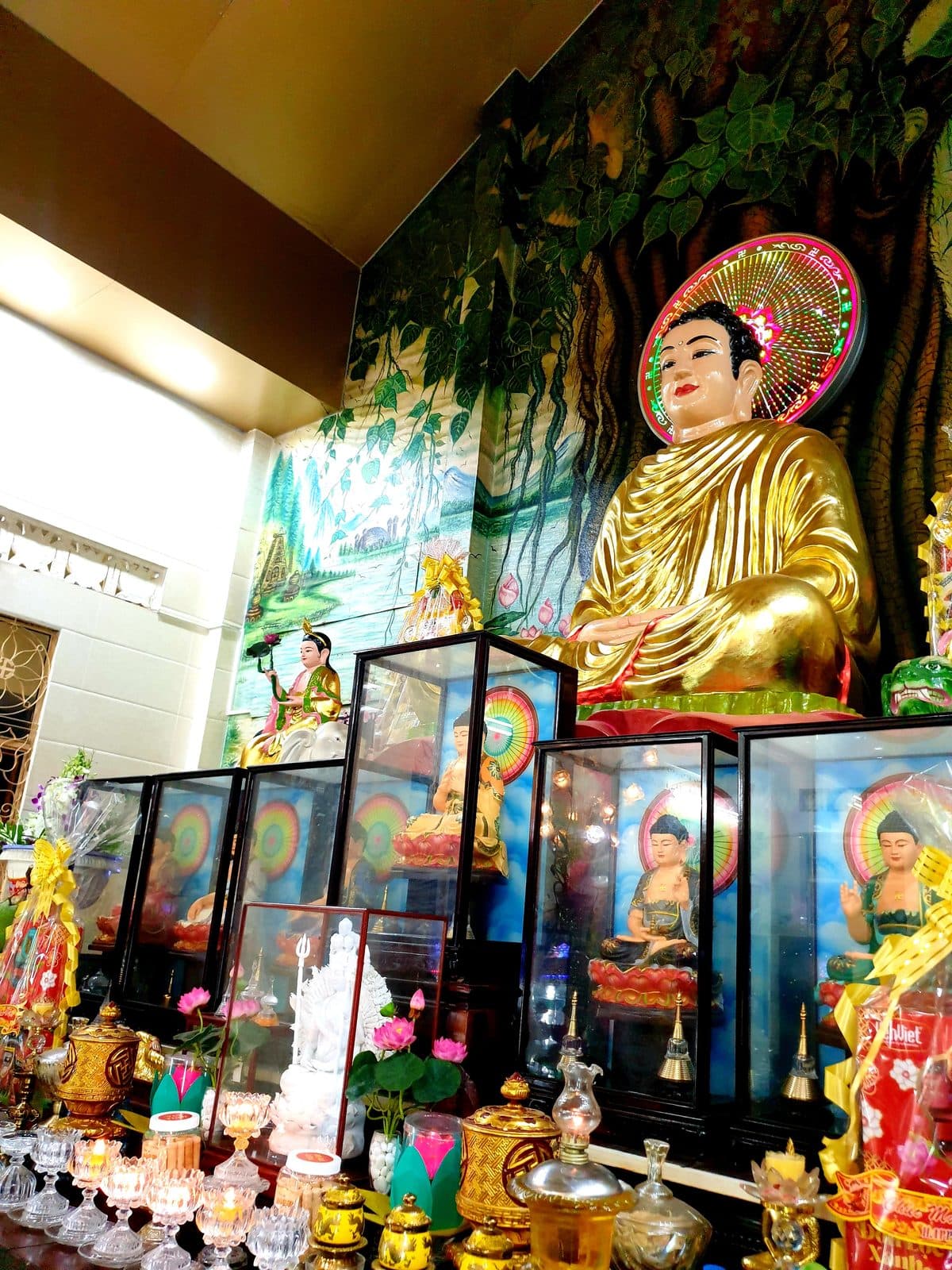
Going to the pagoda, making offerings to the Buddha at the Tam Bảo (Three Jewels) altar
Also called: Văn khấn ban Tam Bảo, Văn khấn đi chùa, Đi lễ chùa đầu năm
- Pagodas, communal houses, temples and shrines
Culture and belief A record of custom.
By custom, people going to the pagoda prepare vegetarian offerings, make offerings at the Đức Ông (the Venerable) altar first, then go up to the main hall to make offerings to the Buddha, and afterward to the other altars. The prayer text at the Tam Bảo altar includes a repentance text (Văn khấn lễ Phật) and a prayer for peace and good fortune, with a sớ (petition) offered.
At a glance
- When it is held
- On the fifteenth day and the first day of the lunar month, on Tết holidays, at the beginning of the year, and when there is an important matter
- For whom
- Tam Bảo (Three Jewels) at the main hall: Đức Phật Thích Ca (Shakyamuni Buddha), Đức Phật A Di Đà (Amitabha Buddha), Đức Phật Dược Sư (Medicine Buddha), Buddhas of the ten directions, Quán Thế Âm Bồ Tát (Avalokiteshvara Bodhisattva), chư Hiền Thánh Tăng (the noble and holy sangha), Hộ pháp (Dharma protectors)
- Where
- Pagoda
Each family and each region may do it differently.
The offering tray
_(1).jpg)

- When
- On the fifteenth day and the first day of the lunar month, on Tết holidays, and when there is an important matter
| Offering | Vegetarian or not | Notes |
|---|---|---|
| Xôi (steamed sticky rice) and cakes | ||
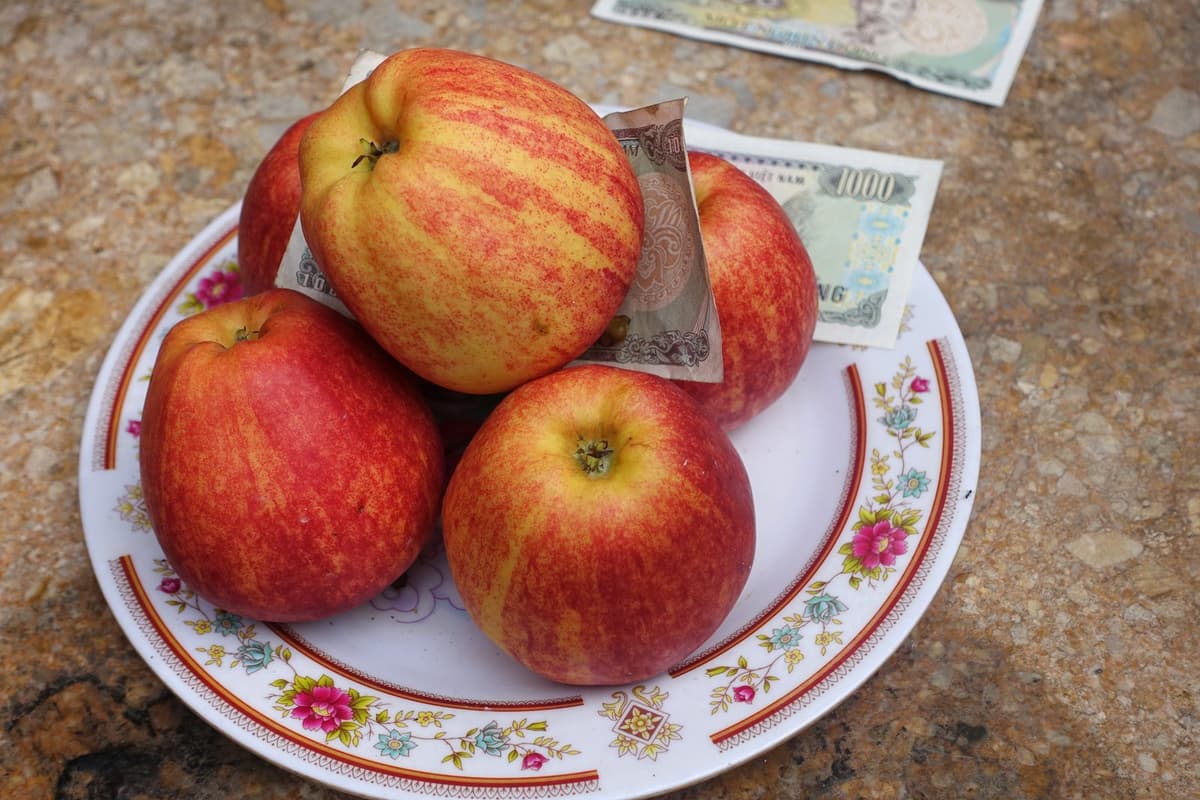
| Incense, fresh flowers, ripe fruit, oản phẩm (rice-flour offerings), xôi chè (steamed sticky rice and sweet soup) | Vegetarian | Required. Vegetarian offerings; only vegetarian and pure offerings are placed at the main hall |
| Flowers | ||
| Lotus flowers, huệ flowers (tuberose), mẫu đơn flowers (peony), ngâu flowers (Aglaia) | Do not use mixed flowers or wild flowers | |
| Meat and savoury dishes | ||
| Savory offerings (chicken, giò, chả) | Meat or fish | Optional. Only placed at the altar of the Thánh, the Mẫu, or the Đức Ông altar if the pagoda has one; not placed at the Buddha hall |
| Votive paper | ||
| Vàng mã (votive paper), tiền âm phủ (hell money) | Optional. Not offered at the Buddha and Bodhisattva altars; if there is any, it is placed at the altar of the Thần linh, the Thánh Mẫu, or the Đức Ông altar | |
| Objects | ||
| Donation money | Put into the merit box, not placed on the main altar of the main hall | |
Steps of the rite
- Lighting incensePlace the offerings, light incense, and make offerings at the Đức Ông altar first
- Lighting incensePlace the offerings on the main altar of the main hall, light the lamps and incense, strike three rounds of the bell, then make offerings to the Buddhas and Bodhisattvas
- Lighting incenseLight incense at the other altars of the Bái Đường (worship hall), three or five offerings at each altar; if the pagoda has a Mẫu điện or Tứ Phủ, go there to place offerings
- Lighting incenseMake offerings at the Tổ (patriarch) shrine (nhà Hậu)
- Clearing the offeringsMake a farewell offering, lower the offerings, greet the monks, and donate according to one's heart
- Clearing the offeringsWhen lowering the offerings: wait about one incense stick's time, bow three times before each altar, burn the sớ, then lower the offerings from the outer altars to the main altar
Good to know
- Safety (fire, burning votive paper)Many pagodas do not allow incense inside for safety; visitors burn it at the large censer in front of the pagoda
What is avoided
- OfferingsDo not prepare savory offerings (tam sinh feast, meat, chicken, giò, chả) to offer to the Buddha
- OfferingsDo not place real money, hell money, or votive paper on the Buddha and Bodhisattva altars
- OfferingsOn the full moon of the seventh lunar month, do not prepare hình nhân thế mạng (substitute effigies)
- ConductBefore the day of offering to the Buddha, one should keep pure: eat vegetarian food, keep the precepts, do good deeds
The custom
Phan Kế Bính (1915) describes village pagodas of the early 20th century: the central bay is for the Buddha and a side bay for Đức Ông (also called Đức Chúa, that is the Earth God); each year at the Đoan dương festival and at New Year villagers brought oản rice cakes and bananas to offer to the Buddha; on full-moon and first days the pagoda offered oản, then gave each lay sister a share of oản and a banana, called lộc Phật (the Buddha's blessing).
Where the sources differ
- On savory offerings at the outer altars of the main hall: one guide writes that savory offerings are accepted if offered only at the altars of the Thánh, the Mẫu, and the Đức Ông; another advises not to use savory food when going to the pagoda, and if one wants to use it, to buy vegetarian food shaped like chicken, giò, and the offerings to the Thành Hoàng and Thư điền also use vegetarian food.
- Within one Buddhist guidance article: one passage says simple savoury offerings are usually placed at the Đức Ông altar, a later passage says no savoury offerings at all in the pagoda, not even at the Đức Ông altar
Communities and regions
More about Going to the pagoda, making offerings to the Buddha at the Tam Bảo (Three Jewels) altar
- Festival customsGoing to the Pagoda at the Start of the Year: What Offerings to Prepare and Which Altar to Worship First?
- Festival customsRằm Tháng Giêng (Tết Nguyên Tiêu): The First Full Moon and Temple-Going Traditions
- Folk beliefVía Ngọc Hoàng on the 9th of the First Lunar Month and Worship at Chùa Ngọc Hoàng in Ho Chi Minh City
Sources
- Văn khấn tại chùa (vankhan.vn)
- Bài khấn đi lễ chùa (hoatieu.vn)
- Văn khấn khi đi lễ chùa đầu năm chuẩn nhất (phatgiao.org.vn)
- Việt Nam phong tục, Thiên II, mục VI. Chùa chiền, Phan Kế Bính 1915 (vi.wikisource.org)
Part of the open datasets Types of Vietnamese offering rites and Vietnamese offering procedures, licensed CC BY 4.0.
More ritesDeath anniversaries, Tết, the home, business, the life cycle, village and ethnic rites.Open