


Offering incense and praying to ancestors on ordinary days
Also called: Văn khấn thờ cúng gia tiên, Xin gia tiên phù hộ, Cáo gia tiên, Thắp hương gia tiên hằng ngày
- Ancestors and death anniversaries
Culture and belief A record of custom.
By custom, apart from giỗ (death anniversary) and Tết, descendants still offer incense at the ancestors' altar on ordinary days and whenever the household has a matter, to remember and report to the ancestors. Offerings depend on circumstances; the prayer states clearly the date, the name of the person praying, the reason, and those invited.
At a glance
- When it is held
- Any day the family offers incense at the ancestors' altar: ordinary days, the first and fifteenth days of the lunar month, or when the household has a matter to report (marriage, childbirth, building a house, going far away, examinations)
- For whom
- Ancestors on both the paternal and maternal sides, grandparents, parents, and the souls worshipped at the ancestors' altar
- Where
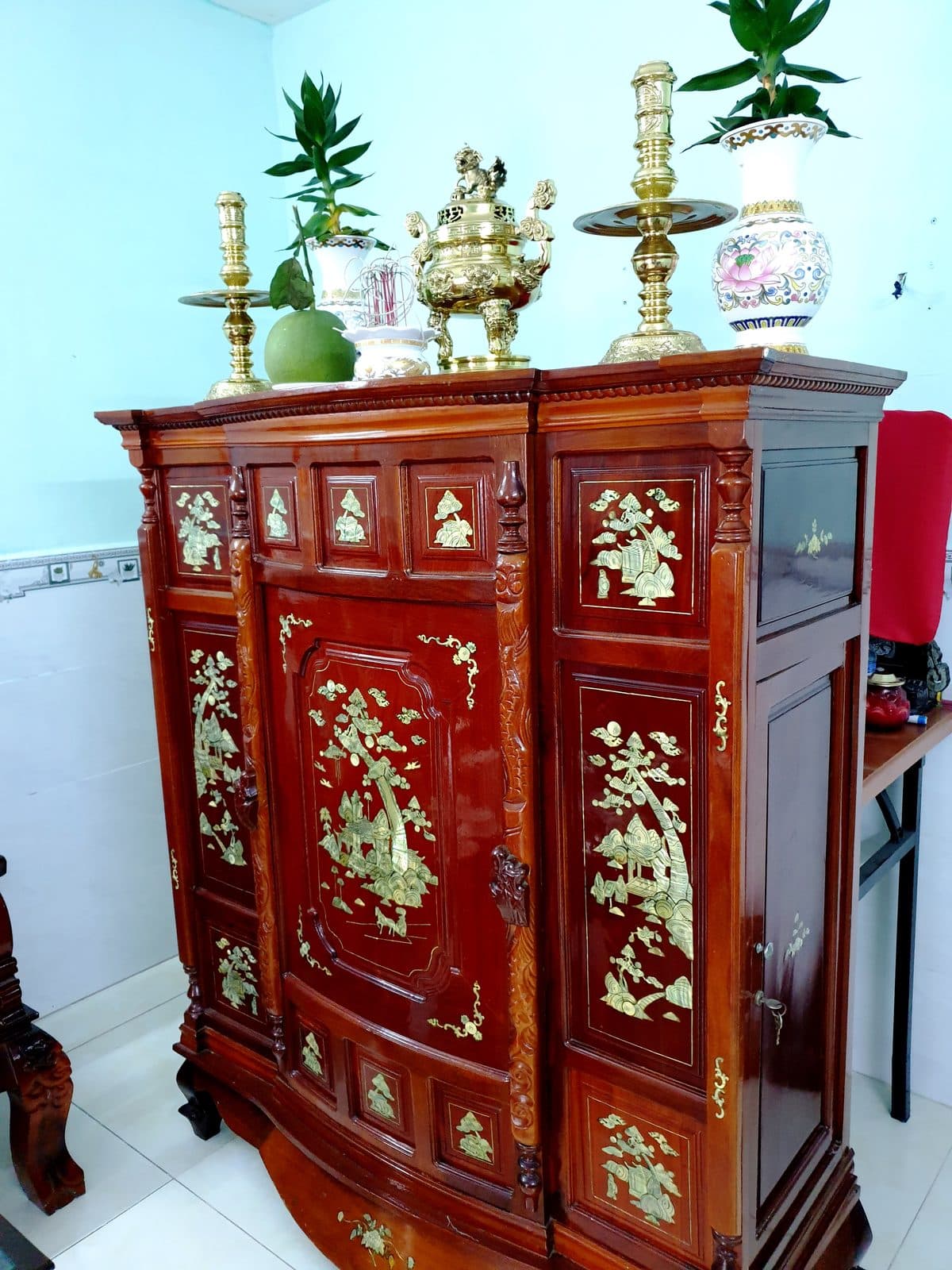
- Ancestral altar
- Who makes the offering
- The head of the household or the person who continues the duty of worship, in neat clothing
Each family and each region may do it differently.
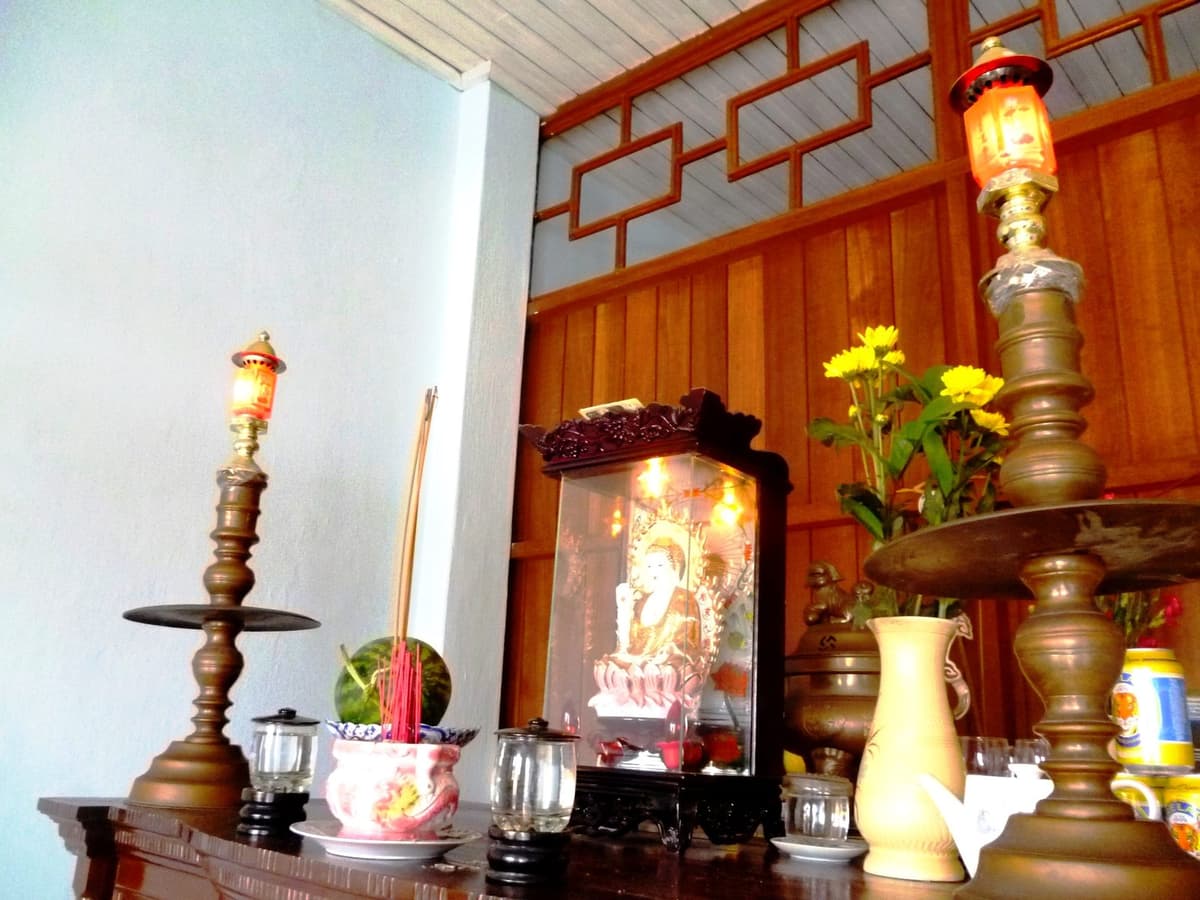
The offering tray
.jpg)
.jpg)
- When
- The first day of the lunar month, the fifteenth day of the lunar month, festival days, or when the household has a wedding or funeral matter to report to the ancestors
| Offering | Vegetarian or not | Notes |
|---|---|---|
| Incense, lamps, candles | ||
| Incense, lamps and candles | ||
| Flowers | ||
| Fresh flowers, fruit | Vegetarian | |
| Tea, rice wine, water | ||
| Clean water, tea or wine | Vegetarian | Some guides note it depends on each household's tradition, not mandatory |
| Betel leaves and areca nuts | ||
| Betel leaves and areca nuts | Vegetarian | Optional. When the household has the custom of offering betel leaves and areca nuts |
| Other | ||
| A tray of vegetarian or non-vegetarian rice dishes | Optional. On ordinary days it may be just a vase of flowers, a plate of fruit, a cup of water | |
Steps of the rite
- Laying out the offeringsArrange the offerings on the altar, light the lamps and candles
- Lighting incenseLight incense sticks and place them in the incense bowl, stand before the altar, bow three bows, then pray
- Reciting the prayerState clearly in the prayer the date, the name of the person praying, the place of residence, the reason for the rite, and those invited
- Reciting the prayerAfter praying, perform four and a half lễ and three vái; nowadays four long vái and three short vái may replace the lễ
- Waiting for the incense to burn downWait for one incense stick to burn out, then make the farewell lễ, burn votive paper (if any), and take down the offerings
Good to know
- SubstitutesPhan Kế Bính records that the offering depends on the size of the occasion and on whether the household is well off or frugal: it may be cattle or pigs, a few trays of feast dishes, fruit and cakes, or just a bowl of rice and an egg, a fish and a bowl of soup
What is avoided
- ConductWhen the tray of food is cooked, it is offered to the ancestors first; before the offering no one may touch it
The custom
According to Phan Kế Bính (1915), ordinary households without a separate ancestral hall worship their ancestors in the house where they live, and however poor, every house has an altar.
Where the sources differ
- Phan Kế Bính (1915) records that the rite of reporting to the ancestors must in any case have a tray of betel, a bowl of clear water and a jar of rice wine to be a proper rite; many current guides say that water, tea or wine and betel depend on each household's custom and are not required
Questions
What offerings are needed to light incense for the ancestors on ordinary days?
There is no fixed tray: one guide notes that on ordinary days a small vase of flowers, a plate of fruit and a cup of clean water make an offering; another notes that if need be a single incense stick and a cup of cool water will do. Phan Kế Bính (1915), however, records that a rite of reporting to the ancestors must always have a tray of betel, a bowl of clear water and a jar of rice wine.
Communities and regions
Sources
- Văn khấn Thờ cúng gia tiên (vankhan.vn)
- Việt Nam phong tục, Phần I, mục IV. Phụng sự tổ tôn, Phan Kế Bính, 1915 (vi.wikisource.org)
Part of the open datasets Types of Vietnamese offering rites and Vietnamese offering procedures, licensed CC BY 4.0.
More ritesDeath anniversaries, Tết, the home, business, the life cycle, village and ethnic rites.Open