


Cúng giao thừa ngoài trời (New Year's Eve offering, outdoors)
Also called: Lễ Trừ tịch, Cúng hành khiển, Văn khấn giao thừa ngoài trời
- Lunar New Year (Tết)
Culture and belief A record of custom.
By custom two rites are held at the turn of the lunar year: an outdoor table to see off the Hành khiển (the official believed to oversee the old year) and welcome the new one, and an indoor rite at the ancestral altar. Prayer texts are divided along these two settings.
At a glance
- When it is held
- The night of the 30th (or 29th) of the twelfth lunar month, at the shift into the hour of the Rat of the first day of Tết
- For whom
- The Quan Hành khiển (Administrator) of the old year and the new year together with the deities
- Where
- Courtyard or outdoors, In front of the house
- Who makes the offering
- The head of the household
Each family and each region may do it differently.
The offering tray
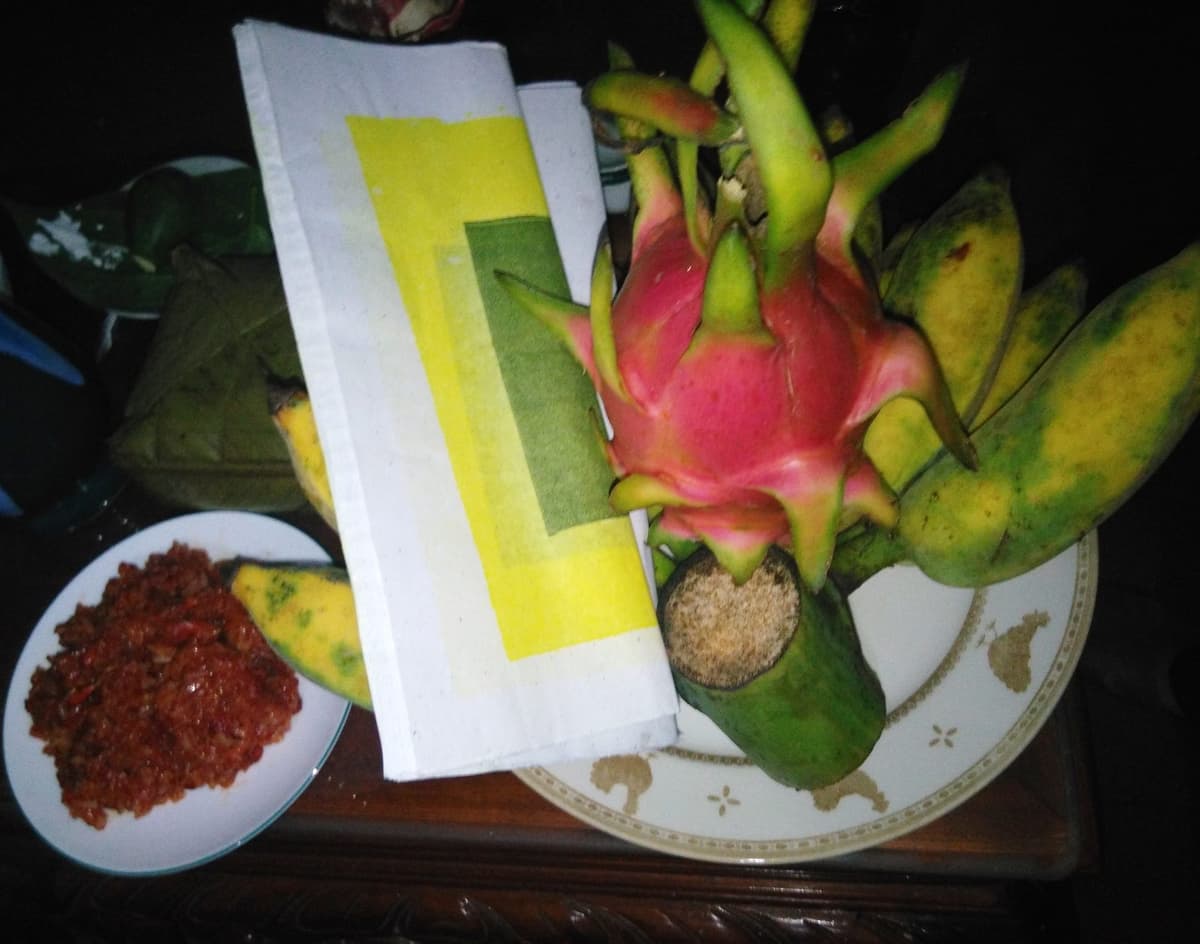
.jpg)
Nationwide
Folk practice, Outdoor offering
- When
- Exactly at giao thừa (New Year's Eve)
- Customary hour
- from 23:00 on the night of the 30th to before 1:00 on the 1st
| Offering | Vegetarian or not | Notes |
|---|---|---|
| Incense, lamps, candles | ||
| Incense, flowers, lamps and candles | Required | |
| Betel leaves and areca nuts | ||
| Betel leaves and areca nuts | Vegetarian | |
| Votive paper | ||
| Clothes and hats for the deities (votive paper) | ||
| Meat and savoury dishes | ||
| Boiled pig's head | Meat or fish | |
| Boiled rooster | Meat or fish | |
| Xôi (steamed sticky rice) and cakes | ||
| xôi (steamed sticky rice) | Vegetarian | |
| bánh chưng (square sticky rice cake) | Meat or fish | |
| Candied fruit and sweets, rice and salt | Vegetarian | Tuổi Trẻ lists candied fruit and sweets; VnExpress lists rice and salt in the fuller trays many households set out today |
| Tea, rice wine, water | ||
| rice wine | ||
Central
Folk practice
- When
- The night of giao thừa (New Year's Eve)
| Offering | Vegetarian or not |
|---|---|
| Incense, lamps, candles | |
| Incense and flowers, lamps and candles, betel leaves and areca nuts, tea and wine, the five-fruit tray | Vegetarian |
| Xôi (steamed sticky rice) and cakes | |
| Bánh chưng or bánh tét | Meat or fish |
| Meat and savoury dishes | |
| Boiled chicken, giò lụa, glass noodles, pork, braised fish | Meat or fish |
Huế, Huế, Folk practice
- When
- The night of the 30th of Tết, after the welcome of Ông Táo early in the night; at exactly 0:00 (midnight) incense is lit to welcome the new year's deity
- Customary hour
- 0:00 (midnight)
| Offering | Vegetarian or not | Notes |
|---|---|---|
| Incense, lamps, candles | ||
| Incense bowl, incense and lamps | ||
| Flowers | ||
| Flowers, the five-fruit tray | Vegetarian | |
| Votive paper | ||
| Gold and silver paper | ||
| Votive items: clothes, boots and hats for the heavenly soldiers | The paper robes are yellow, standing for the attire of the Đại Vương | |
| Xôi (steamed sticky rice) and cakes | ||
| Xôi, chè | Vegetarian | Households that eat vegetarian on the morning of the first day make no savoury offering on the night of the 30th, only a tray of xôi and chè |
| Meat and savoury dishes | ||
| A chicken | Meat or fish | Added by households without that restriction, in the belief that the rooster calls the sun to shine all year |
South
Southern Vietnam (Nam Bộ, no finer detail in the source), Folk practice
- When
- At giao thừa (New Year's Eve)
| Offering | Vegetarian or not | Notes |
|---|---|---|
| Incense, lamps, candles | ||
| Incense, flowers, lamps, tea, fruit, food | Vegetarian | |
| Xôi (steamed sticky rice) and cakes | ||
| Xôi nếp (glutinous sticky rice) | Vegetarian | Some families offer it, meaning cohesion and lasting bonds |
| Rice and salt | ||
| A plate of salt and rice | Vegetarian | Added by many families |
Steps of the rite
Used across Vietnam, Folk practice, Outdoor offering
- Reciting the prayerBefore the hour of the Rat, perform the rite to send off the administrator of the old year and then welcome the administrator of the new year
- Lighting incenseThe head of the household lights lamps and candles, pours wine, and prays before the altar
- Reciting the prayerPray the name and title of the Hành khiển of the year (12 deities rotating according to the 12 zodiac animals)
- Burning votive paperAfter three rounds of incense, burn the prayer text together with votive paper
- Reciting the prayerAfter the outdoor rite, the head of the household goes inside to pray to Thổ Công (Earth God of the house) and the ancestors
Central Vietnam, Folk practice
- Reciting the prayerThe outdoor tray sees off the deity who governed the old year and welcomes the new one
- Reciting the prayerThe indoor tray is offered to the ancestors
Huế, Huế, Folk practice
- Burning votive paperBurn the votive items and the gold and silver paper; in this belief the rite of the 30th sees off the heavenly officials of the old year and welcomes the new ones who come down to govern
- Reciting the prayerAt exactly 0:00 (midnight) the head of the household lights three incense sticks, prays and bows, welcoming the deity of the new year into the house
Southern Vietnam (Nam Bộ, no finer detail in the source), Folk practice
- Laying out the offeringsArrange flowers and fruit by the rule "Đông bình Tây quả": the vase of flowers on the east, the plate of fruit on the west
- Reciting the prayerMake the outdoor offering to see off the old deity and welcome the new one
- Reciting the prayerAfter the outdoor rite, go inside to make the offering to the ancestors, inviting them home for Tết
Good to know
- Vegetarian or notA household that worships the Buddha may set a vegetarian tray for the Buddha, but by custom still keeps a separate savoury tray for the deities; pagodas make the giao thừa offering with vegetarian food
What is avoided
Used across Vietnam, Folk practice, Outdoor offering
- ConductThe person praying dresses neatly and modestly; no shorts or sleeveless tops when going out to pray
Huế, Huế, Folk practice
- ConductOn the night of giao thừa people in Huế avoid going out, fearing being blamed for "đạp đất" (first-footing) someone else's house
The custom
Phan Kế Bính (1915) wrote: custom holds that each year a Hành khiển (Administrator) oversees human affairs and at the year's end hands over to the next, so offerings are made to see off the old one and welcome the new; at midnight between the 30th and the first day, every house in town sets an incense table in the middle of the yard, while in the countryside the hamlets hold the giao thừa rite at their meeting houses.
According to Tuổi Trẻ, the giao thừa offering is made outdoors because people of old imagined heavenly officials and soldiers hurrying through the sky at the handover, with no time to come inside, so families brought xôi and chicken, cakes and fruit, all cold food, outdoors as offerings.
Questions
What is on the outdoor giao thừa tray?
According to VnExpress, the basic tray has a plate of xôi, a boiled chicken, betel leaves and areca nuts, rượu, water, fresh flowers, votive paper and hats and robes for the deities; many households now set a fuller tray with giò chả, bánh chưng, rice and salt, fruit, cakes and sweets. Tuổi Trẻ lists the old offering as a pig's head or a chicken, bánh chưng, candied fruit and sweets, betel leaves and areca nuts, fruit, rượu and water, and votive paper.
At what time is the outdoor giao thừa offering made?
According to VnExpress, the rite is usually held from 23:00 on the 30th of Tết until before 1:00 on the first day, that is in the hour of Tý; in the Bính Ngọ year the twelfth month is short, so giao thừa falls on the night of the 29th (5 February 2027, 5/2/2027). In Huế, according to Tuổi Trẻ, at exactly 0:00 (midnight) the head of the household lights three incense sticks to welcome the new year's deity into the house.
Is the giao thừa offering made outdoors first or indoors first?
Outdoors first, indoors after. According to VnExpress, only after seeing off and welcoming the Hành khiển (Administrator) outdoors does the head of the household go inside to light incense for the ancestors; Báo Hà Tĩnh and Thanh Niên also describe the outdoor rite first and the indoor ancestral rite after.
How is the outdoor giao thừa offering set out in the South?
According to Thanh Niên, the giao thừa table of the Vietnamese in old Nam Bộ stood in the yard or in front of the door, with incense, flowers, lamps, tea, fruit and food; some families offered xôi nếp and added a plate of salt and rice. Flowers and fruit follow the rule "Đông bình Tây quả": the vase on the east, the fruit plate on the west.
How many incense sticks are lit at the outdoor giao thừa offering?
Tuổi Trẻ describes Huế: at exactly 0:00 (midnight) the head of the household lights three incense sticks, prays and bows, welcoming the new year's deity into the house.
Communities and regions
More about Cúng giao thừa ngoài trời (New Year's Eve offering, outdoors)
Sources
- Lễ cúng giao thừa, lễ Trừ tịch ngày 30 Tết (vankhan.vn)
- Văn khấn và nghi thức cúng giao thừa năm Bính Ngọ 2026 (vnexpress.net)
- Tại sao cúng Giao thừa ngoài trời? (tuoitre.vn)
- Việt Nam phong tục, mục XII Tứ thời tiết lạp, Phan Kế Bính, 1915 (vi.wikisource.org)
- Mâm cúng giao thừa 3 miền gồm những gì? Chuyên gia văn hóa giải đáp chi tiết (thanhnien.vn)
- Giao thừa ở Huế (tuoitre.vn)
- Bàn thờ cúng giao thừa kiểu Nam bộ xưa được tái hiện tại ngôi đình trăm tuổi (thanhnien.vn)
- Văn khấn Gia Tiên ngày 30 Tết Bính Ngọ 2026 (baohatinh.vn)
Part of the open datasets Types of Vietnamese offering rites and Vietnamese offering procedures, licensed CC BY 4.0.
More ritesDeath anniversaries, Tết, the home, business, the life cycle, village and ethnic rites.Open