


Cúng Giỗ Tổ Hùng Vương tại nhà (offering to the Hùng Kings at home)
Also called: Giỗ Tổ mùng 10 tháng 3, Mâm cơm giỗ Tổ, Cúng vua Hùng tại gia
- Ancestors and death anniversaries
Culture and belief A record of custom.
Giỗ Tổ Hùng Vương (death anniversary of the Hùng Kings) is a national ceremony; besides the ceremony at Đền Hùng, many households prepare an offering tray and offer incense at home to remember the merit of the Hùng Kings in founding the country. Since 2018 Phú Thọ has encouraged every household to prepare an offering tray in gratitude on the 10th day of the third lunar month.
At a glance
- When it is held
- The 10th day of the third lunar month
- This year (2026)
- Next year (2027)
- For whom
- The Hùng Kings, the National Ancestors of the Vietnamese people
- Where
- Ancestral altar
- Who makes the offering
- The whole family, children and siblings gather together to prepare the offering tray
Each family and each region may do it differently.
The offering tray
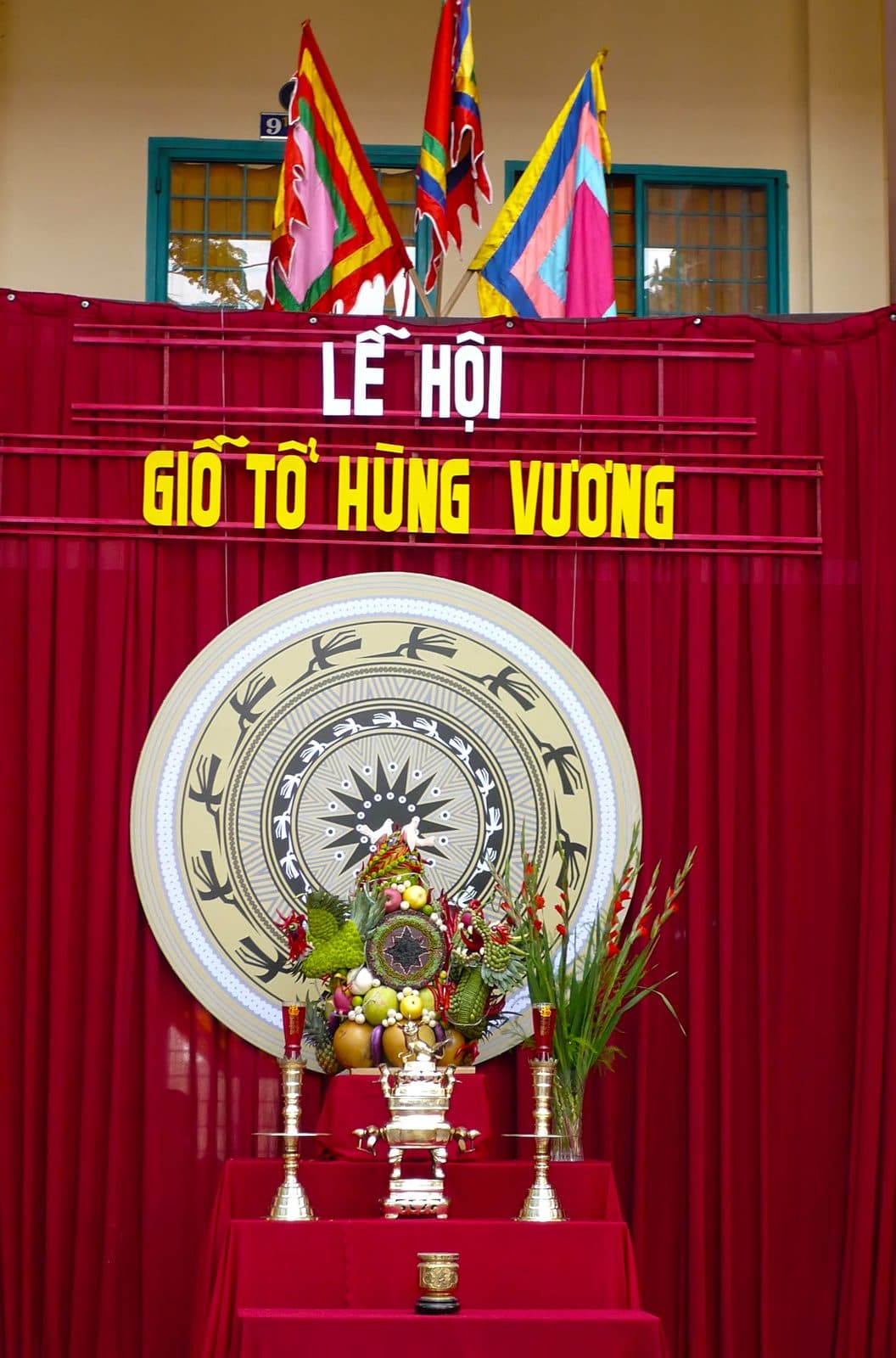

Nationwide
- When
- The 10th day of the third lunar month, when the State and the people hold the Giỗ Tổ rites (Báo Lai Châu)
- Where the offerings are set
- The altar in the house
| Offering | Quantity | Vegetarian or not | Notes |
|---|---|---|---|
| Xôi (steamed sticky rice) and cakes | |||
| bánh chưng (square sticky rice cake) | 18 pieces | Meat or fish | Some guides note that they symbolize the 18 reigns of the Hùng Kings |
| bánh giầy (round sticky rice cake) | 18 pieces | Vegetarian | |
| Meat and savoury dishes | |||
| Savory offerings: boiled rooster or pork, xôi gấc (red sticky rice) or xôi vò (mung bean sticky rice), fried spring rolls, giò lụa (Vietnamese pork sausage), bamboo shoot soup or mọc soup | Meat or fish | ||
| Incense, lamps, candles | |||
| Incense, flowers, tea, five-fruit tray | Vegetarian | ||
| Tea, rice wine, water | |||
| Wine, clean water, rice, salt | Vegetarian | ||
North
Phú Thọ, Việt Trì, xã Chu Hóa, Folk practice
- When
- On the 10th day of the third lunar month, at the same time as the Giỗ ceremony at điện Kính Thiên
- Where the offerings are set
- The family altar
| Offering | Quantity | Vegetarian or not | Notes |
|---|---|---|---|
| Xôi (steamed sticky rice) and cakes | |||
| bánh chưng (square sticky rice cake) | Meat or fish | Required | |
| bánh giầy (round sticky rice cake) | Vegetarian | Required | |
| Plain cooked rice | 4 bowls placed at the four corners of the tray | Vegetarian | Required |
| Meat and savoury dishes | |||
| A bowl of dipping sauce | 1 bowl placed in the middle of the round tray | Meat or fish | |
Steps of the rite
Used across Vietnam, Folk practice
- Laying out the offeringsArrange the offering tray on the altar
- Reciting the prayerLight incense, read the prayer text
- Sharing the blessed offeringsTake down the offerings, the whole family partakes of the offerings
Northern Vietnam, Phú Thọ, Việt Trì, xã Chu Hóa, Folk practice
- PreparationChildren and grandchildren gather to cook the offering tray
- Laying out the offeringsPresent the offering tray on the altar, remember the merit of the Hùng Kings
- The elders tell the children and grandchildren about the Hùng Kings worship
What is avoided
No source we have found describes what is avoided for this rite.
The custom
According to an article by Nguyễn Tiến Khôi (Phú Thọ Historical Science Association), the Vietnamese chose the 10th day of the third lunar month as Giỗ Tổ; from the worship of each household's, clan's and village's ancestors, they jointly worship the Hùng Kings as the ancestors of the whole nation.
On 6/12/2012 (6 December 2012), UNESCO inscribed "Tín ngưỡng thờ cúng Hùng Vương ở Phú Thọ" (the worship of the Hùng Kings in Phú Thọ) on the Representative List of the Intangible Cultural Heritage of Humanity (Báo Văn hoá).
Questions
What date is the Hùng Kings' anniversary?
Giỗ Tổ Hùng Vương falls on the 10th day of the third lunar month every year (Báo Lai Châu, Báo Văn hoá). In 2027 (Đinh Mùi), the 10th day of the third lunar month falls on 16 April 2027.
What is on the Hùng Kings' anniversary offering tray?
An article on Phú Thọ (Vietnam News Agency, published in Báo Hà Tĩnh) notes that the tray for the founding kings needs bánh chưng, bánh giầy and plain rice, with a bowl of dipping sauce in the middle of the round tray and four bowls of rice at the four corners. One guide adds incense, flowers, tea, a five-fruit tray, rice wine, water, rice, salt and savory dishes such as boiled chicken, xôi gấc, fried spring rolls and giò lụa.
How is the Hùng Kings' anniversary observed at home?
In Phú Thọ, the family gathers to cook a tray of food and offers it at the family altar on the 10th day of the third lunar month, at the same time as the ceremony at điện Kính Thiên; preparing such trays at home began in 2018 in Chu Hóa and Hy Cương communes (Việt Trì city) and then spread (Báo Hà Tĩnh, citing the Vietnam News Agency).
Communities and regions
Sources
- Văn khấn Giỗ Tổ Hùng Vương tại nhà, đền thờ (dienmayxanh.com)
- Giỗ Tổ Hùng Vương: nguồn gốc, ý nghĩa, phong tục cần biết (vankhan.vn)
- Tín ngưỡng thờ cúng Hùng Vương thể hiện đạo lý uống nước nhớ nguồn của người Việt, ThS Nguyễn Tiến Khôi, đăng lại từ baophutho.vn (baolaichau.vn)
- Tín ngưỡng thờ cúng Hùng Vương: di sản mang đậm bản sắc cội nguồn dân tộc Việt (baovanhoa.vn)
- Mâm cơm giỗ Tổ Hùng Vương, nét đẹp văn hóa người dân Phú Thọ (baohatinh.vn)
Part of the open datasets Types of Vietnamese offering rites and Vietnamese offering procedures, licensed CC BY 4.0.
More ritesDeath anniversaries, Tết, the home, business, the life cycle, village and ethnic rites.Open