What is the Expression Number and how is it calculated?
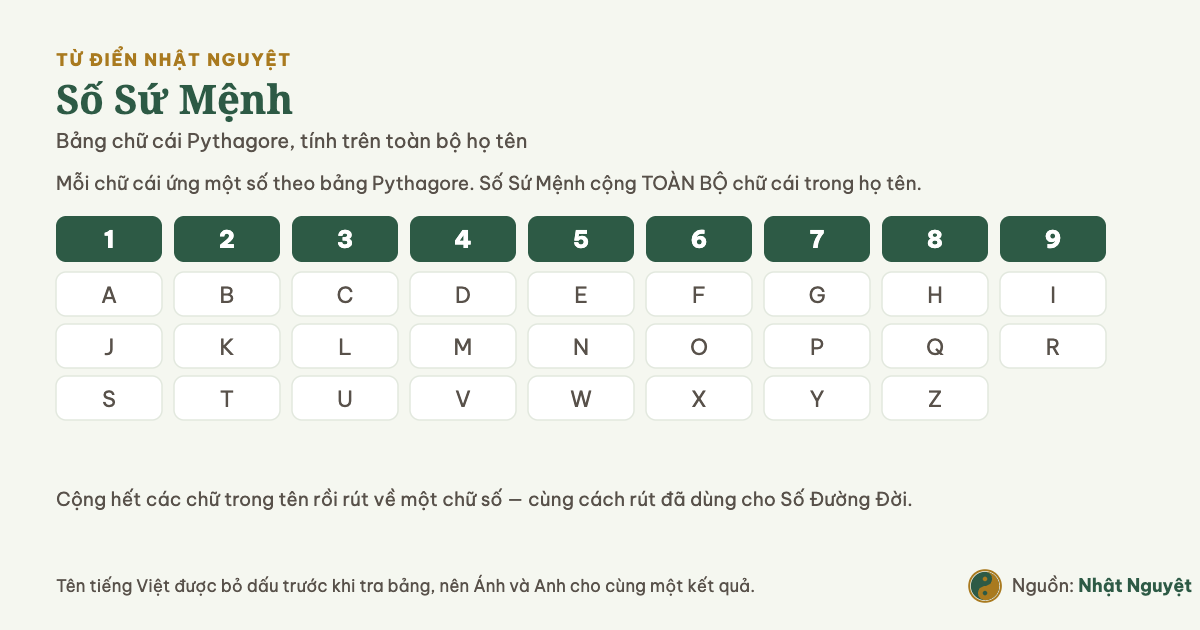
The Expression Number is an indicator in numerology, calculated by converting a person's full birth name (family name, middle name, given name) into numbers using a letter-to-number chart, then reducing the total to a single digit from 1 to 9 or to master numbers such as 11 and 22. Unlike the Life Path Number, which is based on the date of birth, the Expression Number is tied to the name, so it is seen as a marker of how a person expresses themselves outwardly and of the natural talents they may develop.
Why is it called a "mission" number?
The word "mission" here is metaphorical: this number is said to describe the direction a person tends to move toward and how they contribute to the world around them through their own abilities. In the articles on each number, every Expression Number from 1 to 9 is linked to a group of qualities: number 1 leans toward independence and leadership; number 2 toward diplomacy and cooperation; number 3 toward creativity and expression; number 4 toward stability and discipline; number 5 toward freedom and experience; number 6 toward nurturing and care; number 7 toward analysis and spirituality; number 8 toward ambition and achievement; number 9 toward compassion and service.
Distinguishing the Expression Number from other indicators
The three most easily confused indicators are the Life Path Number, the Expression Number, and the Soul Urge Number. The Life Path Number is calculated from the date of birth and is usually seen as the overall "path" of a life. The Expression Number is calculated from the birth name and leans toward outward expression and demonstrated talents. The Soul Urge Number counts only the vowels in the name and points to inner desires and motivations. Because both are based on the name, the Expression Number and the Soul Urge Number can be read side by side to compare what a person shows and what they long for.
What should be kept in mind when reading the Expression Number?
When a name changes (through marriage, a stage name, or a dharma name), some interpretations hold that the Expression Number can be recalculated from the new name, while others keep the birth name as the root. In addition, converting letters to numbers depends on the chart the practitioner chooses, so results can differ between systems.
Numerology in general, and the Expression Number in particular, is traditional knowledge of a reference nature that has not been scientifically verified. It should be treated as a tool for self-reflection, not as a rigid basis for deciding about oneself or others.