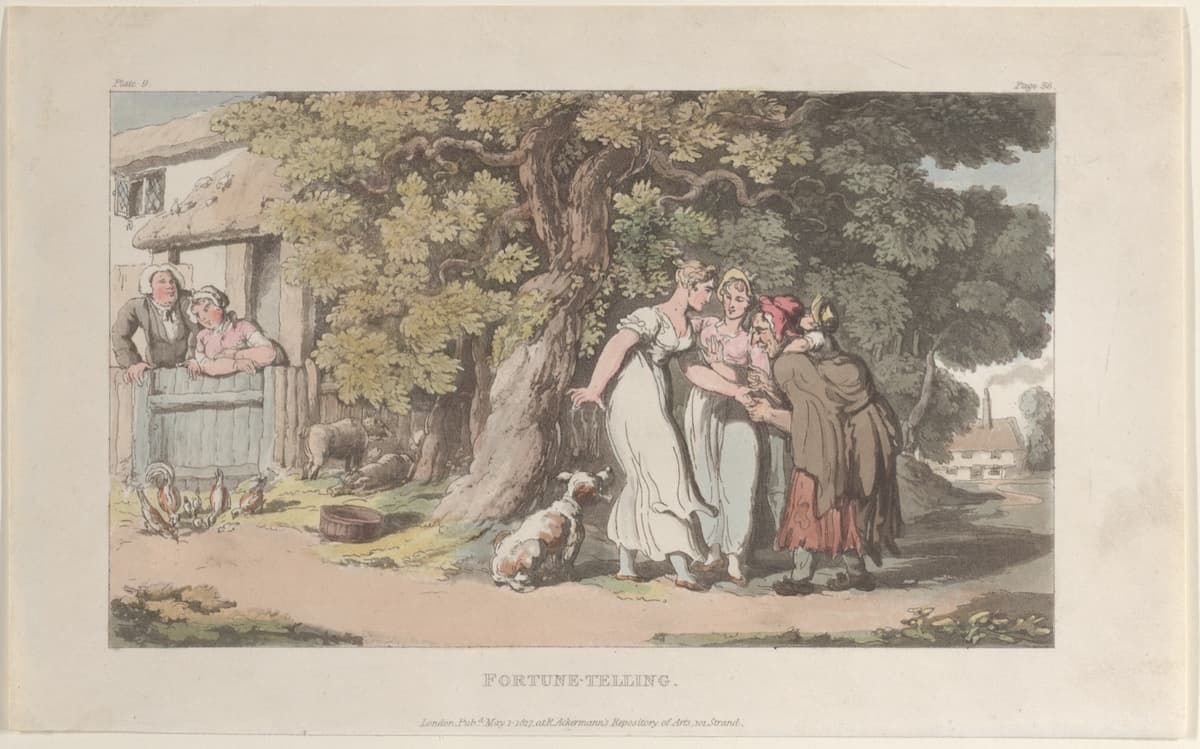
What Is Kieu Fortune Telling? Origins from a Great Literary Work
Amid the myriad customs of Tet, Kieu fortune telling stands out as a refined cultural practice where classical literature blends with the spiritual life of the Vietnamese. Unlike elaborate divination methods, Kieu fortune telling uses the 3,254 six-eight verses of Nguyen Du's Tale of Kieu as a tool to find answers to human concerns. Cultural researcher Phan Ke Binh, in his work Vietnamese Customs, described this practice simply: a person with a matter to know will pray to Thuy Kieu and Kim Trong, then open the book and randomly choose a verse from some page to divine. He also emphasized this is a "playful divination" but many believe it works.
The Tale of Kieu, since its inception, has transcended the limits of a literary work to become an integral part of the Vietnamese psyche. It is not only read, recited, praised, and commented upon but also used as a "bedside book," a mirror reflecting the anxieties of human existence. This deep immersion in cultural life provided a solid foundation for the practice of Kieu fortune telling to emerge and endure, especially in the sacred atmosphere of early spring days.
Why Is Kieu Fortune Telling Often Done During Tet?
It is no coincidence that Kieu fortune telling became a beautiful feature of the old Vietnamese Tet. The transition between the old and new year is a time when people feel the need to reflect on the past and look toward future plans. This is an occasion for each person to look inward, hoping for predictions or advice for a good new beginning.
The ritual requires a quiet, airy space and a calm, relaxed state of mind, free from anxiety or stress. During Tet, when work is set aside and hearts are more at ease, it is the most suitable time to perform this ritual with solemnity and sincerity. The sacred atmosphere of the early spring sky and earth further enhances the significance of seeking a divination, turning it into an indispensable cultural activity during the festive season.
Methods of Performing the Kieu Fortune Telling Ritual
The folk practice of Kieu fortune telling does not have a single fixed pattern but varies over time and place, creating richness and diversity. Researcher Pham Dan Que, in his book "The Tale of Kieu and Confucian Scholars of the 19th Century," categorized the forms of Kieu fortune telling in detail.
Coin Casting Method
This is considered the most traditional and popular method. The seeker tosses three coins and, based on the heads/tails result, calculates a corresponding number. This number is then used to reference a specific verse in the Tale of Kieu. This method has a high element of randomness and is often performed by experienced individuals or professional fortune tellers.
Card Drawing Method
Another variation uses a deck of cards numbered to correspond to verses in the Tale of Kieu. The seeker randomly draws one or more cards, each displaying a couplet. This approach is seen as a blend of tradition and modernity, offering convenience and liveliness to users.
Random Verse Selection
This is the simplest and most folk-oriented method, used by the majority of people. The seeker simply closes their eyes, holds a thought about the issue at hand, then randomly opens a page and presses a finger on any spot. The couplet where the finger lands becomes the "divination" for the seeker. Researcher Nhat Chieu also described this method in his talks on folk culture.
The Role of Characters in the Kieu Fortune Telling Ritual
A special feature distinguishing Kieu fortune telling from other divination forms is the prayer said before performing. The seeker often lights incense and prays: "I bow to King Tu Hai, I bow to the nun Giac Duyen, I bow to the fairy Thuy Kieu."
This invocation is not merely a ritual but also shows the deep appreciation, respect, and empathy of the people toward the protagonist of the work. Thuy Kieu, through the vicissitudes of fate, has become a symbol of loyalty, talent, and resilience. Viewing her as a "fairy" who can guide people in the present reflects the belief that literature is not only art but also contains profound life lessons.
Why Is the Tale of Kieu So "Efficacious"?
The question of the "efficacy" of Kieu fortune telling has been explained by many scholars and researchers. According to them, this wonder does not come from any supernatural force but from the intrinsic value of the work itself.
The Tale of Kieu as an Encyclopedia of the Soul
Professor Phan Ngoc once remarked that the Tale of Kieu is an "encyclopedia of the human soul." The work not only tells the fate of a talented and beautiful woman but also paints a comprehensive picture of feudal society with all facets of human existence. From romantic loves, betrayal, envy, sacrifice, to aspirations for fame and happiness, all are depicted realistically and vividly. Researcher Nhat Chieu agrees, stating that in the work, "every circumstance of life is present." Thuy Kieu encountered all kinds of people and experienced every emotional spectrum, creating a treasure trove of situations in which anyone can find a reflection of themselves.
The Polysemy of Language
Each verse in the Tale of Kieu often carries multiple layers of meaning, open to various interpretations depending on the reader's situation and mood. This "polyphonic," "multivocal" nature makes a randomly chosen verse capable of evoking deep associations and coinciding strangely with the seeker's concern. The seeker will reflect, compare the verse to their current circumstances, and arrive at their own explanation, turning the divination process into an act of self-reflection and self-understanding.
Random Coincidence and an Objective View
Many believe in the efficacy of Kieu fortune telling because of the astonishing coincidences between the chosen verse and actual situations. There are anecdotes of someone opening to the verse "If only within is warm, then without will be calm" (line 1506) while having family conflicts. Another person might open to "How painful is the lot of women" (line 83) exactly on International Women's Day, March 8.
However, it should be objectively acknowledged that these coincidences are often random. The Tale of Kieu has 3,254 verses covering nearly every aspect of human life, from love, family, fame, career, to profound philosophies of life. Therefore, the probability that a chosen verse can be associated with a specific life situation is not small.
The true value of Kieu fortune telling perhaps lies in its evocative nature, in creating a pause for people to look back at themselves. The randomly selected verse may not be an "omen" but a "reminder," a new perspective on the issue the seeker faces. It stimulates reflection, helps people gain another view, an empathy, to make wiser decisions in life.
Kieu Fortune Telling in Contemporary Life
In the context of modern society with the intermingling of various cultural currents, Kieu fortune telling still quietly exists and adapts itself. New forms, such as printing couplets on cards for random drawing, or even combining with tarot philosophy, have emerged. This creativity not only refreshes the form but also makes it accessible to the younger generation, who may not have had the chance to read the entire work closely.
The practice of Kieu fortune telling occurs not only during Tet but also in discussions and cultural events about the Tale of Kieu, showing the work's enduring vitality in contemporary life. It is not just a folk game but also a way for Vietnamese people to connect with their literary heritage, to better understand traditional cultural values, and to reflect on their own lives. Kieu fortune telling, in whatever form, remains a cultural beauty worth cherishing and preserving, a message of luck and aspiration for a peaceful and prosperous new year.


