Cham Brocade Weaving in My Nghiep Village: From the Legend of Goddess Po Nagar to a Living Heritage
Located about 12 km from the center of Phan Rang-Thap Cham, My Nghiep village in Phuoc Dan town, Ninh Phuoc district (Ninh Thuan) is known as one of the cradles of traditional Cham brocade weaving. Through more than a thousand years of history, the rhythmic shuttle still moves here, creating vibrant fabrics that crystallize the skillful hands and souls of Cham women. The story of weaving here is not just about production but also about culture, belief, and the enduring vitality of a community.
Ancient Origins and the Legend of Goddess Po Nagar
According to Cham legend, the weaving craft in My Nghiep appeared as early as the 6th century, associated with Goddess Po Yang Inư Nagar, the mother goddess of the land, revered as the patroness of weaving. She is also known by other respectful titles such as Patao Kumay (king of women) or Stri Ratjnhi (lady of women). For the local people, weaving is not merely a livelihood but a sacred gift from the divine. Thus, the craft is closely linked to women and passed down from generation to generation through the custom of mother-to-daughter inheritance.
To pursue the craft, Cham women must meet professional ethical standards set by Muk Thruh Palei (the village ancestral mother). This shows that weaving requires not only technical skill but also character building, patience, and reverence for the craft's founders. The bond between belief, ethics, and labor creates a unique cultural value, turning each brocade piece into a product imbued with the spirit of the whole community.
The Mastery of Weaving Techniques on Wooden Looms
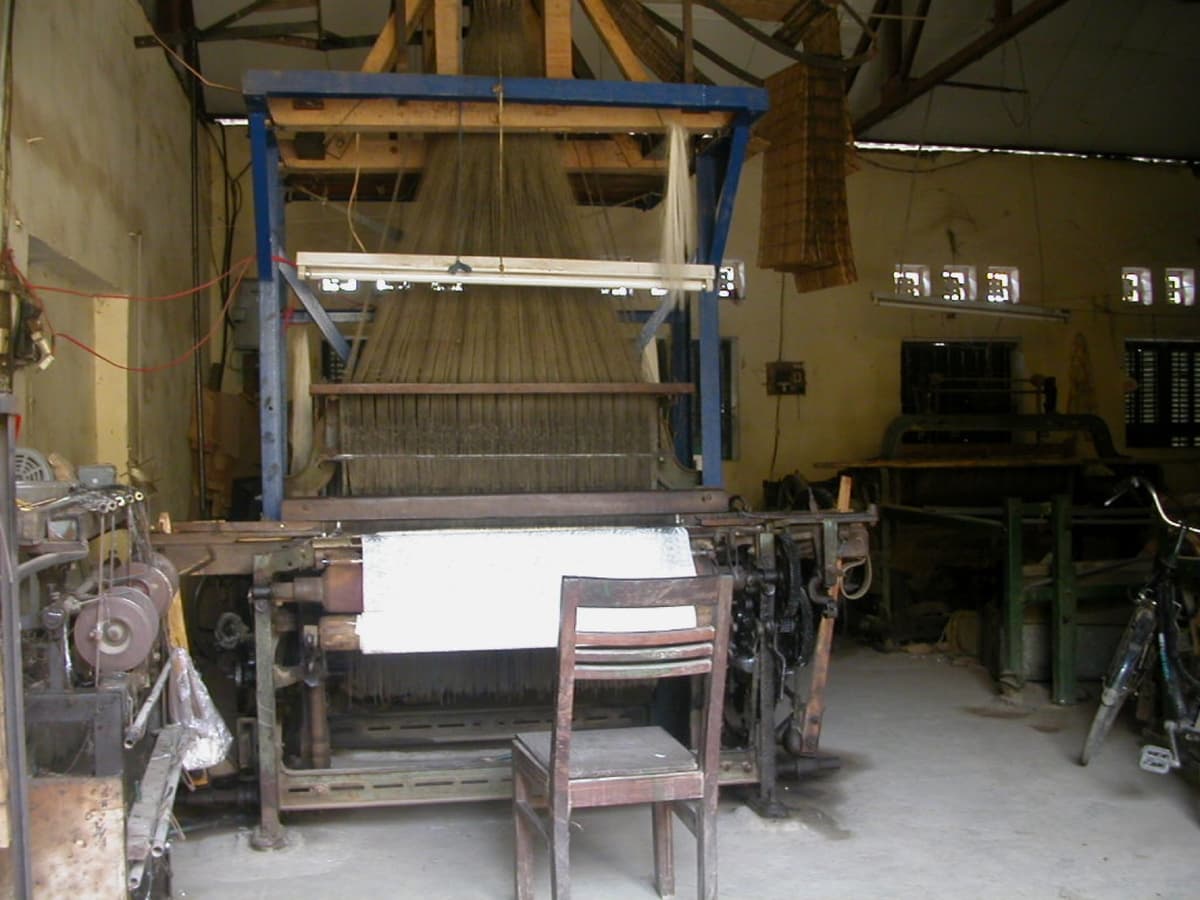
A special feature that makes My Nghiep village attractive is its near-complete preservation of traditional hand-weaving techniques. Amid an industrial age, locals remain committed to wooden looms, performing each precise motion and maintaining the shuttle rhythm. Creating a Cham fabric is a meticulous series of steps, starting with growing cotton right in the family yard.
From cotton plants, artisans go through steps: separating seeds, soaking and pounding, dyeing, starching the yarn, combing, and winding onto spools. Among these, dyeing, combing, and winding require the most finesse and concentration, as they directly affect the quality and durability of the yarn. To finish a traditional brocade piece, artisans often spend two to three days, or even longer for complex patterns. That time allows them to infuse each thread with dedication and pride, turning every product into a unique work of art.
Patterns That Tell the History and Culture of Champa
Unlike the monotony often seen in handwoven fabrics, My Nghiep brocade products are diverse in patterns and colors. The motifs are often ancient symbols rich in cultural value, such as the lamp genie, Lord Shiva, or the celestial dragon. These are familiar images in Cham spiritual life, stylized by the skilled hands of weavers, creating a fusion of tradition and art.
Besides preserving traditional motifs, the Cham in My Nghiep also show creativity and cultural exchange by integrating patterns from other regions. Especially favored are the elephant motif from the Central Highlands or the apricot blossom of the Kinh people. This blend enriches the pattern repertoire and reflects interregional cultural connections, producing items that are both unique and symbolically meaningful.
Not stopping at traditional cotton yarn, weavers skillfully combine synthetic and metallic threads to create fresh motifs like the creative rainbow pattern. This mix helps products retain traditional characteristics with natural sophistication while meeting modern demands for convenience and high applicability. Notably, all products, despite their variety, are woven on a single type of loom. This further affirms the skill, talent, and dexterity of the local weavers.
Development and Important Milestones
The My Nghiep weaving craft flourished from 1992 when the Inrahani brocade workshop of Mrs. Thuan Thi Tru was established. This workshop gathered many talented artisans, helping to revive and bring Cham brocade closer to domestic and international visitors. From that initial success, My Nghiep's reputation spread to other Cham regions like Huu Duc, Chung My, Van Lam, and even to Binh Thuan province, affirming the village's standing in the region.
2017 marked a significant milestone as the Ninh Thuan Provincial Department of Culture, Sports, and Tourism submitted a proposal to the Ministry of Culture, Sports, and Tourism to include My Nghiep village in the National List of Intangible Cultural Heritage. In parallel, local authorities have provided practical support, such as connecting the craft village with garment companies in Ho Chi Minh City. This cooperation aims to create products that harmoniously combine industrial and handmade elements, modern and traditional, thereby expanding markets and enhancing product value.
Preserving the Heritage Soul Amid Modern Life
Today, My Nghiep weaving village is not only a production site but also an attractive cultural destination. Visitors can admire the artisans' skillful hands creating each line on the loom, listen to touching stories about the craft's founders, and the journey of preserving excellence through generations. Especially, visitors can try their hand at weaving a small keepsake. Holding the shuttle, hearing the rhythmic sound of the loom, and watching threads blend into vivid patterns, one deeply understands the value of handmade labor and the admirable patience of the Cham people.
Preserving My Nghiep's weaving craft is not just about maintaining a production technique but also about safeguarding the soul of an entire people. Each brocade piece is a story of Cham history, culture, and spirit, woven with time, perseverance, and deep love for the homeland. Amid the fast pace of modern life, the clatter of shuttles in My Nghiep village still echoes steadily, like the heartbeat of an ancient culture that never fades. This is living proof of the enduring vitality of a heritage that has lasted over a thousand years and will continue to be passed on to future generations.


