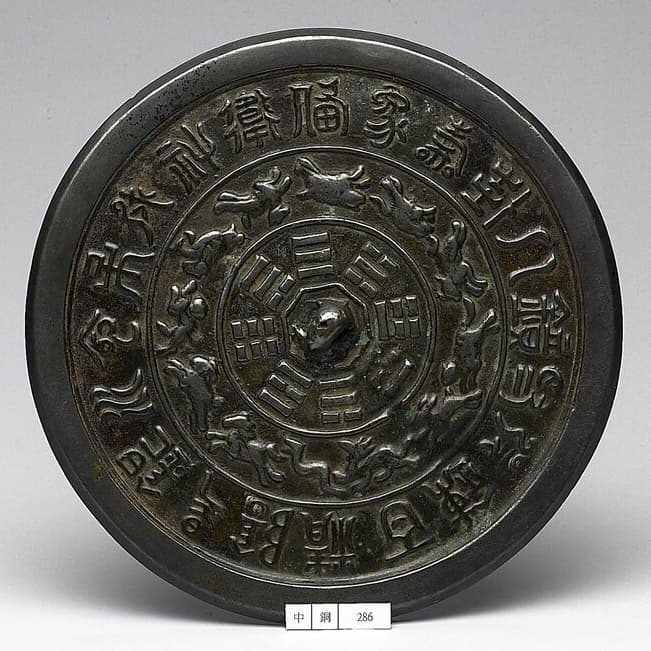
Overview of the Heavenly Stem Ren in the Stem-Branch System
The Heavenly Stem Ren (壬) is the 9th of the 10 Heavenly Stems, following Xin (辛) and preceding Gui (癸). In the Stem-Branch system, Ren belongs to the Water element and carries Yang nature. Unlike Gui (癸) which is Yin Water representing drizzling rain and morning dew, Ren symbolizes great rivers, oceans, and relentless flowing currents. In the I Ching, Ren's energy connects to the Kan hexagram (坎), representing water, danger, yet also the source of life and wisdom.
Yin-Yang and Five Elements Characteristics of Ren
Position in the Yin-Yang Cycle
Ren carries Yang Water. In Yin-Yang theory, Yang Water represents water in a dynamic, strong, outward, and expansive state. It differs fundamentally from Gui Water (Yin Water), which is still, passive, and introspective. As Yang Water, Ren symbolizes great rivers, oceans, and waterfalls, representing unstoppable natural force. In seasonal terms, Ren connects to deep winter, when water freezes but powerful undercurrents still flow beneath the surface.
Role in the Five Elements Cycle
In the generative cycle, Water generates Wood, so Ren nourishes new growth and life. In the controlling cycle, Water controls Fire, giving Ren the ability to regulate excessive fiery energy. Ren is also generated by Metal (Metal generates Water), meaning those with strong Ren characteristics often receive support from Metal-associated qualities such as discipline and sharp intellect. In the I Ching, Ren Water's movement reflects the Kan hexagram's principle: water never stops flowing, always finding ways through every gap and obstacle.
Ren in the I Ching System
Connection to the Kan Hexagram and Water Lines
The Kan hexagram consists of two yin lines surrounding one yang line, symbolizing water, danger, deep pits, yet also profound wisdom. The single yang line between two yin lines reveals Ren's essence: outwardly adaptable and gentle (yin), yet internally holding firm, unyielding strength (yang). This explains why people with strong Ren often appear mild-mannered but possess decisive, unyielding inner resolve.
Meaning of Water in Various Hexagrams
Hexagrams containing the Kan trigram often carry profound meanings about overcoming difficulties, adaptation, and wisdom. The Water over Heaven hexagram (Xu, 需) means waiting and patience, showing that Ren water needs time to accumulate sufficient strength. The Heaven over Water hexagram (Song, 訟) symbolizes disputes and litigation, reflecting the conflicting aspect when water encounters obstacles. Each combination reveals how Ren Water energy interacts with other elements to create different situations and lessons.
Application of Ren in Interpretation and Prediction
Ren in Understanding Human Nature
People with prominent Ren or strong Ren influence typically exhibit: sharp intellect, deep thinking ability, strong intuition, excellent adaptability, broad vision, and natural leadership. However, limitations may include excessive self-confidence, difficulty controlling emotions, and occasionally acting on instinct without careful consideration.
Ren in Interpreting Time Cycles
When a year or period features the Ren Heavenly Stem (such as Ren Yin, Ren Chen, Ren Wu, Ren Shen, Ren Xu, Ren Zi years), Yang Water energy is strongly activated. These periods often favor intellectual activities, research, communication, and flexible business ventures. However, caution is advised regarding water-related risks, travel, and overly adventurous decisions.
Conclusion
The Heavenly Stem Ren with its Yang Water nature represents a rich concept within the I Ching and Eastern cultural wisdom. Understanding Ren's essence not only aids in interpreting hexagrams but also opens deeper perspectives on natural patterns, human nature, and the principles governing life. This knowledge should serve as a reference tool for personal development and understanding the world, rather than an absolute authority for life's important decisions.
