


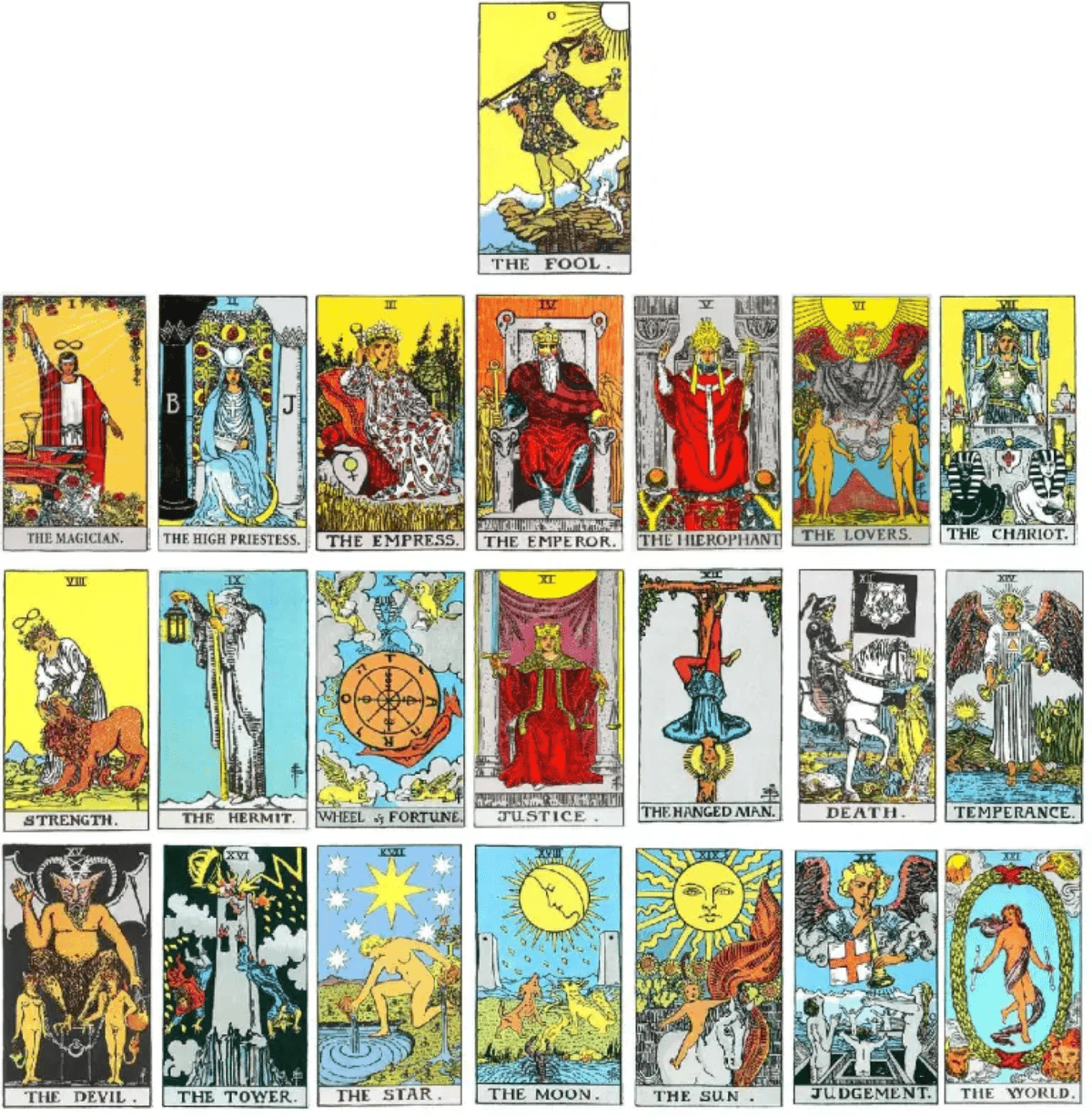
TL;DR: The V-shaped spread is one of the most popular and effective Tarot spreads for love and relationship questions. It uses 6 cards arranged in a V-shape, each representing a different aspect of the relationship, from current feelings to future prospects.
The V-Shaped Spread (Love and Relationships) in Tarot: How to Lay It Out and the Meaning of Each Position
What is the V-Shaped Spread in Tarot?
Among the many Tarot spread methods, the V-shaped spread (also known as the V-Spread) stands out as a particularly effective tool for exploring the deep layers of a romantic relationship. More than just a way of arranging cards, the V shape carries a powerful symbolism of convergence, choice, and the journey toward mutual understanding between two people. This article will take a close look at the structure, how to lay out the spread, and the detailed meaning of each position, giving you a comprehensive and in-depth perspective.
Unlike complex spreads such as the Celtic Cross, the V-shaped spread focuses on one specific question about a relationship, offering a clear and concise picture of the dynamics at play. This makes it an ideal choice for beginners and experienced readers alike, for anyone seeking a direct view of the state of a relationship.
A summary table of the six positions in the V-shaped spread and the meaning of each position.
| Position | Position Name | Meaning |
|---|---|---|
| 1 | You (The Querent) | Your own current energy, emotions and awareness within the relationship |
| 2 | The Other Person | The current emotions, thoughts and behaviour of the other person |
| 3 | The Nature of the Relationship | The foundation, the main driving force and the true nature of the relationship |
| 4 | The Strengths of the Relationship | Positive factors, strengths and resources for nurturing the relationship |
| 5 | Challenges or Weaknesses | Obstacles, challenges or hidden weaknesses the relationship is facing |
| 6 | Potential Outcome | The trajectory of the relationship if everything continues as it is now |
How to Prepare Before Laying Out the Spread
Before beginning any spread, creating a quiet and focused space is extremely important. First, you need a Tarot deck that you feel most connected to. As mentioned, the Rider-Waite deck, first published in 1909, is a popular choice for beginners because its imagery is intuitive, easy to understand and rich in symbolism. However, any deck that makes you feel comfortable and inspired can be used.
Next, define your question clearly. A good question is specific and open-ended, for example "What is really happening in my relationship with that person?" or "What is the biggest challenge we need to overcome?". Avoid closed questions that only need a yes or no answer, because they will limit the richness of the message in the cards.
What is the structure of the V-Shaped spread and how is it laid out?
The V-shaped spread uses 6 cards, arranged in a V shape as follows:
- Card 1 (Left peak): Placed at the highest position on the left.
- Card 2 (Right peak): Placed at the highest position on the right, level with Card 1.
- Card 3 (The middle intersection): Placed at the central position, slightly lower than Card 1 and Card 2, forming the meeting point of the two branches of the V.
- Card 4 (Left branch): Placed lower than Card 3 toward the left side.
- Card 5 (Right branch): Placed lower than Card 3 toward the right side.
- Card 6 (The end point): Placed at the lowest position, in the centre, forming the bottom of the V.
Once you have focused and shuffled the deck, draw 6 cards and place them in the exact order and positions above.
What is the deep meaning of each position?
Each position in the V-shaped spread carries its own responsibility, contributing to a complete story about the relationship.
Position 1: You (The Querent) in the Relationship
This card represents your own current energy, emotions and awareness within the relationship. It does not judge right or wrong, it simply reflects your inner state. For example, if you draw the Ace of Cups, it shows that you are overflowing with love, openness and a readiness to give. Conversely, if you draw the Five of Pentacles, you may be feeling emotionally deprived, abandoned or enduring wounds.
Position 2: The Other Person in the Relationship
This card expresses the current emotions, thoughts and behaviour of the other person in the relationship. It helps you gain a more objective view of their inner world. For example, the Knight of Swords appearing in this position may show that the other person is acting hastily, impatiently and somewhat aggressively in how they approach problems. Meanwhile, the Queen of Cups suggests that they are a sensitive, caring and understanding person.
Position 3: The Nature of the Relationship
This is the point of intersection, the element that connects or conflicts between the two of you. This card describes the foundation, the main driving force and the true nature of the relationship at the present time. If this card is The Lovers, it shows a deep connection, based on harmony and shared values. The appearance of the Two of Swords suggests a relationship at a standstill, with difficult decisions to be made and a lack of clear communication.
Position 4: The Strengths of the Relationship
This card highlights the positive factors, the strengths and the resources that both of you can rely on to nurture the relationship. This may be trust, understanding, shared passion or support from family and friends. For example, the Ten of Cups in this position is an extremely positive sign, showing that the relationship has a solid foundation of family and emotion, pointing toward a happy future.
Position 5: Challenges or Weaknesses
In contrast to position 4, this card points out the obstacles, challenges, or hidden weaknesses that the relationship is facing. It may be a problem with communication, a difference in outlook on life, or unhealed wounds from the past. The Five of Cups appearing here shows that one of the two people (or both) is mired in regret and disappointment, unable to see the positive opportunities ahead.
Position 6: Potential Outcome
This final card represents the trajectory of the relationship if everything continues as it is now. This is not an absolute ending, but a warning or a promise about the future based on existing factors. The Star in this position is a good omen, showing hope, healing and a bright future ahead. Conversely, the Tower may indicate a breakdown, a sudden event that could occur if the challenges in position 5 are not resolved.
What are the principles of combining and interpreting the spread as a whole?
The most important thing when reading a spread is not to look at the cards individually, but to see them as a unified whole. Ask yourself: How does the card in position 3 (nature) relate to the card in position 5 (challenge)? How is your energy (position 1) interacting with the energy of the other person (position 2)?
For example, if position 1 is the Eight of Wands (swift action) and position 2 is the Four of Swords (rest, stillness), this contrast shows an imbalance in the pace of the relationship: one person wants to push everything forward quickly, while the other needs time to think and recover.
The V-shaped spread is a wonderful tool for reflection and understanding. It is not an unchanging prophecy, but a mirror reflecting the present state and its potentials. Like advice from psychology experts, using Tarot should be seen as a method for releasing emotions, seeking clarity and orienting action, rather than depending entirely on what the cards say. Always remember that the final decision remains in your hands.
Overview article on the topic: Tarot Basics: The 78 Cards and the Meaning of the Major/Minor Arcana


