


Cúng giao thừa trong nhà (New Year's Eve offering, indoors)
Also called: Cúng giao thừa gia tiên, Giao thừa tại cơ quan, cửa hàng, Văn khấn giao thừa trong nhà
- Lunar New Year (Tết)
Culture and belief A record of custom.
By custom two rites are held at the turn of the lunar year: an outdoor table to see off the Hành khiển (the official believed to oversee the old year) and welcome the new one, and an indoor rite at the ancestral altar. Prayer texts are divided along these two settings.
At a glance
- When it is held
- The night of the 30th (or 29th) of the twelfth lunar month, at the shift into the hour of the Rat of the first day of Tết
- For whom
- Household deities and ancestors
- Where
- Ancestral altar
- Who makes the offering
- head of the household
Each family and each region may do it differently.
The offering tray
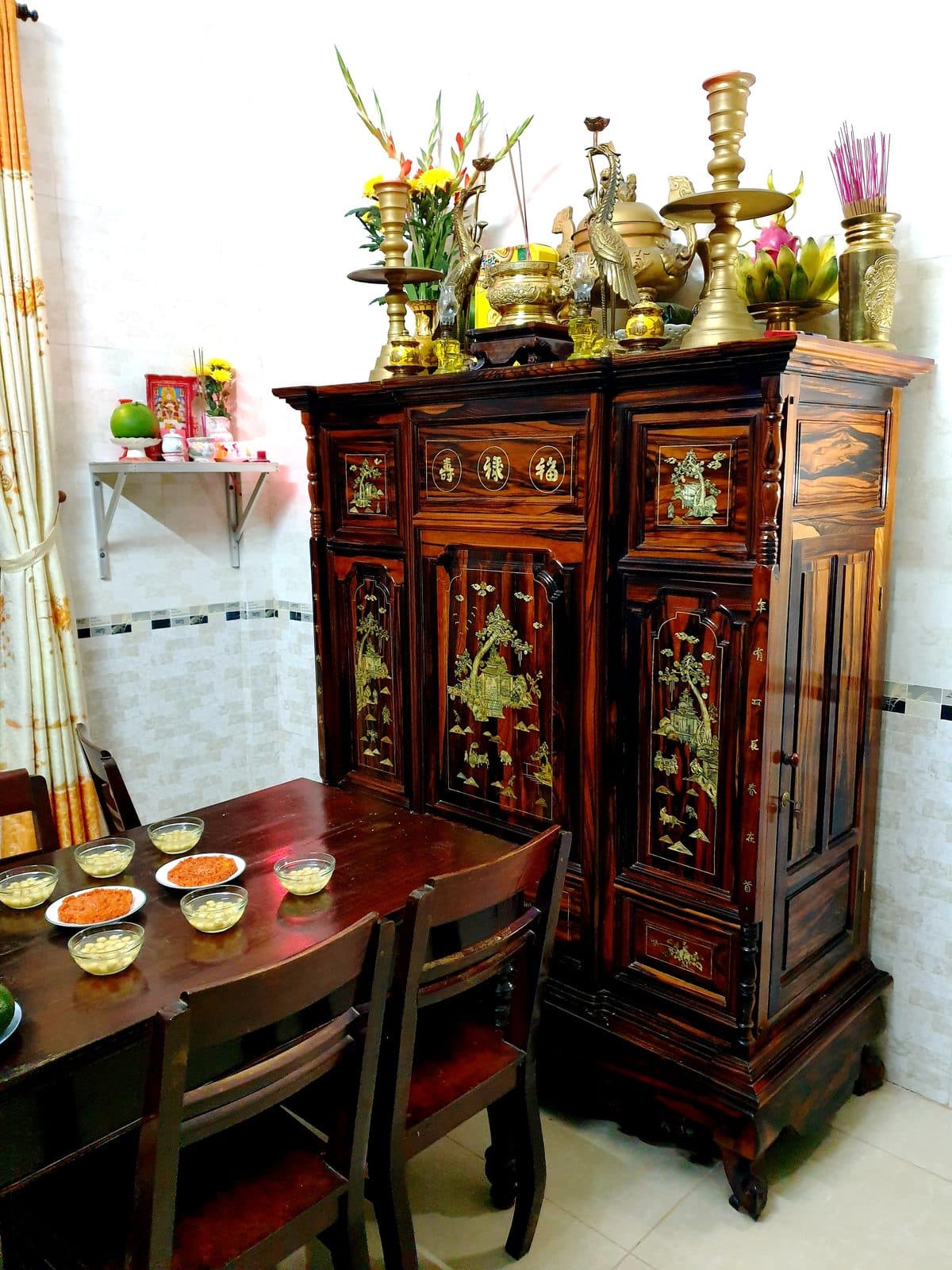
_(1).jpg)
Nationwide
Folk practice, Indoor offering
- When
- At giao thừa (New Year's Eve), after the house has been tidied and the altar cleaned since the afternoon of the 30th
- Customary hour
- as the hour of Hợi on the 30th turns into the hour of Tý on the 1st
- Where the offerings are set
- Indoors: the ancestors' altar
| Offering | Vegetarian or not | Notes |
|---|---|---|
| Incense, lamps, candles | ||
| Incense, flowers, votive paper, lamps and candles | Required | |
| Betel leaves and areca nuts | ||
| Betel leaves and areca nuts, wine, cakes and sweets | Vegetarian | |
| Meat and savoury dishes | ||
| Tray of savory Tết dishes | Meat or fish | In Buddhist guidance: vegetarian dishes, with an additional Buddha altar with incense, flowers, fruit, and vegetarian food |
Central
Folk practice, Indoor offering
- When
- Giao thừa night (New Year's Eve)
- Where the offerings are set
- An indoor tray offered to the ancestors; many families also set an outdoor tray to see off the deity who governed the old year and welcome the new one
| Offering | Vegetarian or not | Notes |
|---|---|---|
| Incense, lamps, candles | ||
| Incense and flowers, lamps and candles, betel leaves and areca nuts, tea and wine, a five-fruit tray | Vegetarian | For both the outdoor and the indoor tray |
| Xôi (steamed sticky rice) and cakes | ||
| Bánh chưng or bánh tét (sticky rice cakes) | Meat or fish | Báo Thanh Niên says it is almost indispensable; for both trays |
| Meat and savoury dishes | ||
| Boiled chicken, giò lụa (pork roll), glass noodles, pork, braised fish | Meat or fish | For both the outdoor and the indoor tray |
Steps of the rite
- PreparationIn the afternoon of the 30th, sweep and clean, tidy the altar, remove old incense sticks leaving only 1 or 3 incense sticks
- One person goes to the cemetery to offer incense and invite the ancestors to return and witness the Tết days (do not offer incense at new graves)
- Reciting the prayerArrange the offerings on the altar, light candles, offer incense, and pray
Good to know
- Vegetarian or notIn the Buddhist guidance the Tết tray is vegetarian; the Buddha altar holds incense, flowers, fruit, lamps and vegetarian food, and the ancestors' altar faces the Buddha altar
What is avoided
- SpeechFrom the moment of giao thừa onward, children do not quarrel or use foul language, and parents do not scold them either
The custom
By custom, giao thừa is the moment the old year turns into the new: the hour of the Pig on the night of the 30th of the twelfth lunar month gives way to the hour of the Rat on the first day. The book Việt Nam phong tục (Phan Kế Bính, 1915) records the belief that each year a Hành khiển (deity in charge of the year) oversees human affairs and hands over to a new one at year's end, so offerings are made to see off the old one and welcome the new.
At the same moment, the indoor rite is offered before the ancestral altar and the household deities, inviting the ancestors to return and witness the Tết days. In central Vietnam many families prepare two trays: an outdoor one to see off the deity of the old year and welcome the new, and an indoor one for the ancestors.
Questions
What time is the indoor giao thừa offering made?
By custom it is made exactly at giao thừa, as the hour of the Pig on the night of the 30th of the twelfth lunar month gives way to the hour of the Rat on the first day. When the twelfth month is short, it is the night of the 29th: the twelfth month of the Bính Ngọ year has only 29 days, so the giao thừa before Tết Đinh Mùi is the night of the 29th, turning into the early hours of 6 February 2027 (6/2/2027).
What does the indoor giao thừa offering include?
The indoor offering usually has incense and flowers, votive paper, lamps and candles, betel and areca, wine, sweets and a savoury Tết feast, set on the ancestral altar. The Buddhist guidance uses a vegetarian feast and adds a Buddha altar. In central Vietnam the basic offerings are incense and flowers, lamps and candles, betel and areca, tea and wine, a five-fruit tray, bánh chưng or bánh tét, boiled chicken, giò lụa (pork roll), pork and braised fish.
Is votive paper burned after the indoor giao thừa offering?
By custom, the votive paper offered to the ancestors stays on the altar throughout Tết and is burned only at the hóa vàng rite at the end of Tết (most households hold it on the 3rd day). In the outdoor rite for the Hành khiển, the written prayer text is burned together with votive paper after three rounds of incense.
Communities and regions
Sources
- Lễ cúng giao thừa, lễ Trừ tịch ngày 30 Tết (vankhan.vn)
- Lễ Tết Nguyên đán (Lễ đầu năm mới) (vankhan.vn)
- Mâm cúng giao thừa 3 miền gồm những gì? Chuyên gia văn hóa giải đáp chi tiết (thanhnien.vn)
- Việt Nam phong tục, mục XII Tứ thời tiết lạp, Phan Kế Bính, 1915 (vi.wikisource.org)
- Lễ hóa vàng đầu năm mới là gì? (vtcnews.vn)
Part of the open datasets Types of Vietnamese offering rites and Vietnamese offering procedures, licensed CC BY 4.0.
More ritesDeath anniversaries, Tết, the home, business, the life cycle, village and ethnic rites.Open