Com Lang Vong, a delicacy exclusively for Hanoi's autumn
When Hanoi's weather turns cool and the first gentle winds of early winter begin to blow through the streets, people start talking about com Lang Vong. This is not just a dish, but a culinary art nurtured by Hanoians for generations. Com Vong is made from young sticky rice, carefully selected from the fields, creating a delicacy with a characteristic jade-green color and a gentle fragrance of young rice blended with lotus leaves.
Origin and status of com Vong in culinary culture
Vong village, now in Dich Vong ward, Cau Giay district, Hanoi, has long been famous for its traditional handmade com craft. Com Lang Vong is considered the culinary essence of Thang Long. The secret lies in the family heirloom techniques in each processing step. This delicacy appears in poetry and in the memories of many generations of Hanoians, associated with the image of street vendors or small packages of com wrapped in green lotus leaves.
The secret behind the chewy, fragrant com grains
Selecting rice and harvest timing
The difference of com Vong lies in the selection of ingredients. Artisans only use the nep cai hoa vang variety, grown on alluvial fields. The harvest time is crucial, usually about 15 to 20 days after the rice flowers, when the grains are still milky and slightly yellowish. Skilled workers often squeeze a grain to feel the ripeness, a skill accumulated through years of experience.
The meticulous processing process
After threshing, the rice is washed clean and drained. The next step is roasting the paddy in large cast-iron pans over moderate heat. The roaster must stir continuously for even cooking. When the husks begin to split and turn light green, the paddy is cooled and then placed in a mortar for pounding.
The pounding process must be rhythmic to avoid crushing the grains. After pounding, the com is sifted through multiple layers to remove husks, leaving only the soft green kernel. The final step is to gently rub the com with a little water or young milk to create softness and a beautiful sheen.
How to enjoy com properly
Fresh com and paired dishes
Com Vong is best enjoyed on the same day, when it retains its moisture and rich aroma. Connoisseurs often eat it plain or with ripe bananas, a classic autumn combination. Com is also used to make banh com, com patties, com xoi, or stir-fried com with young coconut and sugar.
Preservation and wrapping
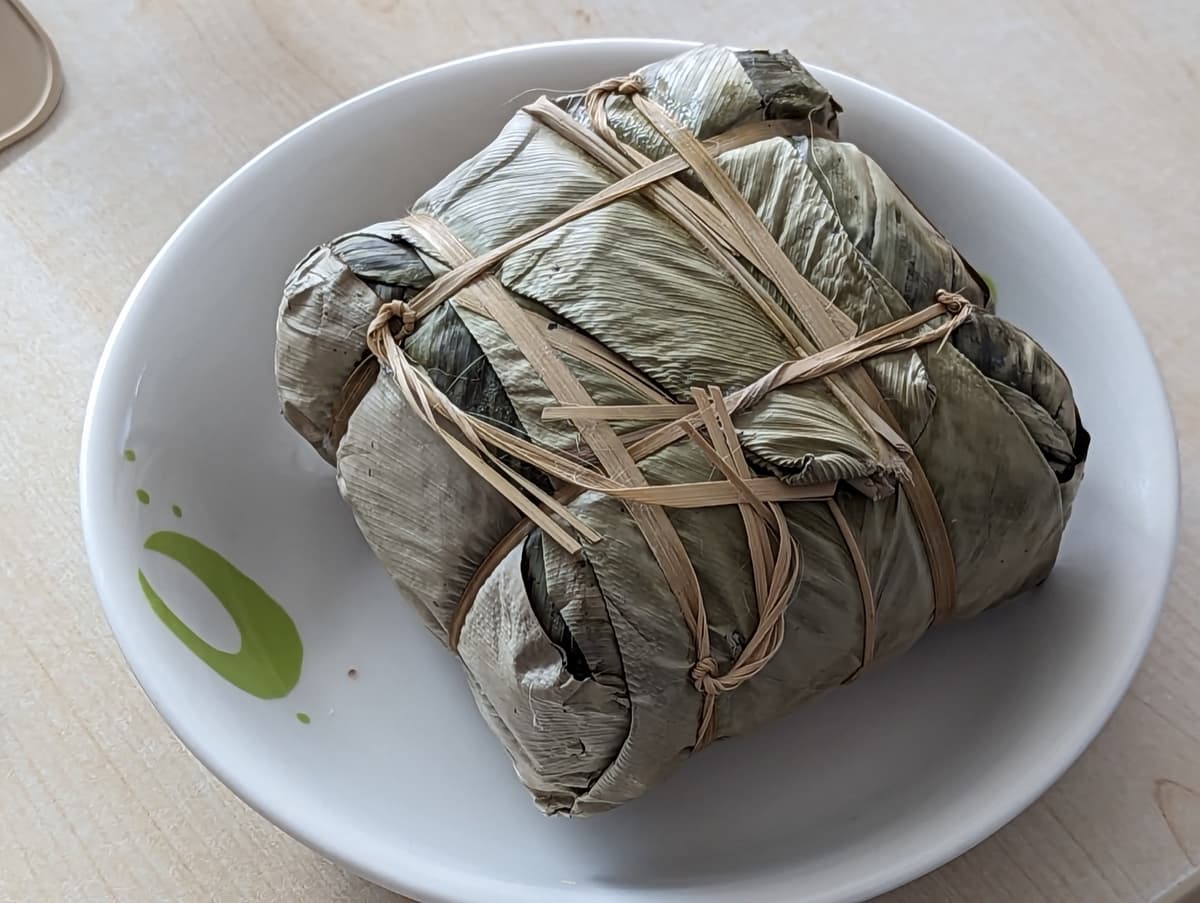
Traditionally, com is wrapped in lotus leaves, whose essential oils help preserve flavor and moisture. Fresh green lotus leaves are carefully selected and layered before placing com inside. When buying com, it should be kept in a cool place and consumed quickly, avoiding refrigeration to maintain its texture and flavor.
Com Vong in the modern flow
Preserving the traditional craft
Today, the com making craft of Vong village faces challenges from modernization. However, many families still preserve their heirloom secrets by growing sticky rice in nearby rural areas or partnering with cooperatives. Com Vong has also been registered for geographical indication protection, affirming its brand and traditional value.
Com Vong on the culinary tourism map
Com Lang Vong has become an attractive culinary destination for tourists. Many international visitors come to Vong village during autumn to witness the process and taste this specialty. Com also appears in high-end restaurants as a refined dessert or premium gift, promoting Vietnamese cuisine to international friends.
Conclusion
Com Lang Vong is a living testament to the sophistication of Hanoi's cuisine. Behind each green package is a laborious process and the dedication of artisans across generations. Despite societal changes, com Vong retains its special place in the hearts of Hanoians, as an indispensable part of autumn and a cultural beauty worth preserving.