Origin and Historical Context of the Nang Han Legend
In the folk culture of the White Thai people in Vietnam's Northwest region, the figure of Nang Han holds a very special place. She is not just a story about a heroic girl but also a symbol of resilience and the will to protect the homeland against foreign invasion. Legend has it that Nang Han was born into a poor Thai family in Chieng Sa, now Muong So commune, Phong Tho district, Lai Chau province.
The historical backdrop of the legend is tied to a period when Thai ethnic groups faced domination and invasion from the North. In that context, the White Thai and other ethnic communities of the Northwest endured many arduous resistance wars to defend their homeland. The legend of Nang Han emerged as a crystallization of patriotism, self-reliance, and the desire for peace of an entire community.
A distinctive feature of Nang Han's story is the female element. In traditional Thai society, with strict gender role norms, a girl rising to lead an uprising was rare. This uniqueness adds depth and appeal to the legend, vividly reflecting the important role of women in Thai community life.
The Journey of Disguise and the Uprising of the 16 Thai Regions
According to legend, when northern invaders swept in, Nang Han decided to disguise herself as a man to rally young men of the villages to unite against the enemy. This act showed not only courage but also wisdom and a deep understanding of contemporary society. In a context where women could hardly openly lead troops, disguise was a clever solution to bypass social prejudices.
Nang Han led the uprising of the people across 16 Thai regions. The number 16 indicates the large scale of the movement, spanning not just a single village but a vast area where Thai people lived. This shows her prestige, talent, and great influence in uniting forces that had local and clan differences.
Nang Han and her righteous army defeated the northern invaders, bringing peace to the homeland. After victory, she led the triumphant troops back amid the joy of the people. The image of the female general riding a horse into the village, welcomed with incense smoke and festival drums, became a beautiful symbol in the minds of the White Thai, passed down through generations.
Legendary Ending and the Birth of Worship Beliefs
A special highlight in the Nang Han legend is its mythical conclusion. After returning victorious, Nang Han did not stay to enjoy glory and wealth but chose a different end. She removed her garments, bathed at the Tay An spring (now in Muong So commune), and then flew to heaven with her horse. This detail transformed Nang Han from a flesh-and-blood person into a deity, a supernatural being capable of connecting the mortal and sacred realms.
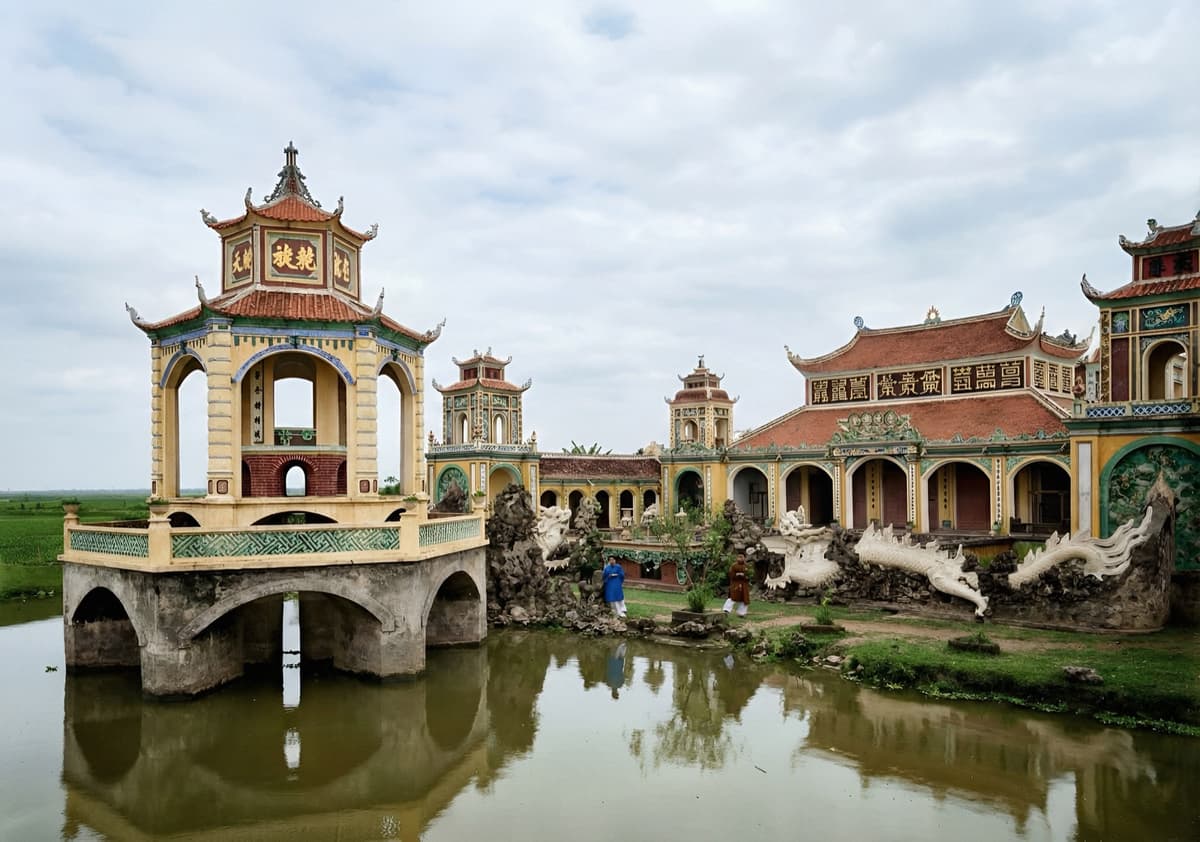
The spring where Nang Han bathed became a sacred space tied to her story. Local people believe that the water from this spring can dispel illness and misfortune and bring good luck. From this belief, they built a temple right at the spring area to honor and venerate Nang Han. The temple gradually became the center of spiritual life, where people come to pray for the peace of their homeland.
In the minds of the White Thai, Nang Han is no longer merely a historical figure but has become a protective deity for all people. She is seen as a symbol of community strength, unyielding will, and the sacred connection between humans and nature, between the present and their roots. The transformation from human to deity added a new layer of meaning, giving the story of Nang Han lasting vitality across generations.
The Nang Han Festival and Unique Spiritual Rituals
The Nang Han Festival is held by the White Thai on the 15th day of the second lunar month each year at Tay An hamlet, Muong So commune, Phong Tho district, Lai Chau province. This occasion allows the community to honor and express gratitude to the heroine, while praying for a prosperous, peaceful new year and abundant harvests. The festival is not only a religious activity but also a space for community bonding and preserving the cultural identity of the White Thai.
The festival has two main parts: the ceremony and the celebration. In the ceremony, solemn rituals include offerings to Nang Han, worship of mountain and land deities, and the spring. A shaman performs incense offerings at the Nang Han Temple with items made by villagers, such as pork, chicken, fragrant wine, incense, flowers, fruits, and betel nuts, expressing deep reverence and gratitude.
After the main rituals, people of all ages go to the spring to wash their faces and hands, hoping to cleanse away misfortunes and pray for a peaceful, lucky new year. This act carries spiritual meaning and reflects the bond between people and nature, with water being vital to Thai agricultural life.
The Nang Han Temple was recognized as a Provincial Artistic Architectural Relic by the Lai Chau Provincial People's Committee in 2007, affirming its cultural and historical value. Since 2009, the festival has been restored and held annually at the commune level, attracting many people from various ethnic groups. This restoration helps preserve a traditional cultural beauty and promotes the image and values of the White Thai to visitors.
The Celebration: A Vibrant Community Cultural Space
While the ceremony is solemn and spiritual, the celebration is a time for fun, entertainment, and showcasing strength and skill. Activities include traditional games such as stick pushing, tug-of-war, en cay, to ma le, and Chinese chess. These games are entertaining and reflect individual strength and community solidarity. Through them, traditional cultural values are preserved and passed on naturally to younger generations.
Besides folk games, the festival includes cultural performances, a Muong So beauty contest, culinary competitions, and distinctive xoe dance performances. These create a colorful festival space that embodies Thai cultural identity and meets the growing cultural needs of locals and tourists. The traditional tug-of-war has become a highlight attracting many spectators.
The Nang Han Festival also introduces, honors, and promotes the unique cultural values of the White Thai to the whole country, aligning with sustainable community tourism development. Muong So commune, especially the Vang Pheo community tourism village, is considered the cradle of the White Thai, located at the confluence of Nam So and Nam Lum streams, about 25 km from Lai Chau city on the Lai Chau - Dien Bien tourist route. With nearly 100 households and over 400 people, all White Thai, Vang Pheo boasts distinctive cultural traits such as traditional stilt houses, folk arts, unique festivals, and cuisine, making it a highlight for community tourism in Phong Tho district and Lai Chau province.
Humanistic Meaning and Enduring Values of the Nang Han Legend
The Nang Han legend carries many profound humanistic meanings. First, it is a story of patriotism, resilience, and community solidarity in the face of challenges. Nang Han's disguise as a man to lead troops symbolizes overcoming limits and prejudices to serve the common good. This affirms the important role of women in society, a timeless message.
Second, the detail of Nang Han bathing in the spring and flying to heaven symbolizes the harmony between humans and nature, and between the mortal and sacred realms. The spring is not just a location but a symbol of purity, life source, and rebirth. People washing their faces with its water for peace reflects a belief in nature's cleansing and healing power, a beautiful aspect of Thai environmental ethics.
Finally, the enduring festival of Nang Han through generations is evidence of the vibrant life of a folk belief deeply rooted in community consciousness. Amid modernization, preserving and promoting the festival's value is not only the responsibility of the White Thai but also a shared task for society to safeguard this precious intangible cultural heritage, enriching Vietnam's unified yet diverse cultural identity.