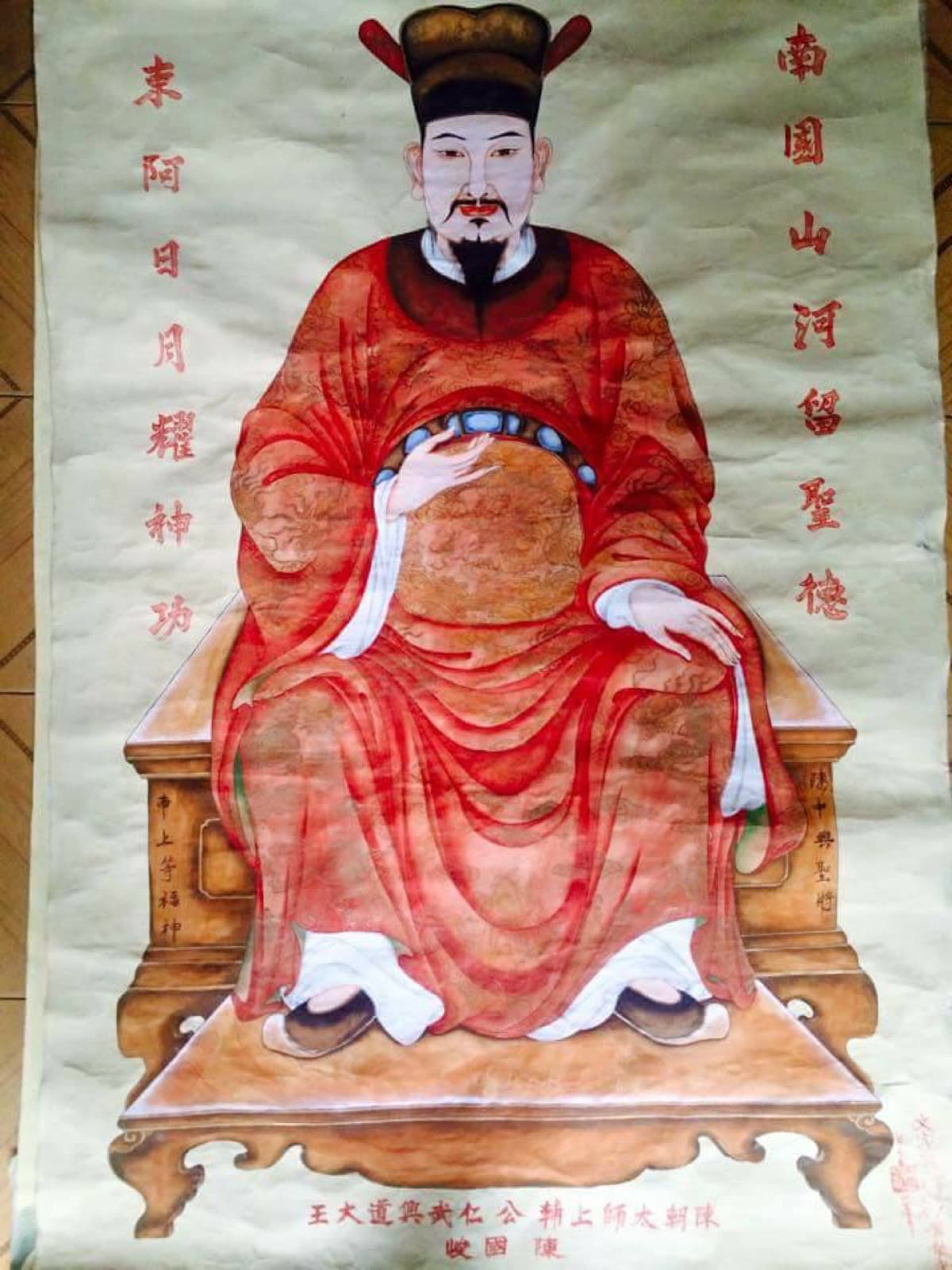
Introduction to the Worship of Ong Hoang Bay
In the Vietnamese psyche, the worship of ancestors and national heroes always holds a special place, reflecting the tradition of "remembering the source when drinking water." Among these, the worship of Ong Hoang Bay at Bao Ha Temple (Bao Ha Commune, Bao Yen District, Lao Cai Province) stands out as a unique spiritual cultural phenomenon, intersecting history, legend, and folk belief. Ong Hoang Bay, also known as Than Ve Quoc Hoang Bay, is not only a real historical figure but also a cultural symbol worshipped and honored for centuries.
Bao Ha Temple, the main place of worship for this deity, has been classified as a national historical-cultural relic. The Bao Ha Temple Festival is held on the 17th day of the 7th lunar month annually, an occasion for people and pilgrims from all directions to remember and express gratitude for the talented general's contributions, while also serving as an opportunity to strengthen community bonds and preserve traditional cultural values. This in-depth article will analyze in detail the origins, nature, rituals, and significance of this unique belief.
Historical Origins and Formation of the Belief
Hoang Bay - A General of the Le Dynasty in History
According to folk documents and records, Hoang Bay was a talented general under the Le Dynasty with significant contributions to protecting the northern border of the Fatherland. The land of Bao Ha was formerly a strategic stronghold at the headwaters of the Red River, frequently harassed by northern invaders. With his strategic skills and courage, the general named Hoang led local soldiers and civilians in valiant battles, repelling invasions, maintaining territorial integrity, and bringing peace and prosperity to the people.
His merits and virtue quickly became deeply ingrained in folk memory. Upon his death, local people built a temple to remember and thank him for his sacrifice for the homeland's peace. From a small initial temple, over the centuries, Bao Ha Temple was gradually renovated and expanded, becoming a major cultural and religious center of the northern midlands and mountains.
From Historical Figure to Deity in the Temple Pantheon
Interestingly, the worship of Ong Hoang Bay does not stop at venerating a national hero like other temples. Over time, his image was folklorized, entering the Vietnamese Mother Goddess religion of the Four Palaces, becoming one of the "Ong Hoang" (Princes) in the ranks of the Quan Hoang. This combination reflects an important characteristic of Vietnamese folk belief: the ability to absorb and transform historical figures with contributions to the country and people into the pantheon for worship.
His canonization as "Than Ve Quoc" (National Defense Spirit) reflects the recognition by both the court and the people of his great contributions. This title carries both historical meaning (defending the country) and spiritual meaning (a deity who protects and ensures the nation's peace and prosperity). This explains why the worship of Ong Hoang Bay retains its strong vitality through generations, not only in Lao Cai but also spreading to many other localities, especially in the northern plains where the Mother Goddess religion thrives.
Architecture and Cultural Space of Bao Ha Temple
Value of a National Historical-Cultural Relic
Bao Ha Temple is located in Bao Ha Commune, Bao Yen District, Lao Cai Province, on the banks of the Red River, within the majestic natural landscape of the Northwest region. With its historical value and distinctive artistic architecture, the temple has been classified as a national historical-cultural relic. It is not only a sacred place of worship but also a typical architectural work, crystallizing the talent and aesthetic sense of folk artisans through various periods.
The temple space is arranged in a traditional architectural style with items such as the gate, courtyard, altar house, middle hall, and inner sanctuary. Every architectural detail, from woodcarvings, horizontal lacquered boards, and parallel sentences to the statues, bears the artistic imprint of the border region. The temple is not only a place to worship Ong Hoang Bay but also a living museum of the culture and history of the local ethnic communities.
A Convergence of Ethnic Cultures
A special feature of Bao Ha Temple is its location in the northern midlands and mountains, home to many ethnic groups such as Kinh, Tay, Dao, Mong, and Giay. Therefore, the temple's cultural space has become a place of convergence and exchange of various cultural hues. During festivals, the cultural space of the ethnic groups is vividly recreated with distinctive features of each community, from costumes and cuisine to folk games and dances.
This exchange does not diminish unique identities but rather creates a diverse and rich cultural picture, demonstrating the solidarity and attachment among ethnic groups in jointly protecting the border and building the homeland. Thus, Bao Ha Temple is not only a heritage of a single community but has become a shared cultural asset and a source of pride for the people of Lao Cai province in particular and the whole country in general.
Bao Ha Temple Festival - A Highlight of the Belief
Scale and Traditional Rituals
The Bao Ha Temple Festival is held on the 17th day of the 7th lunar month annually, considered the death anniversary of Duc Thanh Hoang Bay. This is the most important cultural and religious event of the year, attracting a large number of locals and pilgrims. The 2025 festival falls on September 8 of the solar calendar, with thorough and elaborate preparations following traditional rituals, demonstrating solemnity and reverence for the ancestors.
The ritual part includes important ceremonies such as the sacrifice, procession, incense offering, and prayer for peace. These rituals are performed systematically and on a large scale with the participation of many locals in traditional costumes. Notably, releasing flower lanterns on the Red River is one of the beautiful spiritual highlights, creating a mystical and sacred space, expressing wishes for national peace and favorable weather.
Cultural and Community Activities
Besides the solemn rituals, the festive part is vibrant with various cultural, artistic, and sports activities. The cultural space of ethnic groups is recreated, allowing visitors to discover and experience the distinctive cultural beauties of Bao Ha. Performances rich in ethnic identity, folk games, and traditional sports are organized, creating a joyful and exciting atmosphere for locals and visitors.
The festival is not only an occasion to remember the merits of ancestors but also a valuable opportunity to strengthen community bonds, educate patriotic traditions, and foster national pride. It is also a chance to promote the image of Lao Cai in general and Bao Ha in particular to domestic and international visitors, contributing to the development of spiritual and cultural tourism in the locality.
Cultural and Spiritual Significance in Contemporary Life
Humanistic Values and Traditional Education
The worship of Ong Hoang Bay carries profound humanistic values. First, it is gratitude toward those who contributed to the country and the people. Worshipping a general who repelled northern invaders to maintain the nation's integrity is not only an act of remembrance but also a vivid historical lesson for present and future generations. The Bao Ha Temple Festival thus plays an important role in educating patriotic traditions and awareness of protecting the Fatherland's borders.
In the context of integration and development, preserving and promoting traditional cultural values is an important task. The Bao Ha Temple Festival helps raise awareness among all levels, sectors, and people in preserving and promoting the nation's traditional cultural values. At the same time, promoting and publicizing the national historical-cultural relic of Bao Ha Temple also attracts an increasing number of pilgrims to this tourism-rich land.
Folk Belief and Modern Spiritual Life
In modern spiritual life, the worship of Ong Hoang Bay still holds an important role. Many people from all over the country come to Bao Ha Temple to offer incense, pray for peace, luck, and health for their families. The existence and development of this belief show that human spiritual needs are legitimate and should be respected and facilitated to develop healthily, in line with national customs and practices.
However, it is also necessary to objectively recognize that, alongside positive values, the worship of Ong Hoang Bay in particular and the Mother Goddess religion in general can be exploited by superstitions and the commercialization of spirituality. Therefore, appropriately orienting and managing religious activities, ensuring people's freedom of belief while preventing negative manifestations, is an important task for state management agencies and local authorities.
Conclusion
The worship of Ong Hoang Bay at Bao Ha Temple is a distinctive spiritual cultural phenomenon, crystallizing profound historical, cultural, and humanistic values. From a Le Dynasty general who protected the border, he has become a deity worshipped in folk consciousness, enriching the community's spiritual life. The annual Bao Ha Temple Festival on the 17th day of the 7th lunar month is not only an occasion to honor and remember the merits of ancestors but also a special cultural space for community bonding and educating patriotic traditions for generations.
Preserving and promoting the value of the national historical-cultural relic of Bao Ha Temple and the worship of Ong Hoang Bay is a shared responsibility of the whole society. This not only contributes to preserving national cultural identity but also serves as an important foundation for sustainable spiritual tourism development and promoting the image of Lao Cai to domestic and international friends.