



TL;DR: Đại Hải Thủy is the nạp âm for years Nhâm Tuất (1922, 1982) and Quý Hợi (1923, 1983), belonging to the Water element. It symbolizes the vast ocean, representing generosity, wisdom, and great capacity, yet also requires emotional control to avoid overflow.
Introduction to the Sixty Jiazi Cycle and nayin
The Sixty Jiazi Cycle (Lục Thập Hoa Giáp) is a system that combines the 10 Heavenly Stems (Giáp, Ất, Bính, Đinh, Mậu, Kỷ, Canh, Tân, Nhâm, Quý) with the 12 Earthly Branches (Tý, Sửu, Dần, Mão, Thìn, Tỵ, Ngọ, Mùi, Thân, Dậu, Tuất, Hợi) to form 60 different combinations, each corresponding to a lunar year. In Tử Vi (Vietnamese astrology) and feng shui, besides determining one's fate element by birth year (for example, Water fate, Fire fate...), people also use the concept of nayin (nạp âm) to describe the nature of each year in more detail. Nayin divides the 60 jiazi into 30 types, each consisting of two consecutive years sharing the same element and a specific image, for example: Hải Trung Kim (Gold in the sea), Lô Trung Hỏa (Fire in the furnace), Đại Lâm Mộc (Wood in the great forest)...
What is Đại Hải Thủy?
Đại Hải Thủy (nayin: 大海水) is one of the 30 nayin, belonging to the Water element. This nayin corresponds to two years:
- Nhâm Tuất (1922, 1982, 2042...)
- Quý Hợi (1923, 1983, 2043...)
The name "Đại Hải Thủy" means great sea water, the image of a vast, boundless ocean. The ancients held that sea water gathers the energy of heaven and earth, possessing both boundless power and the capacity to contain all living things. Therefore, those born with this nayin often have broad vision, deep thinking, and a tolerant heart.
What are the Five Elements characteristics of Đại Hải Thủy?
In the Five Elements, Water represents water, with characteristic colors of black and blue, and free, asymmetrical shapes. According to feng shui, Water generates Wood, Water controls Fire, and Metal generates Water. Đại Hải Thủy, sea water, is the strongest form of Water, because it is not limited by shores, and has a very great power to spread and permeate.
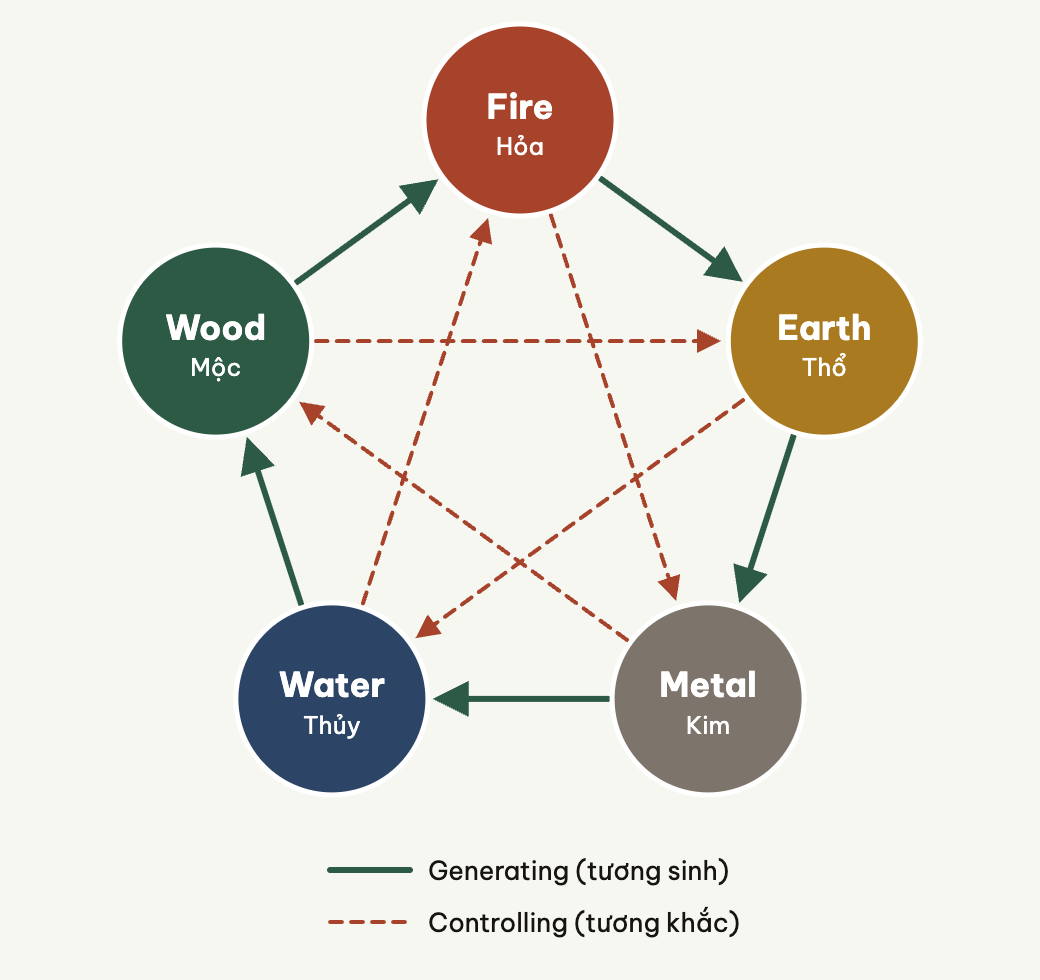
What are the generating and controlling relationships of Đại Hải Thủy?
- Metal generates Water: Metal (gold, silver, iron) when melted becomes liquid, so Metal is the source that generates Water. For Đại Hải Thủy, Metal plays a supporting role, helping the water become purer and stronger.
- Water generates Wood: Water is the source of life for plants. People with Đại Hải Thủy fate have the ability to nurture and support others, but also easily dissipate their energy if they worry too much about others.
- Water controls Fire: Water extinguishes fire. This expresses dominance, but with Đại Hải Thủy, this power is very great, and can lead to overwhelming others if one is not skillful.
Comparing Đại Hải Thủy with other Water nayin
Besides Đại Hải Thủy, there are other Water nayin such as: Giản Hạ Thủy (stream water, Giáp Tý, Ất Sửu), Tuyền Trung Thủy (clear spring water, Bính Thìn, Đinh Tỵ), Trường Lưu Thủy (long river water, Nhâm Thìn, Quý Tỵ), Thiên Hà Thủy (rain water, Bính Ngọ, Đinh Mùi). Each type has different qualities:
| Water nayin | Qualities |
|---|---|
| Giản Hạ Thủy | small, gentle, suited to a leisurely life. |
| Tuyền Trung Thủy | pure, cool and refreshing, but the source is limited. |
| Trường Lưu Thủy | flowing long, enduring, representing a lasting career. |
| Thiên Hà Thủy | heavenly water, sacred, somewhat hard to grasp. |
| Đại Hải Thủy | vast, deep, the strongest, symbolizing wisdom and power. |
What is the meaning of Đại Hải Thủy in Tử Vi and feng shui?
What personality do people with Đại Hải Thủy fate have?
People born with the Đại Hải Thủy nayin often have these characteristics:
- Generous, tolerant: Like the sea containing every river, they easily forgive and accept differences.
- Deep wisdom: Sea water symbolizes the depth of knowledge, they like to explore the essence of problems.
- Intense emotions: Like ocean waves surging, they love passionately but are also easily swept up in emotion.
- Love freedom: They dislike being constrained, and long for open space to develop.
However, if uncontrolled, Đại Hải Thủy people can become too dreamy, hard to stabilize, or when suppressed will erupt violently like a tsunami.
What colors are compatible and incompatible with Đại Hải Thủy?
According to the principles of the Five Elements, people with Đại Hải Thủy fate should use these colors:
- Compatible colors: Black, blue (belonging to Water), strengthening one's own fate; white, gray, ash gray (belonging to Metal), because Metal generates Water, bringing good luck.
- Incompatible colors: Earth yellow, brown (belonging to Earth), because Earth controls Water (earth blocks water), easily causing obstacles.
When decorating a home, if the householder belongs to Đại Hải Thủy, they can use blue as an accent in the living room or workspace to increase a feeling of relaxation, but avoid overuse because too much Water will create a heavy, buried feeling (according to feng shui).
What directions and feng shui items suit Đại Hải Thủy?
- Good directions: North (Water prospers), West and Northwest (Metal generates Water).
- Items: One can display metal objects (belonging to Metal) such as bronze kettles or metal statues to generate energy for Water. Fish tanks and water fountains are also good choices, but the water needs to be kept clean and circulating to avoid stagnation.
Applying Đại Hải Thủy in modern life
Today, quite a few people use nayin to choose car colors, interior colors, or choose a career. With Đại Hải Thủy, professions related to water, communication, research, and art (because Water symbolizes emotion and imagination) are often considered suitable. However, it must be emphasized that nayin is only one reference factor, and one should not depend on it too much or worry excessively. Life also depends on personal effort, environment, and each person's choices.
Feng shui and Tử Vi are ancient Eastern bodies of knowledge with a certain cultural value, but they are not experimental science. Their application should be in harmony with modern life, avoiding extremism and superstition.


