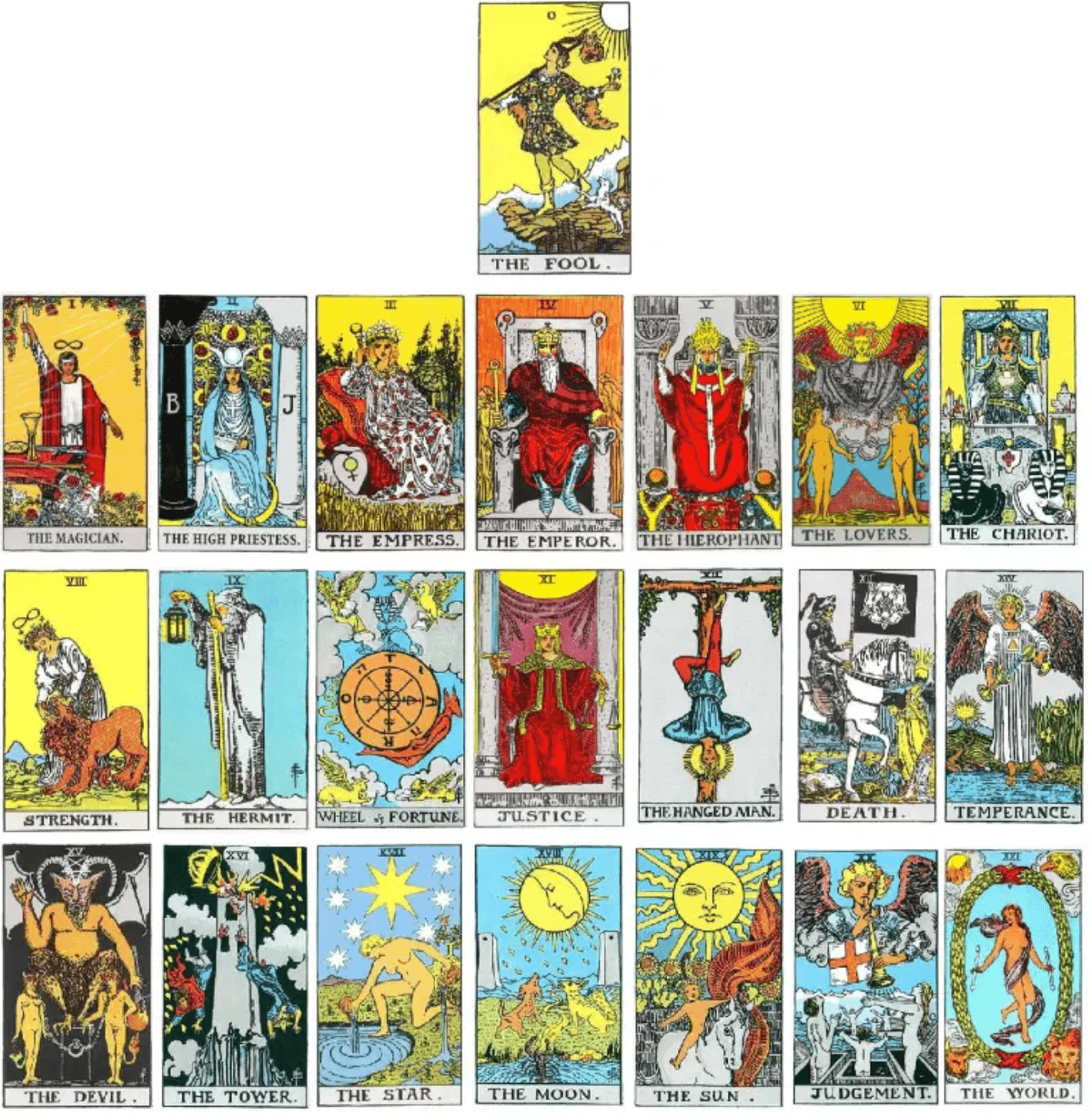
What is confirmation bias?
Confirmation bias is the tendency to seek, interpret, favor, and recall information in ways that reinforce or support beliefs, values, or decisions we already hold. British psychologist Peter Wason described it as "a preference for information consistent with a hypothesis over information against it." When we visit a fortune-teller, read astrology, or use any form of prediction, this very mechanism makes us remember the hits and forget the misses.
It is worth distinguishing confirmation bias from the self-fulfilling prophecy. In a self-fulfilling prophecy, our expectations change our own behavior, which then produces the expected outcome. Confirmation bias is purely a matter of information processing: we do not make events happen, we only filter and distort how we receive, interpret, and recall them.
Some psychologists restrict the term to selective evidence gathering. Others use it more broadly, including the tendency to preserve existing beliefs when seeking, interpreting, or remembering. The common thread: it results from automatic, unintentional strategies, not calculated deception.
Why do we remember the hits and forget the misses?
The answer lies in three mechanisms: biased information search, biased interpretation, and biased memory. All three work together to create the feeling that the fortune-teller was remarkably accurate.
First, we tend to seek information that supports an existing hypothesis. Once we believe a fortune-teller has a special gift, we pay attention to the hits, remember them, and retell them to others. The misses rarely get mentioned, and often are not even remembered.
Second, we interpret ambiguous information in a direction favorable to existing beliefs. A prediction like "there will be sadness in the family" could match almost any event over the following months. When sadness occurs, we credit the prediction immediately. When nothing happens, we forget the prediction or tell ourselves "the time just has not come yet."
Third, our memory does not record events faithfully. We remember what fits our current beliefs and emotions, and we forget or distort what does not. This is why the feeling that "the fortune-teller was right" is usually far stronger than reality.
Illusory correlation: when two unrelated events get linked
Illusory correlation is the phenomenon of perceiving a relationship between two variables (usually people, events, or behaviors) even when no such relationship exists. It occurs because rare or novel events stand out and draw our attention more.
A classic example: David Hamilton and Robert Gifford (1976) had participants read statements describing good and bad behaviors, attributed to Group A (the majority) or Group B (the minority). Both groups had the same proportion of good and bad behaviors, so there was in fact no relationship between behavior and group. But when bad behavior (distinctive, attention-grabbing) appeared in the minority group, participants exaggerated how often the minority group performed it. Good behavior did not stand out, so it was recorded more accurately.
In fortune-telling, illusory correlation works like this: a rare hit (specific and striking) gets remembered and linked to the fortune-teller. The vague, general, or wrong predictions, which are the majority, leave no impression and are forgotten. The result: we believe the fortune-teller has a special gift, even though the actual hit rate is no better than chance.
This mechanism rests on availability: what is easy to recall and picture feels more frequent. A hit leaves a strong, memorable impression, so we assume it happens often. A miss leaves no impression, so we do not count it.
Related forms of confirmation bias
Four psychological effects are commonly explained by confirmation bias:
- Attitude polarization: when two sides disagree and receive the same evidence, their views grow more extreme.
- Belief perseverance: a belief survives even after the evidence for it has been discredited.
- Irrational primacy effect: we rely more on the first piece of information in a sequence.
- Illusory correlation: we perceive a link between two events even when they are unrelated.
These effects explain why a person can believe in fortune-telling, astrology, or other forms of prediction despite many disappointments. Each disappointment is forgotten, each hit is remembered and retold, producing a distorted picture of reality.
Comparison table of bias types in fortune-telling
| Bias type | Manifestation in fortune-telling | Consequence |
|---|---|---|
| Biased search | Noticing only hits, ignoring misses | Believing the fortune-teller has a special gift |
| Biased interpretation | Attributing ambiguous events to the prediction, ignoring other readings | Vague predictions are treated as accurate |
| Biased memory | Recalling hits clearly, forgetting misses | Estimating a hit rate higher than reality |
| Illusory correlation | Linking a rare hit to a striking event | Creating a false sense of causation |
Why do intelligent people still believe?
Michael Shermer once wrote: "Smart people believe weird things because they are skilled at defending beliefs they arrived at for non-smart reasons." A Stanford study with supporters and opponents of the death penalty showed that, after reading the same research, both sides rated studies supporting their view as higher quality and studies opposing it as less convincing. They produced detailed arguments to defend their existing positions.
This means high education does not protect us from confirmation bias. On the contrary, people with strong reasoning skills can become more effective defenders of existing beliefs. In fortune-telling, a knowledgeable person can find many explanations to turn a miss into "right in some way," or a vague prediction into "right later."
Limits of confirmation bias
People are not always biased in one direction. Some studies show we tend to prefer genuinely diagnostic questions over questions that merely confirm. In one experiment, when given a choice between a biased question and a diagnostic one, participants chose the diagnostic question. This suggests confirmation bias is not an absolute law but a tendency that can be adjusted when we are reminded or motivated to think more carefully.
Another study found that education about illusory correlation reduces how often the phenomenon occurs. This means understanding the psychological mechanism can help us be less governed by it, at least in some situations.
How to self-check and reduce bias
If we want to test whether a fortune-teller or a prediction method is truly accurate, we need to do what confirmation bias prevents: look for evidence against, not evidence for.
- Record all predictions, not just the hits. Count the wrong ones and the ones that never happened.
- Set clear criteria before testing: what counts as a "hit," what counts as a "miss," and over what time frame.
- Seek disconfirming evidence: if the fortune-teller says "this year brings wealth," look for years without wealth to compare.
- Ask others to evaluate independently, because we often cannot see our own biases.
These steps are not meant to deny all spiritual experience, but to separate subjective feeling from objective reality. The feeling that "the fortune-teller was right" can be very real, but it does not automatically become scientific evidence.
Conclusion
Confirmation bias is one of the most powerful psychological mechanisms governing how we take in information about ourselves and the world. In fortune-telling, it explains why we remember the hits and forget the misses. This is not a sign of intellectual weakness but a result of how the human brain processes information: saving energy, prioritizing what fits existing beliefs, and protecting personal identity. Understanding this mechanism helps us stay clear-headed when evaluating any prediction, whether from a fortune-teller, astrology, or an algorithm.