


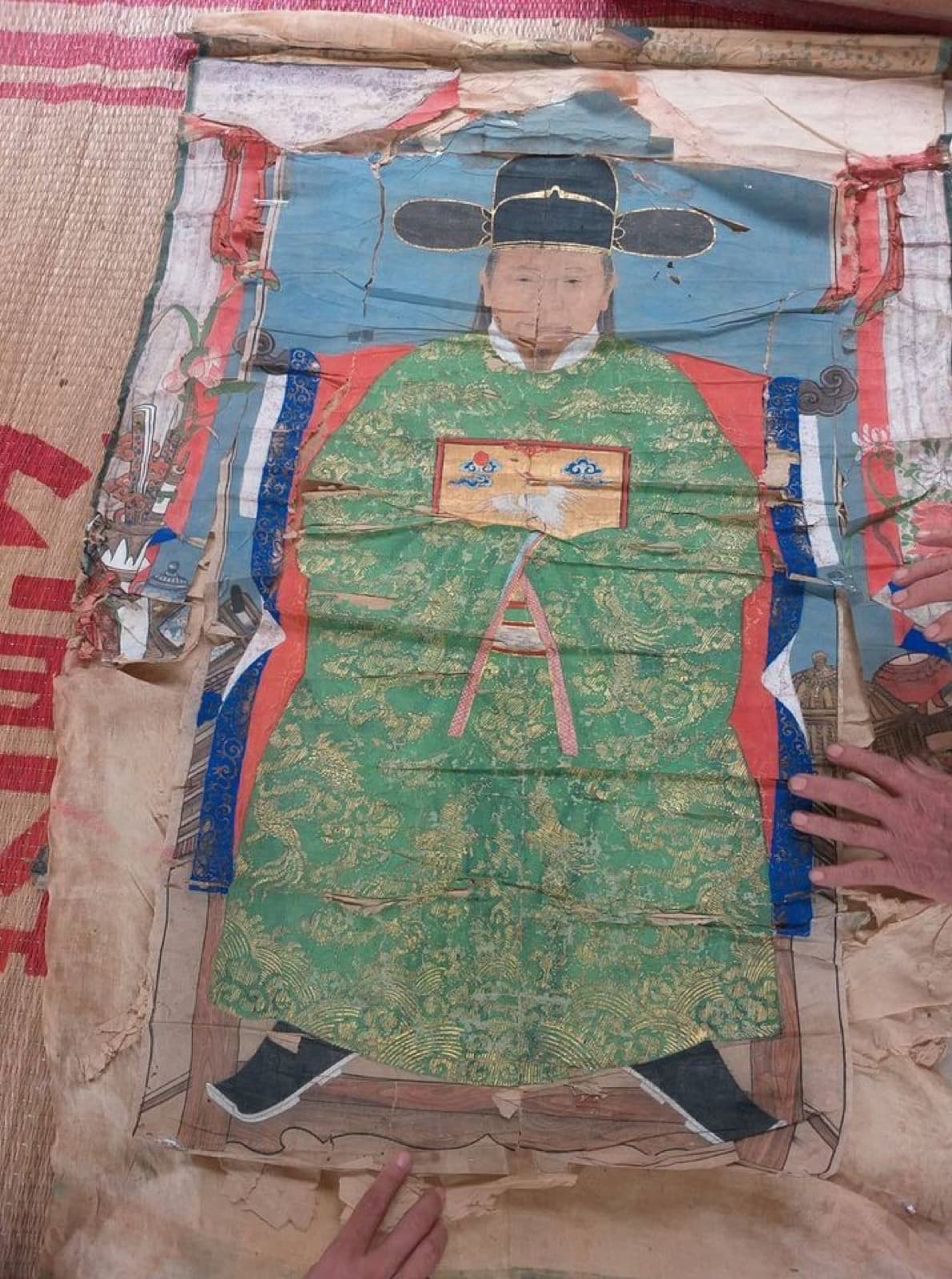
TL;DR: The Hùng Vương ancestor worship is a distinctive Vietnamese spiritual cultural practice expressing the tradition of remembering one's origins. In 2012, UNESCO inscribed this belief in its Representative List of the Intangible Cultural Heritage of Humanity, under nomination file No. 00735 submitted by the Vietnamese state. The file describes the system of temples dedicated to the Hùng Kings, the ancestral commemoration rituals, the practicing community, and heritage protection commitments. Tradition holds that there was a sequence of Hùng Vương reigns, though modern scholarship does not regard this as proven.
The Hùng Vương Commemoration: from legend to heritage of humanity
The Hùng Vương worship belief is not merely a commemorative ritual but a profound system of cultural and spiritual practice, reflecting the philosophy of life and the aspiration for enduring existence of the Vietnamese people. UNESCO's official inscription of the "Worship of Hùng kings in Phú Thọ" as a Representative Intangible Cultural Heritage of Humanity in 2012 brought this belief from the national sphere to the international arena, affirming the universal values of a distinctive cultural phenomenon.
What is the origin and historical meaning of worshipping the National Ancestors?
According to legend and official histories, the Hùng Kings were those credited with founding the state of Văn Lang, the first embryonic state of the Vietnamese people. The worship of the Hùng Kings originated very early, tied to Mount Nghĩa Lĩnh (Hy Cương commune, Việt Trì city, Phú Thọ province), which is regarded as the centre of the nation at that time. The ancient Vietnamese believed that the Hùng Kings were not only political and military leaders but also cultural heroes who laid the foundations for customs, practices, crafts and communal ways of life.
The formation of this belief was a long historical process. It began with the worship of those who had rendered service to the village and the country according to the Vietnamese tradition of "Uống nước nhớ nguồn" (when drinking water, remember the source), and gradually the worship was systematised and standardised into a national ceremony. The feudal dynasties of Vietnam, from the Đinh, Lý, Trần and Lê to the Nguyễn, all had policies of honouring, building and expanding the scale of the Hùng Temple. This shows that the Hùng Vương worship belief is not a spontaneous phenomenon but the result of a process of cultural integration and national consciousness over thousands of years.
A distinction should be made between two layers of information that are often conflated. Tradition tells of a succession of Hùng Vương reigns ruling over the state of Văn Lang . This is a legend handed down in folk tradition and in ancient texts, and modern scholarship does not consider it to be historically proven. Therefore, when speaking of the Hùng Kings, one should separate what tradition recounts from what modern historiography can verify.
What did the 2012 UNESCO nomination file contain?
The nomination file that Vietnam submitted to UNESCO in 2012 is Nomination file No. 00735 under the name "Worship of Hùng kings in Phú Thọ". This is the nomination document of the Vietnamese state, considered by the Intergovernmental Committee for the Safeguarding of the Intangible Cultural Heritage at its seventh session in Paris in December 2012. The file describes the system of temples and shrines worshipping the Hùng Kings, the commemoration ritual, the practising community and the commitments to safeguarding the heritage.
According to this file, elements of the belief such as the stories of the deities recorded in Hán characters, the custom of choosing caretakers for temples and shrines in the villages and at the Hùng Temple, and the identification of the black pig as a suitable offering to the Hùng Kings, are all living traditions still preserved. The file also states that the practice of the Hùng Vương worship belief by individuals, communities and state agencies is governed by the Ordinance on Belief and Religion issued by the Standing Committee of the National Assembly (No. 21/2004/PL-UBTVQH) and the Law on Cultural Heritage (2001, amended 2009).
Regarding community consensus, the file records that representatives of 109 villages associated with the Hùng Vương worship belief, together with leaders of districts and communes and cultural practitioners, members of the Festival Management Board and elders, met on 19 November 2010 in Việt Trì city and on 20 November 2010 in Lâm Thao district, Phú Thọ province, to express their consensus with Document No. 2496/VPCP-KGVX of the Government Office concerning the Prime Minister's agreement to submit the file. There were 3,773 representatives from 109 villages, together with representatives of 76 commune, ward and township People's Committees, 12 district, town and city People's Committees and one provincial People's Committee, who signed the document of consensus.
What is the nature and operating mechanism of the Hùng Vương worship belief?
Unlike ancestor worship within the family or clan, the Hùng Vương worship belief has a deeply communal and national character. It is an extension of the concept of "ancestor" to the scale of the entire nation. The Hùng Kings are regarded as the "Ancestors" of the entire Vietnamese nation, and therefore every Vietnamese person, in whatever region, can regard themselves as descendants of the Hùng Kings.
The operating mechanism of this belief rests on a system of relics and rituals. According to statistics of Phú Thọ province, there are currently 345 relics in the province associated with the Hùng Vương worship belief. Among them, the Hùng Temple Historical Relic Site is ranked as a special national relic. Nationwide, the number reaches 1,417 relics worshipping the Hùng Kings, their wives and children, and the generals of the Hùng Vương era. These relics are not only places where rituals take place but also historical "witnesses", sacred spaces connecting the present generation with the heroic past.
The centre of the belief is the Hùng Vương Commemoration held on the 10th day of the third lunar month every year at the Hùng Temple. This ritual is performed solemnly and reverently, following traditional procedures preserved through many generations. Besides the ceremonial part, the festive part with folk games and cultural and artistic activities is also organised, creating an atmosphere both sacred and lively, attracting millions of people from every region of the country and overseas Vietnamese.
What are its symbolic values and power to connect the community?
The core and overarching value of the Hùng Vương worship belief is connection. It connects people with the nation's origins, and connects generations within a continuous historical flow. When taking part in the ritual, each person not only fulfils a spiritual duty but also becomes conscious of their own place within the larger national community.
The artistic programme "Linh thiêng nguồn cội - Đất Tổ Hùng Vương" (Sacred origins, the Ancestral Land of Hùng Vương), held on the evening of 9 April 2022 (the 9th day of the third lunar month) on the occasion of the 10th anniversary of UNESCO recognition, once again affirmed the role of this belief in the spiritual life of Vietnamese people. This event was not only an occasion to honour the unique folk cultural values of the Ancestral Land but also an opportunity to praise the spirit of solidarity and the tradition of "Uống nước nhớ nguồn" of the nation.
The Hùng Vương worship belief goes beyond the meaning of a purely spiritual activity (praying for national peace and prosperity, favourable weather) to become an invisible yet extremely strong thread binding the Vietnamese community at home and abroad. It reminds each person of their responsibility towards the past, present and future of the nation, thereby strengthening solidarity, love and mutual support.
How are the safeguarding and promotion of the heritage's values carried out?
UNESCO recognition is a great honour but also places great responsibilities on Vietnam in safeguarding and promoting the heritage's values in the spirit of the UNESCO 2003 Convention. Over the past 10 years (2012-2022), Phú Thọ province, as the central locality of the heritage, has made considerable efforts.
Specifically, the province has stepped up communication and promotion to raise awareness and capacity of the community, the cultural practitioners, in preserving and promoting the unique values of the belief. The province has also mobilised resources to restore, repair and embellish the Hùng Temple Historical Relic Site and nearly 60 other Hùng Vương worship relics in the area. The ranking of 25 relics worshipping the Hùng Kings and figures of the Hùng Vương era as provincial-level historical and cultural relics during this period was also an important step in systematising and managing the heritage.
Besides safeguarding tangible values, the safeguarding of intangible values such as worship rites, folk songs and dances, and related customs and practices has also received attention. The annual organisation of the Hùng Vương Commemoration at the Hùng Temple and in the villages and communes worshipping the Hùng Kings in the province has always been carried out solemnly, reverently and in accordance with traditional rites, contributing to protecting the core values of the heritage.
Looking at the nomination file, one can see that the safeguarding commitments were set out as specific plans. The file mentions organising training courses for cultural officials in Phú Thọ on the Law on Cultural Heritage and the 2003 Convention, along with an approach to working with local communities, with the advice of the Centre for Conservation and Promotion of Cultural Heritage (Vietnam Cultural Heritage Association) and the Department of Cultural Heritage (Ministry of Culture, Sports and Tourism). The file also planned to establish a fund for the Hùng Vương worship belief under the Vietnam Cultural Heritage Association in Phú Thọ, with the support of businesses, individuals and the community, in order to help educate and disseminate the heritage along with the practice of rituals in the villages. The timeframe for these activities is given as 2013 to 2020, with the 2013-2015 period focusing on restoration, collection, research and documentation, and the establishment of an Association of Hùng Vương Worship Festival Management Boards under the Vietnam Cultural Heritage Association.
On the academic side, the file states that folk culture researchers in Phú Thọ province such as Mr Nguyễn Khắc Xương, Mr Phạm Bá Khiêm and Ms Nguyễn Thị Tuyết Hạnh took an active part in researching the belief. The Department of Cultural Heritage, the Vietnam Institute of Culture and Arts and the Phú Thọ Department of Culture, Sports and Tourism met on 27 January and 28 February 2011 to discuss, review and agree on the nomination process to ensure compliance with UNESCO requirements. On 3 March 2011, the Phú Thọ Provincial People's Committee discussed an action plan to safeguard and promote the Hùng Vương worship belief.
The Hùng Vương worship belief in the modern flow
In the context of a modern society with many changes, the Hùng Vương worship belief still retains a powerful vitality. Not only is it a spiritual destination for millions of pilgrim visits each festival season, this belief is also regarded as a soft resource for tourism development and for promoting Vietnamese culture to the world.
The coordination between Phú Thọ province and central ministries and sectors in implementing the commitments to UNESCO has created a model for the management and safeguarding of intangible cultural heritage in Vietnam. These efforts do not stop at preservation but also aim to "revive" and spread the values of the heritage in the community, especially among the younger generation.
UNESCO recognition created positive pressure obliging authorities at all levels and the people to reconsider and value their heritage more highly. It also opened up opportunities to compare, contrast and learn from the experience of other countries in safeguarding intangible cultural heritage. The Hùng Vương worship belief, with its profound humanistic values, will certainly continue to be a vivid testament to the enduring nature of Vietnamese culture within the flow of human civilisation.
A table comparing the features of the Hùng Vương worship belief according to the facts in this article.
| Feature | Information in the article |
|---|---|
| Year of UNESCO inscription | 2012 |
| Centre of worship | Mount Nghĩa Lĩnh, Hy Cương commune, Việt Trì city, Phú Thọ province |
| Main festival day | The 10th day of the third lunar month every year |
| Number of relics in Phú Thọ | 345 relics |
| Number of relics nationwide | 1,417 relics |
| Number of relics ranked at provincial level in the 2012-2022 period | 25 relics |
| Number of relics restored, repaired and embellished | Nearly 60 relics |
| Dynasties that honoured and built the Hùng Temple | Đinh, Lý, Trần, Lê, Nguyễn |
| Artistic programme marking 10 years of UNESCO recognition | Linh thiêng nguồn cội - Đất Tổ Hùng Vương, evening of 9 April 2022 |
| Core value | Community connection |
| Number of villages taking part in the consensus for the 2012 nomination file | 109 villages |
| Number of representatives who signed the document of consensus | 3,773 people |
| Timeframe of the safeguarding plan in the file | 2013 to 2020 |


