


Cúng ông Công ông Táo (Kitchen Gods' send-off, 23rd of the 12th lunar month)
Also called: Cúng Táo quân, Đưa ông Táo, Tiễn Táo quân, Tết ông Táo, Tiễn Táo quân về trời, Văn khấn ông Công ông Táo 23 tháng Chạp
- Lunar New Year (Tết)
Culture and belief A record of custom.
In folk belief the Kitchen Gods return to heaven on the 23rd of the twelfth lunar month to report on the household's year. Families hold a send-off; the mount offered to the gods, the hour of the rite and the dishes differ between the North, the Centre and the South.
At a glance
- When it is held
- The 23rd of the twelfth lunar month; the offering time differs among the three regions.
- This year (2026)
- Next year (2027)
- For whom
- Táo quân (Kitchen Gods, Đông Trù Tư Mệnh Táo Phủ Thần Quân), together with Thổ Công (Earth God of the house) and Thổ Địa (Earth God) in the house
- Where
- Thổ Công altar, Kitchen, Ancestral altar
- Who makes the offering
- head of the household
Each family and each region may do it differently.
The offering tray
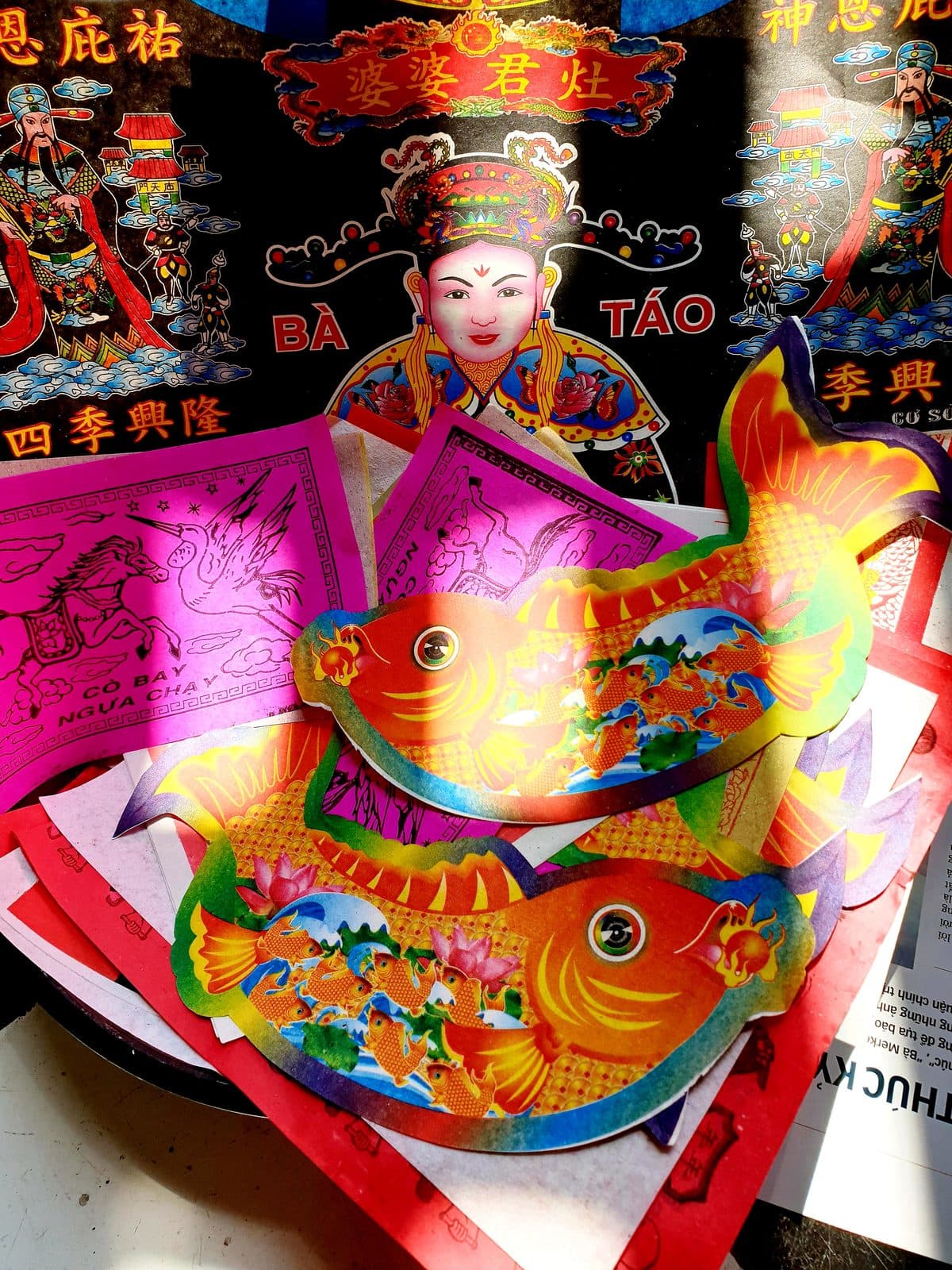
_(2).jpg)

Nationwide
- When
- The 23rd of the twelfth lunar month
- Customary hour
- before 12:00 noon on the 23rd
- Where the offerings are set
- At the altar of Thổ Công (Earth God of the house) (the incense bowl of Ông Công is placed together with the ancestors' altar) or at the kitchen place
| Offering | Quantity | Vegetarian or not | Notes |
|---|---|---|---|
| Votive paper | |||
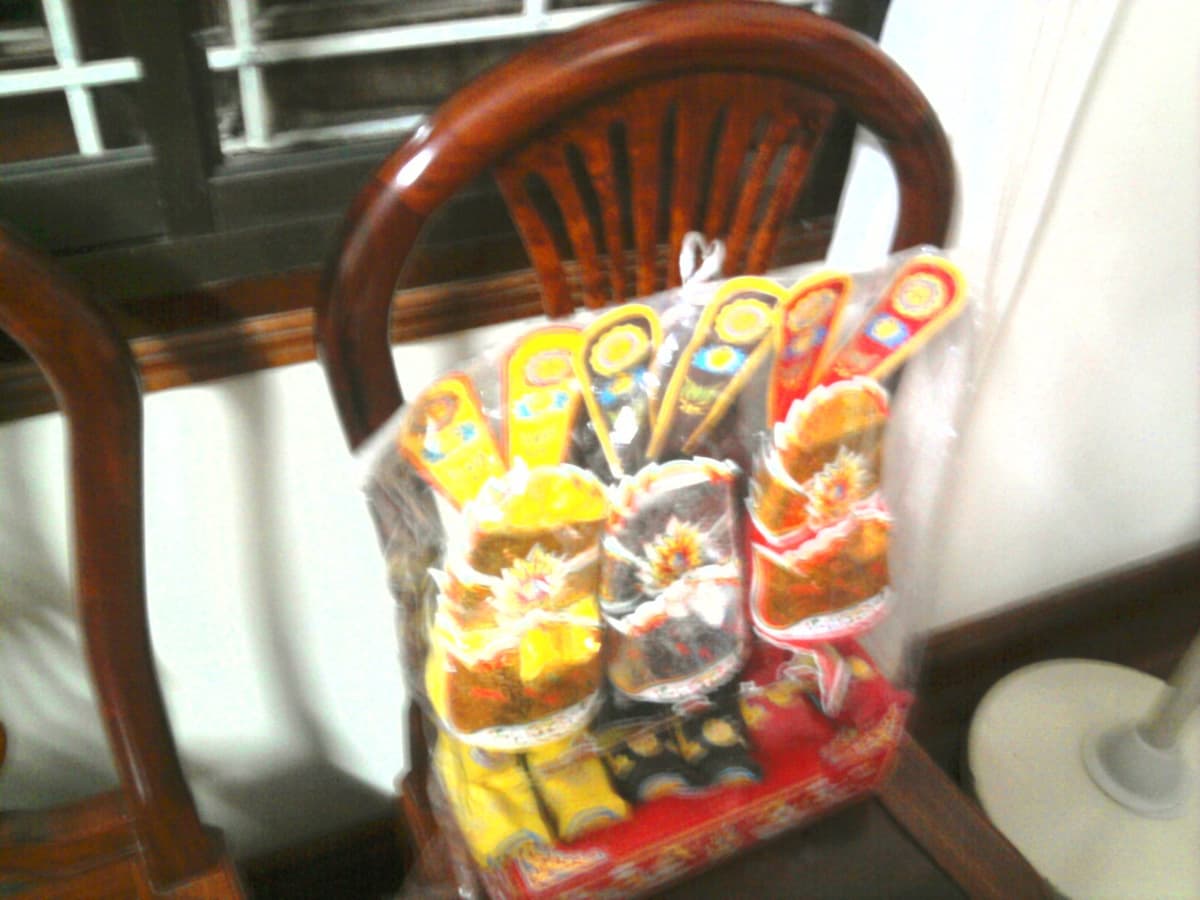
| Mũ Thổ Công (hat for the Earth God of the house) | 1 set of 3 pieces | One woman's hat, two men's hats; together with paper clothes and boots; each year a colour according to the five elements | |
| Paper gold ingots | 100 | Placed under the hats | |
| Meat and savoury dishes | |||
| Cá chép (carp) | Meat or fish | Released after the offering | |
| Incense, lamps, candles | |||
| Incense, flowers, offering tray | |||
North
- When
- Some households hold the offering from the 21st, at the latest in the morning (before noon) of the 23rd of the twelfth lunar month
- Customary hour
- by 12:00 noon on the 23rd at the latest
- Where the offerings are set
- Altar
| Offering | Quantity | Vegetarian or not | Notes |
|---|---|---|---|
| Meat and savoury dishes | |||
| Live red carp | 3 fish | Meat or fish | Required. Placed in a basin of clean water, released after the offering |
| Savory feast: chicken, xôi gấc (steamed sticky rice with gấc fruit), giò (Vietnamese sausage), fried spring rolls, soup, stir-fried dish | Meat or fish | Some households add xôi chè nếp cái (steamed sticky rice and sweet soup with glutinous rice), lotus tea | |
| Votive paper | |||
| Mũ Táo quân (hat for the Kitchen Gods) | 2 men's hats with dragonfly wings, 1 woman's hat without dragonfly wings | Required | |
| Paper clothes and shoes | 3 sets | ||
| Flowers | |||
| Peach branch or a vase of chrysanthemums, betel leaves and areca nuts folded in phoenix-wing shape, a plate of five fruits | Vegetarian | ||
Central
Huế, Hội An, Quảng Nam, Folk practice
- When
- Two guides say differently: one gives the night of the 22nd into the early morning of the 23rd of the twelfth lunar month; another gives morning or noon of the 23rd, with some households making the offering from the afternoon of the 22nd
- Where the offerings are set
- Kitchen altar
| Offering | Quantity | Vegetarian or not | Notes |
|---|---|---|---|
| Votive paper | |||
| Paper horses with full saddle and bridle | Required. Instead of carp; burned together with paper clothes and hats | ||
| Objects | |||
| Three Táo quân (Kitchen Gods) figurines of fired clay | 3 | Huế and nearby areas: the old figurines are carried out to an am miếu (small shrine) or the foot of a tree, and new figurines are brought up to the altar | |
| Meat and savoury dishes | |||
| Cooked mackerel or tuna | Meat or fish | ||
| Boiled pork, ram (spring rolls) | Meat or fish | ||
| Xôi (steamed sticky rice) and cakes | |||
| Bánh tổ | Vegetarian | Quảng Nam | |
South
- When
- Evening of the 23rd of the twelfth lunar month, from about 20:00 to 23:00, after dinner when cooking has finished
- Customary hour
- 20:00 to 23:00
- Where the offerings are set
- Near the kitchen; in the rural Nam Bộ of former times the offering tray was placed on the ground right beside the stove
| Offering | Vegetarian or not | Notes |
|---|---|---|
| Votive paper | ||
| A set of "flying crane, running horse" in paper | Required. Instead of carp; burned right after the offering | |
| Vegetarian dishes | ||
| Peanuts, black sesame candy | Vegetarian | |
| Xôi (steamed sticky rice) and cakes | ||
| Chè, xôi chè (sweet soup, sticky rice with sweet soup) | Vegetarian | |
| Meat and savoury dishes | ||
| Savory tray: boiled chicken or roast pork, xôi gấc (red sticky rice), fried nem | Meat or fish | |
| Incense, lamps, candles | ||
| Incense, lamps, 3 small cups of water | Vegetarian | According to Vietnam+ |
Steps of the rite
Used across Vietnam, Folk practice
- PreparationClean the house and the altar before preparing the feast
- Reciting the prayerPrepare the offering, pray
- Burning votive paperBurn votive paper, hats, clothes, boots of the previous year, replace the tablet and the new set of hats
- Release the carp
Northern Vietnam, Folk practice
- Reciting the prayerArrange the offering, pray to send off before the hour of Ngọ (noon)
- Burning votive paperBurning votive paper
- Releasing carp
Central Vietnam, Huế, Hội An, Quảng Nam, Folk practice
- Reciting the prayerFarewell offering
- Sending off the three old Táo figurines, welcoming the new figurines
- PreparationPulling out the incense stubs, replacing the sand in the incense bowl, cleaning the altar
- Burning votive paperBurning the paper horses, paper clothes and hats
- In some regions a cây nêu (New Year pole) is put up after the 23rd
Southern Vietnam, Folk practice
- Reciting the prayerEvening farewell offering
- Burning votive paperBurning the crane and horse set
- On the 7th of the first lunar month (in some places on the night of the 30th of Tết), a rite is held to welcome Ông Táo back
Good to know
- SubstitutesA household with a Táo quân altar in the kitchen places the offering tray there; otherwise it goes on the main altar
- Common mix-upsProfessor Trần Lâm Biền, a folk culture researcher, holds that the tray for Ông Công and Ông Táo needs no lavish feast or costly votive paper; burning much votive paper is costly and harms the environment
What is avoided
Used across Vietnam, Folk practice
- TimingAccording to VTC News, folk belief holds that the rite should not be held before the 20th of the twelfth lunar month, nor after the hour of Ngọ (11 to 13 o'clock) on the 23rd
- OfferingsIn folk belief, fried carp, duck, Muscovy duck, goat, buffalo, dog meat and squid are avoided; the avoided dishes differ by locality and are fewer today
- OfferingsNo underworld paper money is burned for Táo quân (Kitchen Gods), since in this belief they are deities, not spirits of the dead
- ConductWhen releasing the carp, do not throw them down from a height and do not drop the plastic bag into the pond or river
Northern Vietnam, Folk practice
- TimingOne guide advises against making the offering after noon on the 23rd
The custom
According to Phan Kế Bính's Việt Nam phong tục (1915), the 23rd of the twelfth lunar month is the festival of Táo quân (Kitchen Gods): custom holds that on that day the kitchen god goes up to heaven to report people's good and bad deeds, following a teaching of Taoism. The book also records the tale of two husbands and a wife who all died in a fire and were made kitchen gods by the Emperor of Heaven out of pity; hence families buy two men's hats and one woman's hat for worship and a carp to serve as the gods' mount.
According to the legend retold by Vietnam+, on this day Ông Công and Ông Táo ride carp up to Heaven to report the household's year to the Jade Emperor; in Vietnamese belief the three Táo deities decide the household's fortune and blessings. The mount provided differs by region: carp in the North, a paper horse in the Centre, the paper set "cò bay, ngựa chạy" in the South.
Where the sources differ
- The earliest day: VTC News records the belief that the rite should not be held before the 20th of the twelfth lunar month; Dân trí records that many families now hold it early, from the 16th until before 12 noon on the 23rd
- Two guides say differently: one gives the night of the 22nd into the early morning of the 23rd of the twelfth lunar month; another gives morning or noon of the 23rd, with some households making the offering from the afternoon of the 22nd
Questions
On which day is the offering to Ông Công and Ông Táo held?
By custom the send-off of Táo quân (Kitchen Gods) is on the 23rd of the twelfth lunar month; in the Bính Ngọ year this falls on 30 January 2027 (30/1/2027). The time differs by region: according to Vietnam+, people in the North prepare from about the 20th and finish by noon on the 23rd at the latest; the Centre holds it on the 23rd itself; the South of old held it on the evening of the 23rd, about 20:00 to 23:00.
Can the offering to Ông Công and Ông Táo be made before the 23rd?
According to the papers, many households make the offering before the 23rd: Vietnam+ records that people in the North prepare from about the 20th of the twelfth lunar month, and Dân trí records that many families now hold it from the 16th. VTC News records the folk belief that it should not be held before the 20th, nor after the hour of Ngọ on the 23rd.
Where is the tray for Ông Công and Ông Táo placed?
According to VTC News, a household with a Táo quân (Kitchen Gods) altar in the kitchen places the tray there; otherwise it goes on the main altar. Ông Công is Thổ Công (Earth God of the house), so his incense bowl sits on the ancestral altar. In the Centre, three fired-clay figures of the Táo are worshipped on the kitchen altar.
What is avoided when making the offering to Ông Công and Ông Táo?
According to VTC News and Dân trí, folk custom avoids making the offering after the hour of Ngọ on the 23rd; avoids fried carp, duck, Muscovy duck, goat, buffalo, dog meat and squid, though the avoided dishes differ by locality; burns no underworld paper money since Táo quân are deities; and, when releasing the carp, does not throw them from a height or drop the plastic bag into the water.
What does the South offer when sending off Ông Táo?
According to Vietnam+, people in the South do not use carp but the paper set "cò bay, ngựa chạy", burned after the rite; the offering has incense, lamps and 3 small cups of water; the tray has savoury dishes such as nem, giò, bánh chưng, pickled onions and boiled chicken, plus chè trôi nước and black sesame and peanut candy.
How does the Ông Táo tray in the Centre differ?
According to Vietnam+ and Dân trí, people in the Centre offer a paper horse with full saddle and bridle instead of carp; the tray has mackerel or tuna, fresh flowers and fruit; on the 23rd they carry the three old fired-clay Táo figures to a shrine at the head of the hamlet or the foot of an old tree and bring new figures up to the kitchen altar.
Communities and regions
More about Cúng ông Công ông Táo (Kitchen Gods' send-off, 23rd of the 12th lunar month)
- GlossaryWhat is Ông Công Ông Táo?
- Festival customsÔng Công Ông Táo: The Kitchen Gods' Journey to Heaven on the 23rd of the 12th Lunar Month
- RegionsDifferences in the Kitchen Gods worship customs across three regions
- Tet and seasonal ritesHow to Prepare and Perform the Kitchen Gods' Offering on the 23rd of the Twelfth Lunar Month According to Customs of Three Regions
Sources
- Văn khấn Thổ công (vankhan.vn)
- Văn khấn cúng ông Công ông Táo năm 2023 (phatgiao.org.vn)
- Cúng ông Công ông Táo cần kiêng kỵ những gì? (vtcnews.vn)
- Mâm cỗ chuẩn và 2 điều cấm kỵ khi cúng ông Công ông Táo (dansinh.dantri.com.vn)
- Cúng ông Táo ở 3 miền (fptshop.com.vn, trang tin của cửa hàng)
- Cúng ông Táo miền Bắc (docungtamlinh.com.vn)
- Sự khác biệt trong phong tục cúng ông Công, ông Táo ở 3 miền Bắc-Trung-Nam (vietnamplus.vn)
- Cúng ông Táo miền Trung (docungtamlinh.com.vn)
- Tục lệ cúng ông Công ông Táo của người miền Trung (dantri.com.vn)
- Cách cúng ông Táo ở miền Nam (docungtamlinh.com.vn)
- Tổng hợp bài cúng ông Công ông Táo (docungtamlinh.com.vn, trang bán mâm cúng ở TP.HCM)
- Việt Nam phong tục, mục XII Tứ thời tiết lạp, Phan Kế Bính, 1915 (vi.wikisource.org)
Part of the open datasets Types of Vietnamese offering rites and Vietnamese offering procedures, licensed CC BY 4.0.
More ritesDeath anniversaries, Tết, the home, business, the life cycle, village and ethnic rites.Open