


Cúng rằm tháng Giêng (offering on the full moon of the first lunar month)
Also called: Tết Nguyên tiêu, Tết Thượng nguyên, Rằm Thượng nguyên, Lễ Thượng nguyên
- Festivals through the year
Dates
- This year (2026)
- Next year (2027)
Each family and each region may do it differently.
What is Cúng rằm tháng Giêng (offering on the full moon of the first lunar month), and when is it held?
Rằm tháng Giêng is the 15th day of the first lunar month, the first full moon of the new year, also called Tết Nguyên tiêu or Tết Thượng nguyên; a folk saying goes "A whole year of worshipping the Buddha is not worth the full moon of the first month"[1].
The researcher Toan Ánh, quoted by the Pháp Luật TP.HCM newspaper, wrote that on this day everyone from the royal court to the common people made offerings to the Buddha[2]. Phan Kế Bính (1915) records that on thượng nguyên the pagodas prepared a vegetarian feast for the Buddha and then served it to the lay followers[3]; in the villages, thượng nguyên was one of the seasonal days with a rite, using an ox and a pig or chicken and sticky rice, a full ceremony in some places and a simple offering in others, according to village custom and to whether the harvest was good or poor[4].
Today the rite can be held at a pagoda or at home; most people both go to the pagoda and make offerings at home, and many pagodas also hold a star-appeasing rite (giải sao) on this day[1]. Thanh Niên newspaper notes that many families prepare a meal, fruit, incense and lamps for their ancestors, while pagodas, communal houses and shrines fill with people coming to worship the Buddha[5].
What to prepare
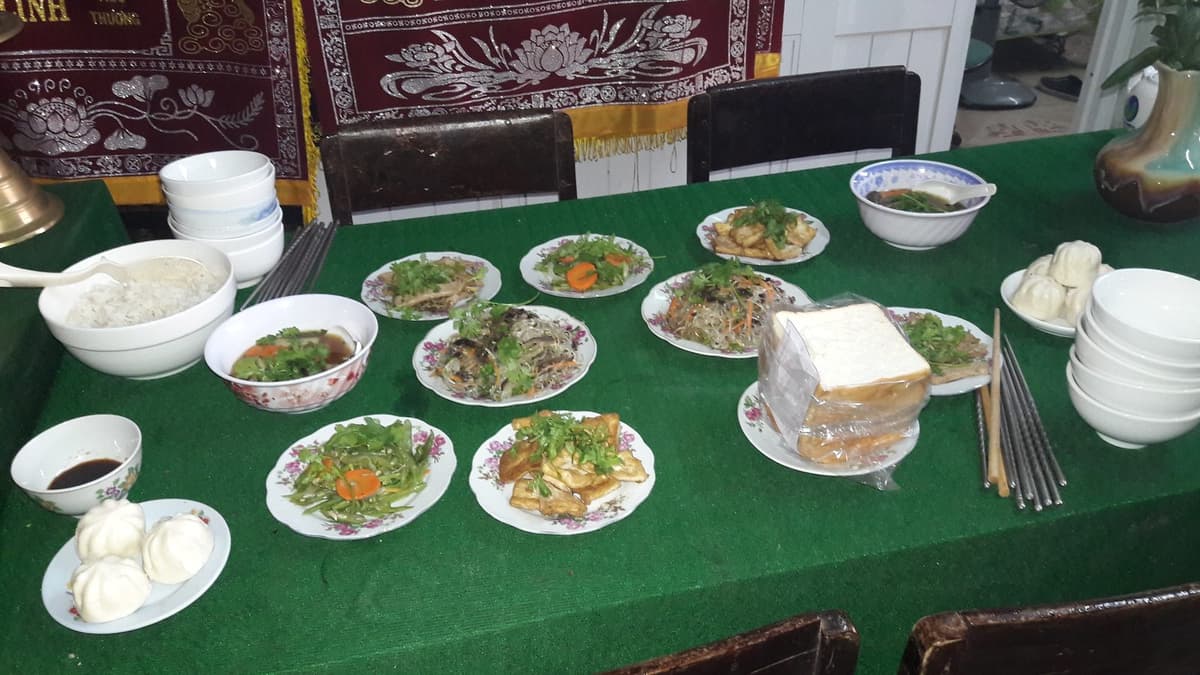
- Two sets of offeringsBy custom, families prepare two sets of offerings: a vegetarian tray for the Buddha with incense, flowers, lamps and candles, and a tray for the ancestors with the dishes of Tết, meat or vegetarian depending on the family[6][7].
- Time of the offeringThe ancestor offering is made at the hour of Ngọ on the full-moon day, that is 11:00 to 13:00[6][8]; one guide notes that a busy family may make the offering at the hour of Tuất, 19:00 to 21:00[8].
- Where the offerings goThe vegetarian offering is for the Buddha, and the meat tray is for the ancestors[7]. One guide notes that the host may set up an altar in the yard for a giải hạn (rite to ward off misfortune)[7]. Shops and companies also make a full-moon offering at the altar of the God of Wealth (Thần Tài)[6].
- Offerings taken to the pagodaBáo Văn Hóa notes that the offering for asking blessings at temples and pagodas early in the year is usually simple: incense, flowers, fresh fruit and clean water, sometimes with a written petition (sớ)[9]. At Vĩnh Nghiêm pagoda (Ho Chi Minh City), people attending the cầu an (prayer for peace and safety) register their names early to receive the pagoda's petition[10].
Offerings and trays
The ancestor tray is basically not much different from the Tết feast[11]. One guide lists a meat tray of half a kilo of boiled pork shoulder, a bowl of bamboo-shoot soup, a plate of mixed stir-fry, a plate of nem (spring rolls), a plate of stir-fried greens, a plate of giò (pork roll), a plate of xôi gấc (red sticky rice) and a plate of fruit, along with incense, flowers, a little votive paper, lamps, candles, betel and areca, and rice wine[6].
The tray often includes bánh trôi (glutinous rice balls, chè trôi nước in the south): one guide says it is required, while Pháp Luật TP.HCM says that many people now add it[6][2]. The same newspaper describes offerings to the Buddha of fruit, chè trôi nước, sticky rice and a plate of salted peanuts[2].
Every place and every family does it differently: vegetarian or not, many dishes or a modest few, depending on means and local custom[11]. VnExpress notes that the home offering need not be as large and formal as at the end of the year[1].

Nationwide
| Offering | Vegetarian or not | Notes |
|---|---|---|
| Vegetarian dishes | ||
| Vegetarian offering tray to Buddha | Vegetarian | Together with incense, flowers, lamps and candles |
| Meat and savoury dishes | ||
| Meat offering tray to ancestors | Meat or fish | Dishes such as the Tết feast: boiled meat, bamboo shoot soup, nem, giò, xôi gấc (steamed sticky rice with gấc fruit) |
| Incense, lamps, candles | ||
| Incense, flowers, votive paper, lamps and candles | ||
| Betel leaves and areca nuts | ||
| Betel leaves and areca nuts, wine | Vegetarian | |
| Xôi (steamed sticky rice) and cakes | ||
| Bánh trôi (chè trôi nước) | Vegetarian | One guide writes that the offering tray must have it, another writes that many places add it |
| Fruit | ||
| Ngũ quả (five-fruit tray) | Vegetarian | |
North
| Offering | Vegetarian or not | Notes |
|---|---|---|
| Meat and savoury dishes | ||
| Meat feast tray offered to ancestors in the style of "4 bowls and 6 plates" | Meat or fish | Some guides call it a rule characteristic of the North |
| Fruit | ||
| Five-fruit tray with a bunch of bananas | Vegetarian | The article writes that bananas are the fruit always present on the five-fruit tray of the North |
Step by step
- Set out the vegetarian tray for the Buddha with incense, flowers, lamps and candles, and the tray for the ancestors[6].
- At the hour of Ngọ, the head of the household reads the prayer, opening with "Nam mô A Di Đà Phật" three times[7]; afterwards he or she bows three times[6].
- If someone in the family is in their zodiac year or under an unlucky star, one guide notes that a small extra offering is prepared for the giải hạn (rite to ward off misfortune) of one's star, held right after the ancestor offering[8].
- Those who go to a pagoda, according to Báo Văn Hóa, first place their offering and incense at the altar of Đức Ông, then offer at the main hall, strike the bell and pray to the Buddhas and Avalokiteśvara (Quán Thế Âm); after that they go to the other altars, the patriarchs' hall and the Mother Goddess shrine if there is one[9].
Why it is done this way
VnExpress explains that as the first full moon of the new year it is the time to pray for peace for the whole year, which is why so many people go to pagodas; at its heart the festival is a prayer for national peace and for health, safety and plenty[1]. Toan Ánh notes that the 1st and the 15th of every month are regarded as the Buddha's days, when the faithful go to pagodas together[2].
Trần Ngọc Thêm, quoted by Pháp Luật TP.HCM, writes that the first month of the year is especially important and has little farm work, so it has far more festivals than any other month[2].
In Vietnamese belief, offering bánh trôi and bánh chay expresses the wish that everything goes smoothly all year[11]. Tạp chí Công Thương notes that the bananas on the northern five-fruit tray curve upward to embrace the rest, meaning mutual care; the southern five fruits spell out a wish for having just enough to live comfortably ("cầu sung túc vừa đủ xài")[11].
How it differs by region
- NorthThe meat tray for the ancestors follows the "4 bowls, 6 plates" pattern: four bowls of bamboo-shoot stew, pork-skin soup, glass noodles and meatballs; six plates of boiled chicken, giò lụa (pork roll), fried nem, braised pork, pickled onions and xôi gấc[8].
- HuếBáo Văn Hóa notes that many families in Huế go to pagodas for cầu an (prayer for peace and safety) from the very start of the year rather than crowding in on the full moon as elsewhere; Thiên Minh pagoda holds the prayers from the 2nd day of Tết until the end of the full-moon day[12].
- Ho Chi Minh CityOn the evening of the 14th, people at the cầu an (prayer for peace and safety) at Vĩnh Nghiêm pagoda sit with the petition tucked on their heads and their palms joined; some carry fish to the Nhiêu Lộc and Thị Nghè canal beside the pagoda to release them[10]. Tết Nguyên tiêu here is usually celebrated by the Hoa community in Chợ Lớn[2]; at Ngọc Hoàng pagoda, following Hoa custom, worshippers bring cooking oil, incense, candles and even clothes, and pour oil into the lamps as a way of adding to their years and health[13].
What is avoided, and good to know
- One guide notes that the full moon of the first month is held to be a day to avoid killing animals, so some families prepare a vegetarian offering tray[8].
- Báo Văn Hóa notes that on early-spring visits to temples sincerity comes first: no pushing, no breaking off large branches, no fuss over costly offerings, and modest, neat clothing; when picking a sprig for luck (hái lộc), only a small twig or young leaves are taken[9].
Preparing the prayer text
The home prayer addresses the Buddhas, the deities and the ancestors together: the nine directions of Heaven and the Buddhas of the ten directions; Heaven and Earth; the village guardian (Thành hoàng), the earth god (Thổ địa) and the kitchen god (Táo quân); the ancestors on both sides; it then invites them to witness the offering, and finally invites the former and later owners of the land (tiền chủ, hậu chủ)[7][6]. The blanks are for the name of the person praying, the address, the lunar year and the family name of the ancestors[7].
There is also a short version of a few lines: it greets the deities, the earth god and the ancestors, states the date, name and address, and asks for health for the children and peace for the household[1]. Business owners add a prayer at the Thần Tài altar, with blanks for the place of business and the trade[6].
Prayer text for Cúng rằm tháng Giêng (offering on the full moon of the first lunar month)7 texts, kept in Vietnamese, with an English summary.OpenCommunities and regions
More about Cúng rằm tháng Giêng (offering on the full moon of the first lunar month)
- Festival customsRằm Tháng Giêng (Tết Nguyên Tiêu): The First Full Moon and Temple-Going Traditions
- Festival customsHow to Arrange the Full Moon of the First Lunar Month Offering Tray for the Family: What to Offer, How Many Trays, How to Place Them
- Tet and seasonal ritesFull Moon of the First Lunar Month - Tet Nguyen Tieu: Why It Is Considered the Most Significant Full Moon of the Year and What to Prepare for the Offering Tray
- Tet and seasonal ritesLantern Festival of the Chinese Community in Cho Lon and the Belief in Thien Hau
Sources
- Nghi lễ cúng rằm tháng Giêng (vnexpress.net)
- Lễ vật cúng Rằm tháng Giêng (plo.vn)
- Việt Nam phong tục, Thiên II, mục VI. Chùa chiền, Phan Kế Bính 1915 (vi.wikisource.org)
- Việt Nam phong tục, Phan Kế Bính (1915), thiên II, mục II. Việc tế tự (vi.wikisource.org)
- Rằm tháng giêng 2026 ở TP.HCM: Đi chùa, thả hoa đăng, cầu an tại đâu? (thanhnien.vn)
- Văn khấn Rằm tháng Giêng 2024 (hoatieu.vn)
- Văn khấn Lễ Nguyên tiêu (vankhan.vn)
- Mâm cỗ cúng rằm tháng giêng (docungtamlinh.com.vn)
- Đầu xuân đi lễ, cầu lộc cầu tài (baovanhoa.vn)
- Người Sài Gòn dâng sớ cầu an tại chùa Vĩnh Nghiêm rằm tháng Giêng (thanhnien.vn)
- Những món ăn không thể thiếu trong mâm cỗ cúng Rằm Tháng Giêng (tapchicongthuong.vn)
- Đi chùa cầu an ở Huế: không có cảnh ồn ào chen lấn, tập trung đông đúc (baovanhoa.vn)
- Rằm tháng Giêng, người dân TP.HCM đi chùa cầu an (plo.vn)
Part of the open datasets Types of Vietnamese offering rites and Vietnamese offering procedures, licensed CC BY 4.0.
More ritesDeath anniversaries, Tết, the home, business, the life cycle, village and ethnic rites.Open