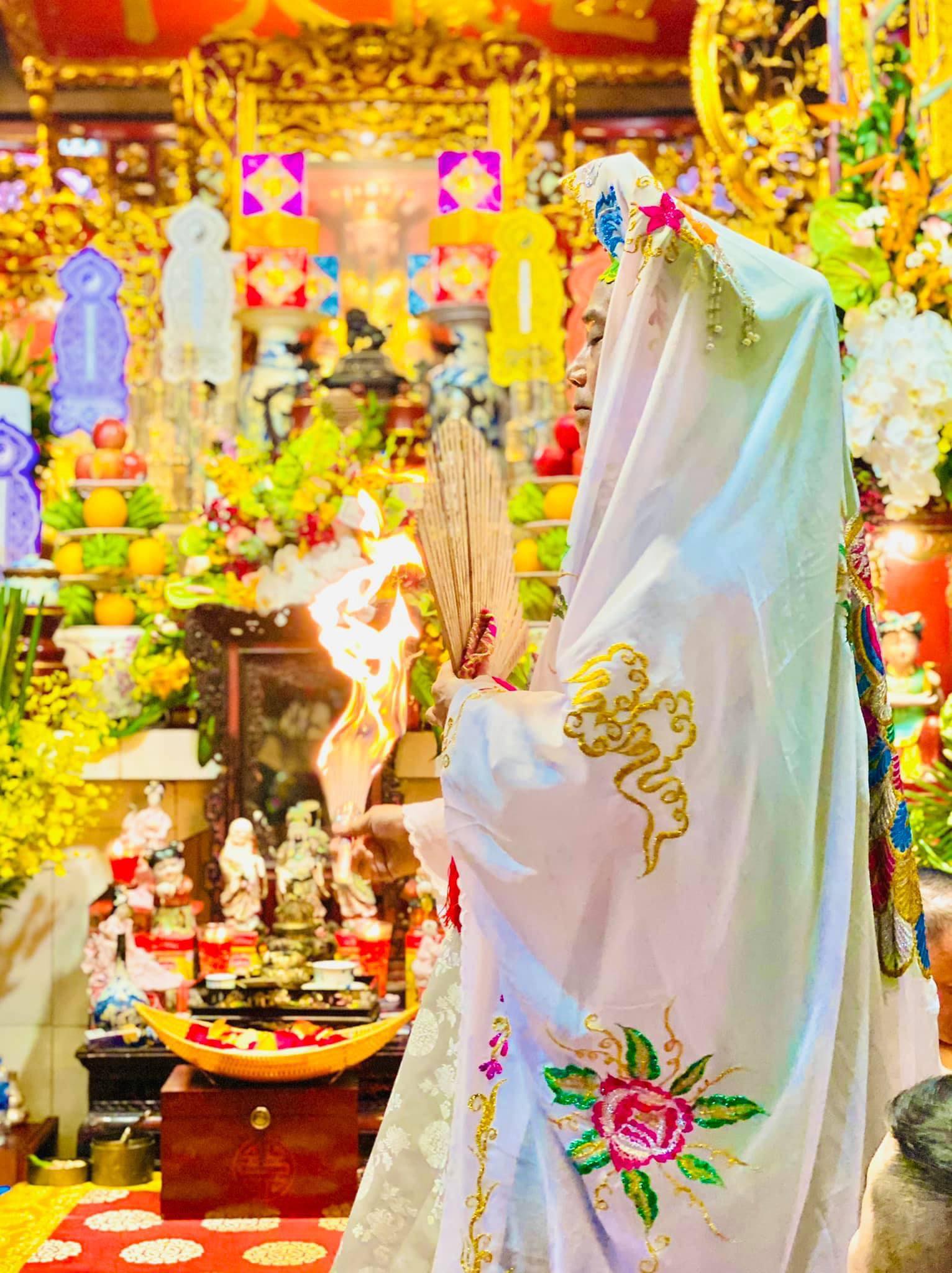
What is Hầu đồng?
Hầu đồng (also called lên đồng, hầu bóng) is the central ritual of the Mother Goddess worship of Tam phủ and Tứ phủ. During the ceremony, a medium (ông đồng or bà đồng) sits before the altar and is believed to be possessed by the spirits, then performs a series of 'giá đồng', each corresponding to a deity in the Four Palaces system. Each giá has its own costume, dance, offerings, and chant.
Origin and context
Hầu đồng is tied to Mother Goddess worship, a folk belief of Vietnamese origin that developed strongly in the Red River Delta. A typical worship center is Phủ Dầy (Nam Định), associated with Thánh Mẫu Liễu Hạnh, the only female saint among the Four Immortals. From the worship of the Three Palaces (Heaven, Earth, Water), the belief expanded to the Four Palaces with the addition of the Mountain Palace. Hầu đồng is a way to communicate with deities, praying for health, fortune, and peace, and giving thanks when prayers are believed to be answered.
How the ritual is performed
A hầu đồng session is usually accompanied by a medium and a chant singer, with an altar and offerings. The medium 'ascends' through the giá from lower to higher, changing costumes for each deity. Common giá include the First, Second, Third, and Fourth Holy Mothers, the Five Great Mandarins, the Four Palaces' Ladies, the Great Mandarins, and the young ladies and boys. Each giá has its own dance, offerings, and distribution of blessed gifts to attendees. At the end, the medium 'descends' and gives thanks.
Distinction from easily confused terms
Hầu đồng differs from 'lên đồng' in nuance: lên đồng is a colloquial term, while hầu đồng emphasizes serving the deities. 'Hầu bóng' highlights serving through the 'bóng' (shadow) of the deity and is often used in the same context. It should be distinguished from 'đồng cốt' or 'đồng bóng', which refer to the practitioner, and from 'lên đồng' in other religions meaning possession. Hầu đồng is also not the same as 'chầu văn', which is a singing genre serving the ritual.
Note
This is traditional knowledge for reference, not scientifically verified. Readers should consult official cultural sources and respect the diversity of folk beliefs.