Introduction: The I Ching and Its Millennial Journey
The I Ching, or Book of Changes, is one of the oldest and most profound classics of humanity. Born thousands of years ago in ancient China, it is not merely a divination tool but a complete philosophical system of cosmic order. Through countless historical upheavals, the 64 hexagrams have been transmitted and studied widely, not only in the East but also in the West, thanks to their intellectual depth and practical applicability.
According to psychologist Carl Gustav Jung, the 64 hexagrams of the I Ching serve as a tool to determine the meaning of 64 different but archetypal situations. Each hexagram is not simply an abstract symbol but a picture describing a state of the universe and human psychology at a given moment. This view is linked to the concept of "synchronicity" , a principle explaining meaningful coincidences between events, transcending ordinary causality.
Origins and Basic Structure of the 64 Hexagrams
From Trigrams to Hexagrams
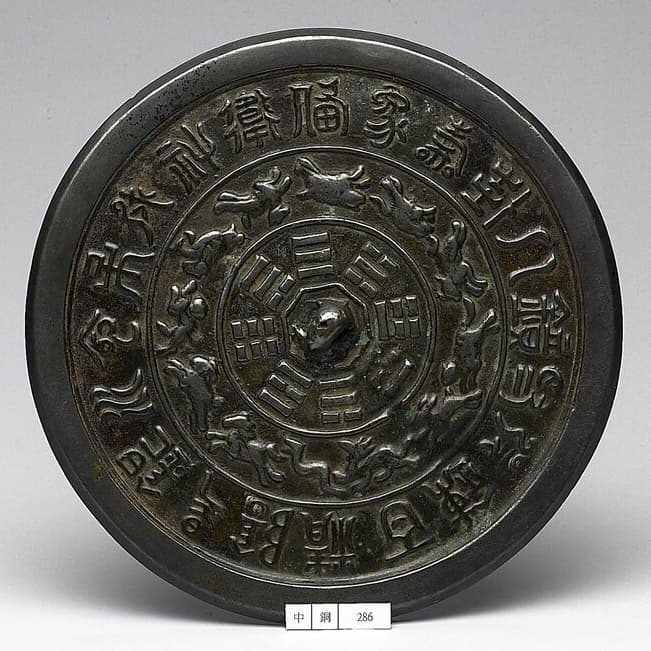
The foundation of the I Ching is the eight trigrams (ba gua), each consisting of three lines. The eight trigrams are: Qian (☰, heaven), Kun (☷, earth), Zhen (☳, thunder), Xun (☴, wind), Kan (☵, water), Li (☲, fire), Gen (☶, mountain), Dui (☱, lake). Each trigram carries its own symbol, quality, and direction, representing natural forces and fundamental principles of the universe.
By combining two trigrams stacked upon each other, we get 8 × 8 = 64 combinations, forming the 64 hexagrams , the core of the I Ching. The lower trigram (inner) often symbolizes the inner self, foundation, or what is happening within; the upper trigram (outer) symbolizes external circumstances, environment, and objective influences. The interaction between inner and outer trigrams creates the overall meaning of each hexagram.
Each hexagram has six lines, numbered from bottom to top: line 1 (initial) to line 6 (top). The position of each line represents a stage of development: line 1 is the beginning, full of potential; lines 2 and 3 are the unfolding phase; lines 4 and 5 are the mature phase; and line 6 is the conclusion, preparing for transition to a new state.
Components of a Hexagram
A hexagram in the I Ching is typically presented with the following components:
- Hexagram name: The name of the hexagram, e.g., Qian (乾), Kun (坤), Zhun (屯, Difficulty at the Beginning).
- Judgment (Tuan): The text under the hexagram, describing its overall meaning. This part is attributed to King Wen or the Duke of Zhou, providing general guidance.
- Line texts: The text for each line, describing specific meanings when that line is moving or in that position. Each line has its own text, often advice or warning.
- Image (Xiang): Commentary explaining the hexagram's meaning based on the images of the constituent trigrams (e.g., upper trigram Kan (water), lower trigram Li (fire) → symbolizes conflict between water and fire).
- Commentary on the Judgment: Deeper explanation of the judgment text, traditionally attributed to Confucius or his disciples.
Operating Principles: Yin-Yang and Change
Yin and Yang Lines
The line system of the I Ching is based on two fundamental principles: yin and yang. A yang line is represented by a solid line (⚊), symbolizing positivity, strength, creativity, and initiative. A yin line is represented by a broken line (⚋), symbolizing passivity, flexibility, nurturing, and acceptance. The interaction between yin and yang creates all transformations in the universe, from material to spiritual.
In a hexagram, the distribution of yin/yang lines in different positions creates specific situations. For example, the Qian hexagram consists of six yang lines, representing pure creativity and maximum strength. The Kun hexagram consists of six yin lines, representing complete receptivity, nurturing, and tolerance. Other hexagrams mix yin and yang, creating rich intermediate states.
Moving Lines and Transformation
When casting a hexagram, if a line is identified as "moving" (usually changing from yin to yang or vice versa), the hexagram's meaning is examined based on that moving line. The moving line is considered the key point, indicating where the issue is focused and the developmental trend. The original hexagram (cast) describes the current state, while the transformed hexagram (after the moving line changes) describes the outcome or future development.
Synchronicity
According to Carl Jung, the I Ching operates not on ordinary causality but on "synchronicity" , meaningful coincidence between simultaneous events. When a person casts a hexagram, the result (e.g., the fall of three coins) is not random but part of the overall picture of that moment. The received hexagram is considered an expression of the essential situation governing that moment, helping the inquirer better understand their circumstances.
This perspective resonates with how modern physicists view the relationship between observer and physical events in quantum mechanics. In the I Ching, reality includes both subjective conditions (the inquirer's psychology) and objective factors, and the hexagram serves as a bridge between these two dimensions.
Basic Interpretation Methods
Steps to Interpret a Hexagram
To interpret a hexagram systematically, one typically follows these steps:
- Identify the primary and transformed hexagrams: Based on the casting result, determine the original hexagram (describing the present) and the transformed hexagram (if there are moving lines, describing the future).
- Read the Judgment: The judgment text gives the overall meaning of the situation. This is the most important part, orienting the entire interpretation.
- Analyze inner and outer trigrams: Examine the relationship between the lower (inner) and upper (outer) trigrams to understand the interaction between inner self and external circumstances.
- Consider moving lines: If there are one or more moving lines, read their texts for specific details. Moving lines often indicate key points or specific advice.
- Relate to the question: Always keep in mind the inquirer's question, as the same hexagram can be interpreted differently for different questions.
Example: Hexagram 3 – Difficulty at the Beginning (Zhun)
Zhun is the third hexagram, consisting of lower trigram Zhen (☳, thunder) and upper trigram Kan (☵, water). Its name means "difficulty," "gathering," or "initial hardship." This hexagram appears when something is just beginning to take shape, with many obstacles, yet containing great potential for growth.
The Judgment of Zhun says: "Great success; perseverance is favorable. Do not rush forward. It is favorable to appoint helpers." The text advises that during initial difficulties, one should not act hastily but rather be patient, consolidate inner strength, and seek support from others.
When interpreting this hexagram, the inquirer should recognize that they are at the beginning of a venture, with many obstacles. The advice is to be humble, learn, and build a solid foundation before advancing further. This illustrates the practical application of the I Ching: each hexagram is not just a prophecy but a lesson on appropriate conduct for each circumstance.
Application in Modern Life
Many people today, regardless of religious or spiritual beliefs, turn to the I Ching as a tool for reflection and decision-making. Modern psychologists also recognize its value in evoking intuition and helping people view problems from multiple perspectives. For instance, Dr. Nguyen Chan Hung, in an interview with Tuoi Tre newspaper, shared how he follows "the spirit of the well" , an image from Hexagram 48 (The Well) , to live and practice medicine: always pure, always ready to serve, never exhausted.
Hexagram 48 depicts a clear well in the middle of a village. The well never runs dry because it has an underground spring; the water is full but never overflows. Whoever needs water can come to the well; the more water is drawn, the clearer it becomes. The meaning of this hexagram concerns nurturing, sharing, and the virtue of the noble person: maintaining purity, serving wholeheartedly without depletion, and remaining steadfast.
Principles for Using the I Ching
Maintain an Objective Attitude, Avoid Superstition
The I Ching is not a tool for absolute prediction of the future. It is a philosophical system that helps people understand the present more clearly, thereby acting appropriately. The accuracy of a hexagram's message depends greatly on the interpreter's skill and sensitivity. Therefore, one should not view the I Ching as a rigid prophecy but as a mirror reflecting inner states and circumstances.
Combine with Reason
When receiving a hexagram, the inquirer should combine its message with rational analysis of their own. The hexagram may offer advice, but the final decision remains with the inquirer. The I Ching encourages self-determination, not passive submission to fate.
Conclusion
The 64 hexagrams of the I Ching are a treasure trove of knowledge about the laws of change in the universe and human life. Each hexagram is an "archetypal situation," a lesson on wise conduct. Understanding their structure and basic interpretation not only helps one use the I Ching effectively but also opens a deeper way of thinking about the workings of nature and the human soul.
As the last two hexagrams , Ji Ji (After Completion) and Wei Ji (Before Completion) , remind us, nothing in life truly ends. What reaches completion soon gives way to a new beginning. The I Ching teaches us to accept change as natural and to maintain hope for the future.
Studying the I Ching is not about escaping reality, but about understanding it more deeply, thereby living a more meaningful and harmonious life. Whether you approach the I Ching from a philosophical, psychological, or cultural perspective, this ancient classic always holds timeless values worth exploring.