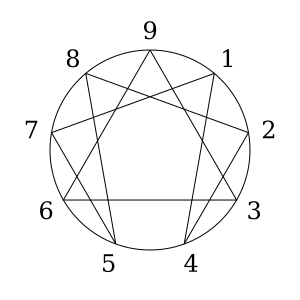
Enneagram Type 5 – The Observer: A Portrait of a Knowledge-Seeking Mind
In the Enneagram system, Type 5 is often called The Observer, The Thinker, or The Investigator. They are characterized by a rich inner world, a drive for deep understanding, and a strong need for self-sufficiency and independence.
Core Motivation and Fear
Type 5 behavior revolves around two emotional axes: the fear of being overwhelmed or intruded upon and the desire to be competent and autonomous. They perceive the outside world as demanding too much energy, time, and emotion. Thus, they build a mental fortress to observe and analyze from a safe distance.
- Essence: Wisdom, insight, and boundless creativity. When healthy, Type 5 individuals become visionaries who contribute groundbreaking ideas.
- Basic Fear: Being useless, helpless, or incapable of coping with life's demands.
- Basic Desire: Having enough knowledge, skills, and resources to function independently and confidently.
Recognizing Type 5 in Behavior and Thought
- Exceptional analytical thinking: Type 5 has a keen eye for detail and strong logical reasoning. They love diving into complex subjects, from science to philosophy.
- Social withdrawal: They tend to observe rather than participate in social interactions. This is not coldness but a need for solitude to recharge and process information.
- Energy conservation: They often live minimally and avoid extravagance. They maintain distance to prevent energy drain.
- Knowledge hoarding: They collect books, data, and experiences as a means of feeling secure.
Strengths of Type 5
- High concentration: They can focus intently for long periods, producing high-quality work.
- Objectivity and fairness: Their ability to detach from emotions allows them to make unbiased judgments.
- Creative problem-solving: They generate unique solutions by thinking outside the box.
- Respect for boundaries: They understand and respect others' limits, fostering trust-based relationships.
Growth Areas for Type 5
- Isolation and detachment: They may become overly reclusive, leading to loneliness. Learning to share emotions is vital.
- Analysis paralysis: They may delay action while seeking more data. This can cause missed opportunities.
- Intellectual perfectionism: They might pressure themselves to know everything, causing stress.
- Difficulty expressing feelings: They often hide emotions behind logic, making them seem distant.
Type 5 in Work and Relationships
In work: Type 5 excels in roles requiring deep expertise, such as research, data analysis, programming, strategic consulting, or academia. They perform best with autonomy and minimal micromanagement.
In friendships and love: They choose friends carefully, usually maintaining a small but close circle. In romantic relationships, they are slow to open up but very loyal. Patience and low-pressure approaches are key.
Advice for Healthy Growth
- Practice small actions: Set daily goals to accomplish something without waiting for perfect preparation.
- Share thoughts with others: Start with trusted people to gain multiple perspectives.
- Accept uncertainty: Life never provides complete data; learn to decide with available information.
- Care for the body: Don't live only in your head; exercise to balance energy.
Conclusion
Enneagram Type 5 are great thinkers who bring depth and innovation to society. By understanding their motivations and fears, they can learn to balance intellectual pursuits with emotional connection, achieving both wisdom and fulfillment. Remember, the Enneagram is not a box but a map for self-awareness and growth.