The Pure Yang Hexagram: The Origin of the Universe and I Ching Thought
The I Ching, one of the most ancient and profound books of the East, is not merely a divination tool but also a deep philosophical system, a cosmology, and a worldview. Among its 64 hexagrams, the Pure Yang Hexagram (Qian) holds a special position as the first hexagram, the source of all transformations. Understanding the Pure Yang Hexagram is understanding the foundational thought of the entire I Ching.
Origin and Structure: Symbol of Heaven
#### From the Eight Trigrams to the 64 Hexagrams
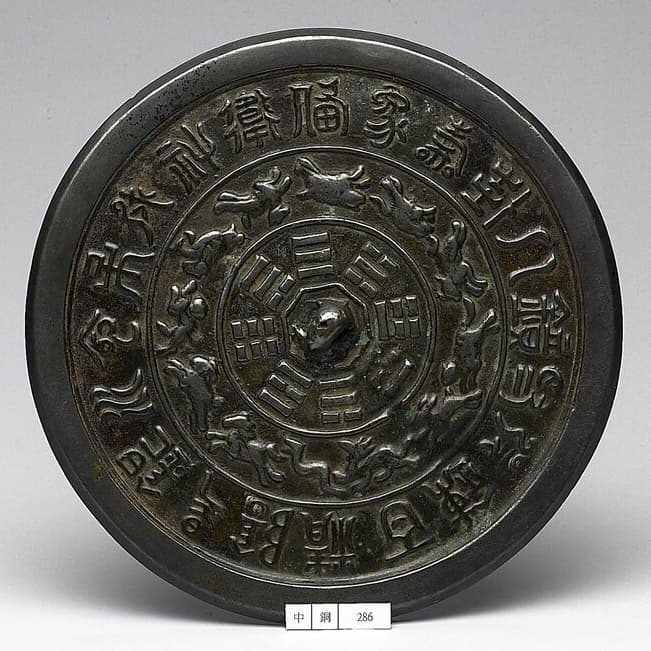
Before delving into the Pure Yang Hexagram, one must understand its origins. The I Ching originates from the Eight Trigrams, traditionally attributed to Fu Xi, who derived them from observing natural phenomena. The Eight Trigrams are: Qian (☰), Dui (☱), Li (☲), Zhen (☳), Xun (☴), Kan (☵), Gen (☶), and Kun (☷).
Later, when the Eight Trigrams were combined in pairs, they formed 64 hexagrams. Each hexagram consists of two stacked trigrams, creating six lines. The Pure Yang Hexagram is the combination of two Qian trigrams stacked, forming a hexagram also named Qian, or called Pure Yang to distinguish it from the single trigram.
#### The Meaning of Six Yang Lines
The structure of the Pure Yang Hexagram is six lines, all being yang lines (solid). This carries an immensely powerful symbolic meaning. A yang line represents activity, positivity, creativity, strength, and brightness. When all six lines are yang, the hexagram embodies an absolutely pure state of yang energy, unmixed with any yin.
In the Eastern cosmological view, this yang energy symbolizes Heaven. Heaven ceaselessly moves, bestowing light, warmth, and life upon all things. Thus, the Pure Yang Hexagram is not merely an image of the physical sky but also a symbol of the creative principle, the primordial energy of the universe.
Philosophy of Life: Lessons of the Noble Person
Much of the I Ching's value lies in applying cosmic symbols to human life. The Pure Yang Hexagram, through its Judgment and Image, offers clear guidance.
#### The Power of Perseverance and the Right Path
The Judgment of Qian is: "Qian: Yuan, Heng, Li, Zhen." These four words are the foundation of all things in the universe. Yuan is the great beginning, the source of all things. Heng is smooth progress, unobstructed development. Li is harmony and appropriateness, bringing benefit to all. Zhen is correctness and steadfastness, the quality of enduring existence.
These four virtues describe not only the operation of heaven and earth but also serve as a model for the noble person. A noble person should embody Yuan (a good start, great intention), Heng (acting smoothly and timely), Li (knowing how to harmonize and benefit others), and Zhen (holding to the right path, steadfast in goals).
#### The Spirit of Unceasing Self-Strengthening
The Image of Qian states: "Heaven moves with vigor; the noble person strengthens himself without cease." This is one of the most famous and influential sayings in Eastern culture. It teaches that self-development and improvement are continuous processes that must never stop. Just as heaven always moves, the noble person must daily cultivate virtue, wisdom, and ability. This is the foundation of a proactive, positive, and responsible attitude toward oneself and society.
The Six Lines of the Qian Hexagram: The Developmental Journey of a Career
The most distinctive part of the Pure Yang Hexagram lies in its line texts, which describe six distinct stages of development in a career or a human life. This is considered one of the earliest and most refined descriptions of developmental stages in modern psychology and management.
#### First Line (Initial Nine): The Hidden Dragon, Do Not Act
The bottom line represents the initial stage. Energy is still weak, lacking the strength and conditions for action. The advice is to be like a dragon lying at the bottom of an abyss: remain hidden, cultivate yourself, accumulate knowledge, and wait for the right moment. Acting hastily without adequate preparation leads to failure.
#### Second Line (Nine in the Second): The Dragon Appears in the Field; It Is Favorable to See the Great Person
With some preparation, talents begin to emerge. The dragon no longer hides but appears in the field. This is the stage where abilities start to be recognized. However, to grow further, the noble person needs support and guidance from those of higher standing and vision.
#### Third Line (Nine in the Third): The Noble Person Works All Day and Is Vigilant at Night; Though in Danger, There Is No Fault
This is the most challenging stage, a transition between inner and outer, below and above. The third position is not a central one, and one may face trials and pressure. The advice is to be diligent and cautious, never negligent or arrogant, in any circumstance. Constant effort and vigilance help one pass through danger without error.
#### Fourth Line (Nine in the Fourth): Sometimes Leaping in the Abyss; No Fault
This is a stage of critical choices, where one may advance to a higher position or retreat. The noble person must be flexible, continually self-examining and assessing the situation to make correct decisions. Boldly trying, "leaping up" when capable and conditions allow, will not cause mistakes.
#### Fifth Line (Nine in the Fifth): The Dragon Flying in the Sky; It Is Favorable to See the Great Person
This is the best line in the hexagram, representing the peak of a career. The dragon has flown to the sky, meaning the noble person has achieved the highest position, with power and ability at their best. The advice is that at this level, a leader should resonate with virtuous and talented people to build great achievements together for the benefit of all.
#### Top Line (Top Nine): The Arrogant Dragon Will Regret
This is a warning for the final stage of development. When something has reached its extreme, if one does not know how to restrain or retreat in time, decline and regret will follow. Like a dragon flying too high, with no room to advance or retreat, one falls into extremity. The lesson is about humility and knowing when to stop, avoiding arrogance and excessive ambition.
Synchronicity and the Operation of the Hexagram
A modern perspective on the I Ching and the Pure Yang Hexagram comes from psychologist Carl Gustav Jung. He proposed that the 64 hexagrams are tools to determine the meaning of 64 typical situations. Divination is not based on ordinary causality but on what he called "synchronicity," or meaningful coincidence. When a hexagram is cast, it not only coincides in time but also matches the "quality" of that moment. The Pure Yang Hexagram, with its six yang lines, might appear in a circumstance where the questioner possesses enormous potential, a creative force needing direction. It describes a "pure yang" situation where everything is positive and active, requiring wise action. This approach provides a theoretical framework for understanding why an ancient symbol like Qian can still offer profound insights today.
Applications of the Pure Yang Hexagram in Modern Life
Beyond abstract philosophy, the Pure Yang Hexagram can be concretely applied to contemporary issues.
- In management and leadership: The six-line model of Qian is seen as a perfect career development map. From starting with humility and learning (line 1), rising to management (lines 2 and 3), taking on greater responsibility (line 4), and reaching the top (line 5). The warning at line 6 reminds leaders of humility and the need for succession planning at the peak.
- In personal development: The spirit of "self-strengthening without cease" guides daily self-cultivation. It encourages proactive learning, health, and moral refinement.
- In decision-making: Facing a difficult situation, reflecting on the lines of Qian helps identify one's current stage, guiding appropriate actions: whether to be patient (line 1), seek support (line 2), or be more cautious and diligent (line 3).
Conclusion
The Pure Yang Hexagram is a masterpiece of Eastern thought. It is more than a divination hexagram; it is a cosmic symbol, a life philosophy, and a profound map of development. From the symbol of heaven and creative energy to lessons on perseverance, integrity, and humility through its six lines, Qian offers timeless values. Understanding and applying its principles provides a sharp lens to view oneself, one's work, and the world with greater insight and positivity.
Quick-Reference Table: Hexagram The Creative
| Aspect | Content |
|---|---|
| King Wen number | 1 |
| Chinese name | 乾 |
| Symbol | ䷀ |
| Vietnamese name | Thuần Càn |
| Upper trigram | Qian (Heaven), Metal element, Northwest |
| Lower trigram | Qian (Heaven), Metal element, Northwest |
| Six lines, first line at the bottom | 1st yang, 2nd yang, 3rd yang, 4th yang, 5th yang, 6th yang |
| Image | Heaven moves with unceasing strength. |
| Reading | A hexagram of pure yang, standing for creative force and initiative. Tradition reads it as a call to tireless self-reliance. Great strength comes paired with a demand for restraint. |
*Số liệu trong bảng khớp với kết quả các công cụ tra cứu trên Nhật Nguyệt.*

