Introduction: From two lines to eight symbols
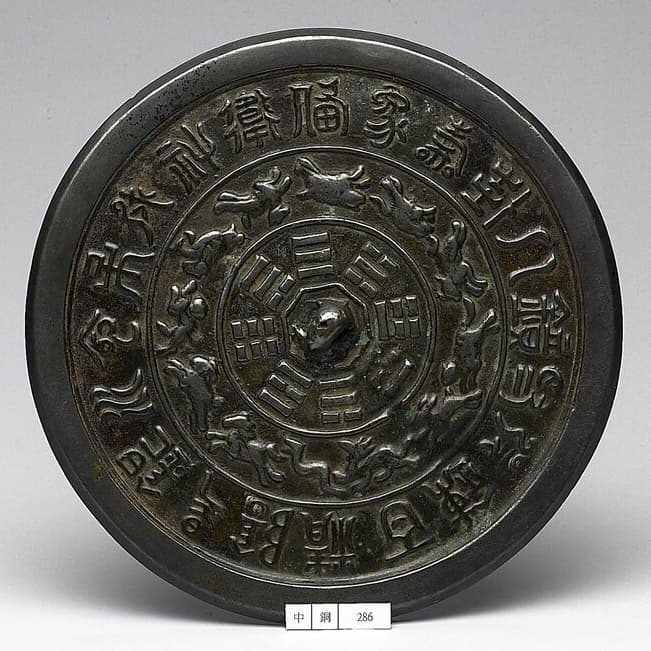
The I Ching (Kinh Dịch), a classic of Eastern philosophy, is built on a remarkably simple symbolic system: the yang line, a solid mark (-), and the yin line, a broken mark (--). These two symbols represent the opposing yet complementary energies of the universe. Their interaction generates eight fundamental forms known as the Bagua (Eight Trigrams). These trigrams combine in pairs to form the 64 hexagrams, encompassing all patterns of cosmic change.
Among these eight trigrams, Kun (☷) stands out as the symbol of Earth and the pure yin principle.
Structure and symbolism of the Kun trigram
The image of three broken lines
Kun consists of three broken lines, representing pure yin. If Qian (☰) is Heaven , creativity, initiative, and dynamism , then Kun is Earth , receptivity, nurture, and a positive form of passivity. This contrast is fundamental to yin-yang philosophy: neither can exist without the other. Qian and Kun are the father and mother of all things, the origin of all transformation.
The image of three broken lines suggests emptiness and flexibility, yet this very emptiness is what enables containment. Earth must be empty to hold seeds; water must be hollow to sustain life. Kun thus embodies the power of unconditional acceptance and tolerance.
Mother, Earth, and fertility
In Eastern culture, Kun is called the Mother trigram. It is the archetype of the maternal: nurturing tirelessly, protecting without complaint. On Dong Son bronze drums, researchers have noted motifs of fertility worship, but for ancient Vietnamese people, sexuality was not the primary concern. They perceived in earth, water, and growth a cosmic principle , and Kun symbolizes that principle. Yin and yang lines engraved on bronze drums testify to a profound understanding of cosmic structure in ancient times.
Philosophical meaning and life lessons
Receptivity and the power of humility
Kun is not weakness but a different kind of strength , the strength of receptivity. In the I Ching, the noble person learns from Kun the virtue of humility: knowing oneself, respecting others, not competing aggressively yet not submitting. The Earth does not claim glory but serves as the foundation of all glory.
This principle is vividly illustrated by the "spirit of the well" that scholar Nguyễn Hiến Lê often discussed. Like the Well hexagram in the I Ching, a well stays in place, never moves, draws from underground springs so it never runs dry. Anyone may come to draw water; the more it is drawn, the clearer and cleaner it becomes. This is the spirit of Kun: steadfast service without demand, enriching the world without exhausting oneself.
Synchronicity and harmony with nature
Psychologist Carl Gustav Jung called the operating principle of the I Ching "synchronicity" , meaningful coincidence between events in space and time, transcending pure randomness. In this view, a cast hexagram coincides not only temporally but also qualitatively with its moment. The Kun trigram, with its three yin lines, represents times when one should listen, observe, and wait rather than act forcefully.
When society moves in a yang direction , active, innovative , the noble person still maintains a solid Kun foundation: the ability to listen, to be patient, to nurture. No creativity is sustainable without the foundation of tolerance and understanding.
Kun in relation to other trigrams
Qian and Kun , the harmony of Heaven and Earth
Qian and Kun are the first two of the 64 hexagrams. Qian is Heaven, creative strength, the yang principle; Kun is Earth, nurturing strength, the yin principle. Their union forms the Tai hexagram (Earth over Heaven) , a symbol of harmony and prosperity when yin and yang energies intermingle. Conversely, the Pi hexagram (Heaven over Earth) shows separation when yang rises and yin sinks without interaction.
The eight trigrams , a cyclical whole
Among the eight trigrams, Kun opposes Qian. If Qian initiates creation, Kun completes and nurtures. In the Former Heaven (Xiantian) arrangement, Qian sits in the South, Kun in the North, forming the cosmic axis of balance. In the Later Heaven (Houtian) arrangement, Kun occupies the Southwest , the position of autumn, harvest, and reaping what has been sown.
Conclusion
The Kun trigram is not merely an archaic philosophical symbol but a living lesson for modern humanity. In a world that prizes competition, self-assertion, and speed, Kun reminds us of the value of listening, tolerance, and quiet perseverance. Learning the virtues of Earth , steadfastness, nurturing, and openness , is the path to genuine maturity and peace.
The 64 hexagrams represent 64 archetypal life situations, teaching the character of the noble person. In every situation, the Kun foundation , yielding to natural order while remaining humble and firm , serves as an anchor against the currents of change.
Quick-Reference Table: Trigram Kun
| Aspect | Content |
|---|---|
| Earlier Heaven number | 8 |
| Chinese name | 坤 |
| Symbol | ☷ |
| Natural image | Earth |
| Element | Earth |
| Later Heaven direction | Southwest |
| Three lines, first line at the bottom | 1st yin, 2nd yin, 3rd yin |
*Số liệu trong bảng khớp với kết quả các công cụ tra cứu trên Nhật Nguyệt.*