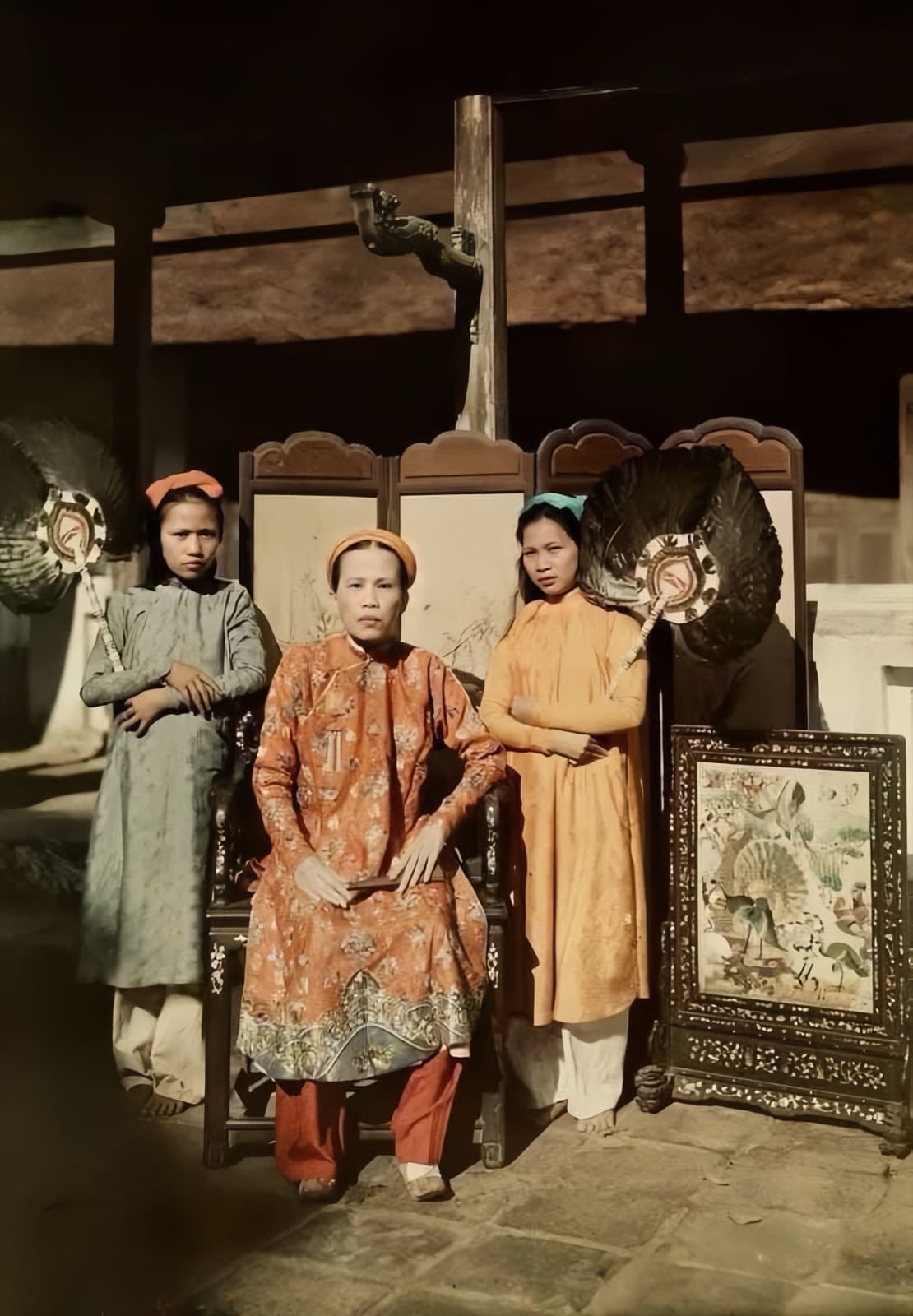
Vietnamese Ao Dai , History and Cultural Significance
The ao dai is one of the most distinctive cultural symbols of Vietnam, present in both daily life and major events. Its journey spans centuries, intertwined with historical ups and downs and cultural exchanges.
Historical Origins and Key Milestones
#### 17th Century Precursor Garments
Researchers find it difficult to pinpoint exactly when the ao dai first appeared. However, records from Western missionaries visiting Vietnam in the early 17th century provide valuable insights. Cristophoro Borri, an Italian Jesuit living in Thuan Hoa and Quang Nam from 1618-1622, described women wearing multiple layers of silk skirts in different colors, combined with cross-draped jackets and a thin veil. This was the xiem canh sen, consisting of overlapping silk strips, with inner layers longer than outer ones. The xiem canh sen is considered an early precursor of today's ao dai.
#### Lord Nguyen Phuc Khoat's Clothing Reform (1744)
A crucial milestone came in 1744 when Lord Nguyen Phuc Khoat ascended to the throne in Phu Xuan and issued clothing reform policies. According to the Dai Nam Thuc Luc, he sought to "change garments, transform customs, and renew with the people," establishing court attire regulations for mandarins based on rank. This reform laid the foundation for ao dai development in Dang Trong, marking a shift toward more standardized and aesthetic clothing.
#### Unification under the Nguyen Dynasty
During the Nguyen Dynasty (1802-1945), Kings Gia Long and Minh Mang continued unifying clothing styles between the two regions. In 1827 (Minh Mang's 8th year), the king issued a decree requiring citizens in Bac Thanh to adopt the southern style from Quang Binh southward. This caused public resistance, reflected in folk verses. Nevertheless, Minh Mang's policy enabled women to wear ao dai regularly, spreading the garment from Hue nationwide.
Development and Variations
#### Northern and Southern Styles
The ao dai initially differed between regions. The northern style split down the front into two panels without buttons. The southern style evolved with side slits creating flowing panels. Through time and royal policies, these merged into the modern ao dai with front and back panels.
#### Distinctive Hue Ao Dai
The Hue ao dai possesses unique elegance. According to researcher Le Van Hao, it has a moderate length, high collar, and fitted waist. Fabric colors are typically pure white, black, or soft shades like light blue, pale pink, apricot, and lavender. A white ao dai with white trousers and a poem leaf hat creates a familiar image harmonious with Hue's ancient, romantic scenery.
Cultural Significance and Symbolic Value
#### Modest, Graceful Beauty of Women
The ao dai highlights modest, gentle beauty while accentuating the wearer's figure. The blend of classic and modern, modesty and refinement, makes it a garment expressing Vietnamese women's character. It is both dignified and aesthetically unique, symbolizing grace and elegance.
#### Cultural Symbol and National Pride
The ao dai transcends mere clothing to become a cultural icon and source of national pride. Despite historical changes, it maintains its importance in spiritual life. Images of ao dai appear during festivals, Tet holidays, schools, diplomatic events, and artistic works. It remains an endless inspiration for poets, musicians, and painters.
#### Tourism Value and International Reach
Today, the ao dai is also a unique tourism product, especially in Hue. Visitors to the ancient capital can see women gracefully wearing ao dai on bridges, streets, or beside ancient citadels and temples. Hue Festivals always feature ao dai celebrations, promoting Vietnamese culture internationally and affirming the enduring value of this traditional garment.
Conclusion
The Vietnamese ao dai embodies a long historical process, creative spirit, and refined aesthetic sense of Vietnamese people across generations. From simple xiem canh sen through clothing reforms under the Nguyen Lords and Dynasty to today's diverse developments, the ao dai maintains traditional beauty while adapting to modern times. It is not merely clothing but a precious cultural heritage expressing the soul, character, and identity of the Vietnamese nation.