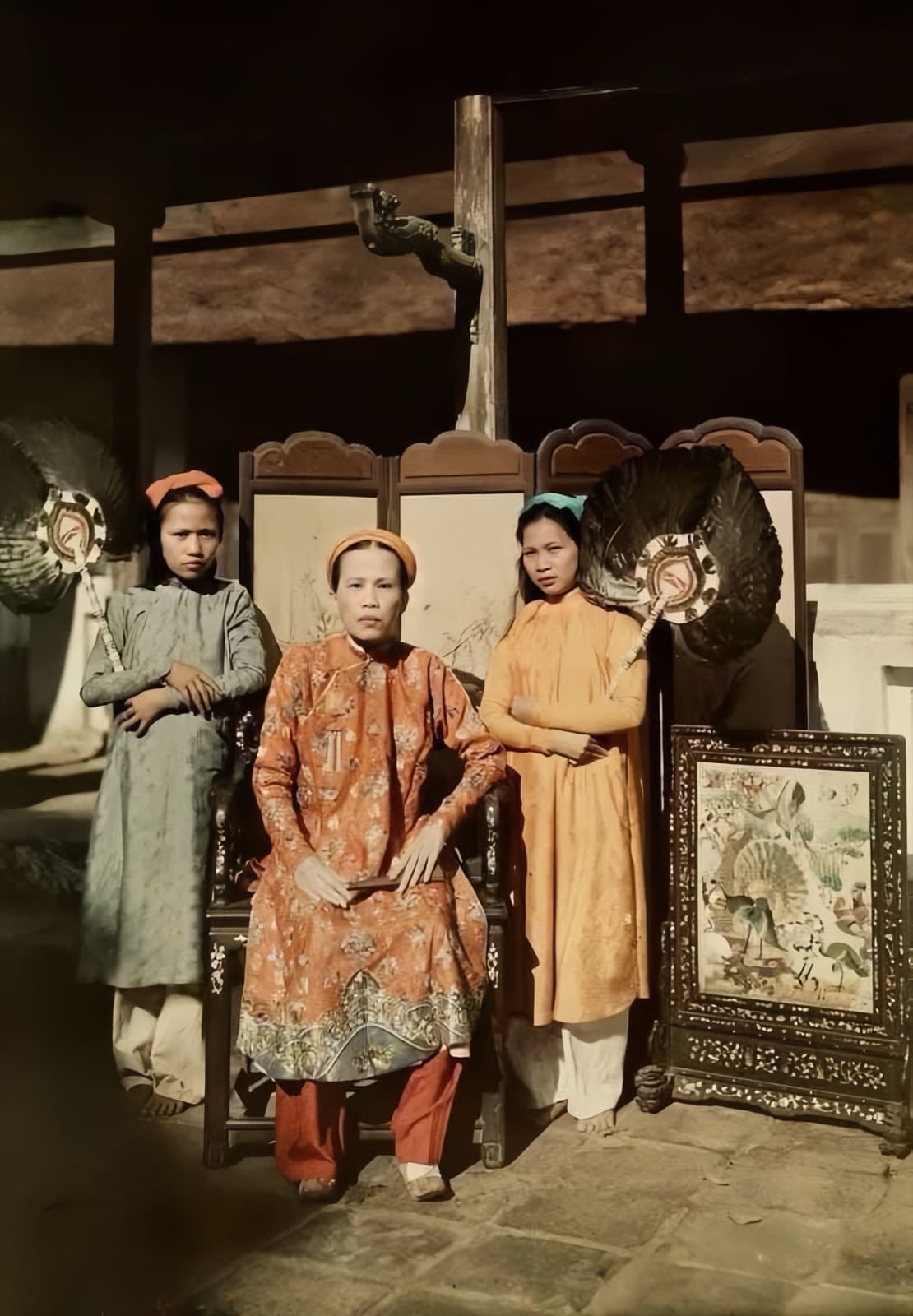
Khan Dong and Ao The: Traditional Vietnamese Men's Attire
In the history of Vietnamese clothing, alongside the graceful Ao Dai of women, the image of men in Khan Dong (headwrap) and Ao The (traditional men's tunic) is associated with an elegant, calm, and confident beauty. This is not merely clothing but a cultural heritage reflecting the spirit, morality, and aesthetics of the Vietnamese people.
Historical Origins and Development
The attire took clear shape during the Revival Le Dynasty (17th-18th century). A pivotal change came from Lord Nguyen Phuc Khoat in 1744. To assert cultural independence in Dang Trong (Southern region), he mandated men to wear the five-panel gown with a standing collar, replacing the crossed-collar style. Men wore Khan Dong instead of other headwear. This reform laid the foundation for the outfit we know today.
Under the Nguyen Dynasty (1802-1945), the attire became widespread and reached its peak of standardization, serving as the official uniform for mandarins and scholars, and formal wear for important ceremonies.
Construction and Materials
Ao The is a five-panel gown made from 'the' fabric, a type of silk fabric with a naturally rough, textured surface. This texture provides breathability, suitable for Vietnam's hot and humid climate. Colors are typically dark and subdued like black, dark brown, or navy blue, reflecting modesty.
Khan Dong is a long strip of fabric, often made from the same 'the' fabric or a softer silk called 'nhieu'. It is wrapped meticulously around the head, creating a cap that fits snugly, with the end tucked away neatly. Wrapping requires skill to create even, beautiful folds.
How to Wear and Key Components
The complete outfit includes:
- Inner garment: A simple shirt or bodice to absorb sweat.
- Trousers: Usually white, wide-legged silk or satin pants.
- Belt: A silk sash tied around the waist over the Ao The.
- Shoes: Traditional fabric or leather shoes, usually black or brown.
The left panel of the Ao The is crossed over the right panel. Buttons are fabric and hidden inside for a discreet look.
Cultural Significance
Khan Dong and Ao The symbolize:
- Ritual and respect: Wearing it shows reverence for deities, ancestors, and the community.
- Gentlemanly virtues: Dark colors and discreet design reflect humility and moral standards.
- Community bonds: Wearing similar attire during village festivals fosters unity.
- National identity: It represents the endurance of Vietnamese culture against foreign influences.
Decline and Modern Revival
From the early 20th century, Western clothing gradually replaced it in daily life. By the mid-20th century, it was mainly seen in rural rituals or historical films.
Recently, alongside a trend of cultural rediscovery, the attire is experiencing a notable revival. Young people and celebrities wear it for important occasions such as:
- Weddings: Grooms wearing Khan Dong and Ao The in traditional ceremonies.
- Tet (Lunar New Year): Families wearing them for holiday photos.
- Traditional festivals: Participants in rituals at communal houses and temples.
- Graduation ceremonies: Some universities encourage or choose this attire for male graduates.
Conclusion
Khan Dong and Ao The are a priceless cultural heritage. Their revival is not a fleeting fashion trend but evidence that traditional cultural values remain relevant. Preserving and promoting this attire is a shared responsibility to affirm Vietnam's unique identity internationally.