Introduction
Ao Tu Than (four-panel dress) is one of the most iconic traditional costumes of Vietnamese women, especially in the northern Red River Delta. Along with Ao Dai, Ao Ba Ba, and Ao Yem, it forms a rich tapestry of Vietnamese attire. Unlike the modern fitted Ao Dai, Ao Tu Than is loose, rustic, and graceful, reflecting agricultural life and philosophical views of ancient Vietnamese.
Origins and Historical Development
From Ao Giao Linh to Ao Tu Than
Many researchers believe Ao Tu Than evolved from Ao Giao Linh, a cross-collar robe popular during the Ly and Tran dynasties (11th-14th centuries). Ao Giao Linh had long panels, split at the sides, with the front panels crossed and tied. Over time, it was modified into a more practical four-panel design.
Solidification in the Le Dynasty
Ao Tu Than became widespread during the Le dynasty (15th century) when agriculture flourished. Under the Nguyen dynasty (19th century), it remained common in the North, while the court in Hue favored the five-panel Ao Dai. This regional distinction highlights cultural differences, yet Ao Tu Than persists as a hallmark of northern Vietnam.
Construction and Features
Four Panels: Symbolism of Filial Piety
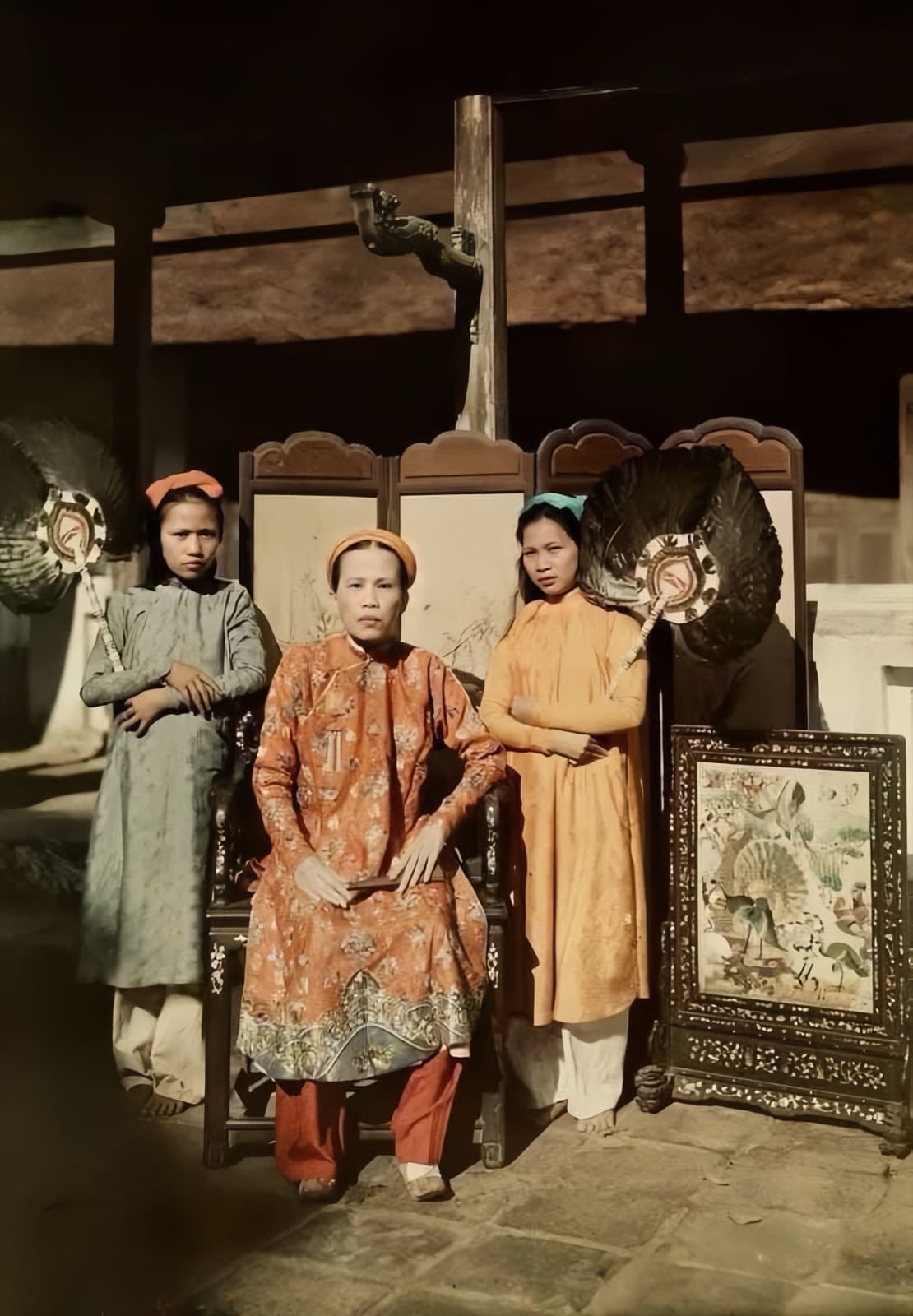
The dress consists of four panels: two front panels are separate, allowing flexible fastening with ties or buttons; two back panels are sewn together along the spine. The four panels symbolize parents (father, mother, and in-laws), reminding wearers of filial duty.
Collar, Sleeves, and Details
The collar is a soft V-shape, often trimmed with contrasting fabric. Sleeves are wide, extending past the elbow for comfort. The dress falls below the hips to knee length, with side slits for ease of movement. Seams are usually hidden, with decorative edges on collar, placket, and hem.
Fabric and Colors
Traditional fabrics include silk, cotton, hemp, and "the" (a coarse silk). Colors range from brown, fawn, and beetle-wing brown to black. Rural women preferred brown for fieldwork, while festive occasions called for brighter hues like pink, blue, or white, paired with an inner bodice (Ao Yem).
Variations and Wearing Styles
Traditional vs. Reformed Styles
Ao Tu Than has two main forms: the classic style where front panels are crossed and tied, and the reformed "xẻ vai" (shoulder-opening) style from the 19th century where front panels are sewn together at the neck, offering more modesty. The latter was popular among urban middle class, while peasants kept the tied style.
Accessories
Ao Tu Than is worn with Ao Yem (chest cover), a wrap skirt (vay đụp), and a silk sash around the waist. Headwear includes a triangular scarf (khan mo qua) and a flat palm hat (non quai thao). Wooden clogs or fabric shoes complete the look, creating a modest yet graceful appearance suited to northern climate and activities.
Cultural Significance
Reflection of Agricultural Life
The loose, slitted design facilitates movement, carrying loads, and farming. The ability to tuck panels over shoulders adds practicality, distinguishing it from the fitted aristocratic Ao Dai.
Symbol of Modesty and Virtue
Four panels represent parents; the crossed front conveys respect and moral integrity. Ao Tu Than does not accentuate body curves but honors a graceful, dignified beauty. In festivals, it symbolizes purity and community cohesion.
Evolution Over Time
Since the early 20th century, Ao Tu Than has gradually been replaced by modern Ao Dai due to Western influence and urbanization. However, it remains present in cultural events and has inspired contemporary designers who modernize colors and materials while preserving its essence.
Comparison with Other Traditional Costumes
Compared to the five-panel Ao Dai (central Vietnam) and Ao Ba Ba (southern Vietnam), Ao Tu Than stands out for its freedom and practicality. Ao Dai is fitted and formal; Ao Ba Ba is simple with round neck and long sleeves. Ao Tu Than is a product of northern wet-rice civilization, close to labor and daily life.
Conclusion
Ao Tu Than is more than a garment; it is a cultural heritage embodying history, philosophy, and aesthetics. Although no longer everyday wear, it lives on in festivals and national memory. Understanding and preserving Ao Tu Than helps Vietnamese people cherish their roots and enrich cultural identity in a globalized world.