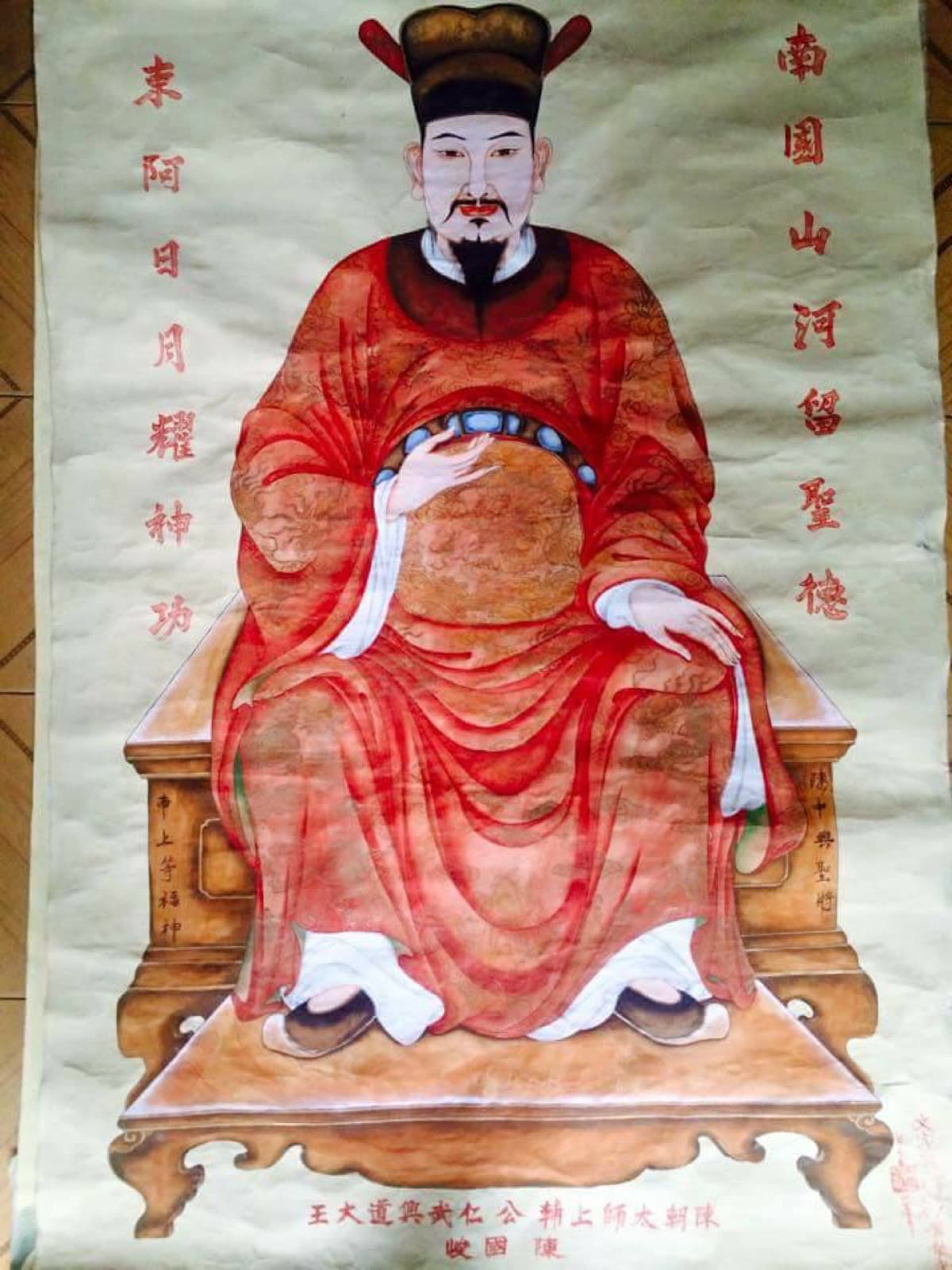
Lady Trieu - Trieu Thi Trinh: An Indomitable Symbol of the Vietnamese People
In the history of building and defending the Vietnamese nation, the image of heroic women has always held a special place. If the Trung Sisters began the glorious struggle tradition of Vietnamese women, then Lady Trieu, or Trieu Thi Trinh, was a subsequent peak, a shining symbol of patriotism and resilient will. Her life and career, along with the sacred temple on Gai Mountain (Trieu Loc commune, Hau Loc district, Thanh Hoa province), form a heroic historical story and an invaluable spiritual cultural heritage that needs to be preserved and promoted.
Historical Context and Background of Trieu Thi Trinh
To understand Lady Trieu's uprising, one must place it in the turbulent historical context of our country in the 3rd century. In 220, the Eastern Han dynasty in China collapsed, and the country fell into the Three Kingdoms period with three main forces: Wei, Shu, and Wu. In that context, our country fell under the rule of the Wu dynasty, a colonial government described in historical records as extremely cruel.
The land of Cuu Chan, corresponding to present-day Thanh Hoa province, was one of the areas suffering the most severe oppression and exploitation. The Wu colonial government aggressively plundered, seized wealth, forced people into labor, and committed heinous crimes such as raping women and killing innocent people. The lives of the Cuu Chan people at that time were extremely miserable, creating intense ethnic conflict and fertile ground for uprisings against colonial rule.
Amidst that chaotic backdrop, Trieu Thi Trinh, a daughter of Quan Yen village (now in Yen Dinh district, Thanh Hoa), appeared. She was born in 226 into a family with a patriotic tradition. From a young age, she was known for her extraordinary intelligence, excelling not only in literature but also in martial arts. According to folk tales, she possessed extraordinary strength and could kill ferocious tigers to protect the villagers. Her patriotic spirit and indomitable will formed early, becoming the foundation for her later great uprising.
The Uprising and Heroic Sacrifice of Lady Trieu
In 248, under the brutal domination of the Wu dynasty, Trieu Thi Trinh, along with her elder brother Trieu Quoc Dat, raised the flag of revolt at the Nua Mountain base (now in Trieu Son district, Thanh Hoa). The uprising quickly attracted a large number of people and righteous soldiers, forming a powerful force that seriously threatened the colonial government.
In a fierce battle against a Wu attack on the Nua Mountain base, Trieu Quoc Dat heroically sacrificed his life. Losing her elder brother, her greatest spiritual support, did not shake Lady Trieu. On the contrary, the pain of loss further tempered her fighting will. She suppressed her grief, rose to lead the insurgent army, and vowed to avenge the country and her family, defeat the Wu invaders to liberate her homeland, and free the people from misery and poverty.
From the Nua Mountain base, Lady Trieu led her troops to attack Tu Pho citadel (now in Giang village, Thieu Duong commune, Thanh Hoa city), an important political and military center of the Wu dynasty in Cuu Chan commandery. With skillful tactics and courageous fighting spirit, her troops quickly eliminated the Wu colonial government in the area, gaining control of a vast region. The resounding victories of Lady Trieu's forces terrified the Wu government, forcing it to concentrate a large force to suppress the uprising.
However, against the strength of a large and better-equipped invading army, Lady Trieu's uprising gradually fell into a disadvantageous position. On the 22nd day of the second lunar month in the year Mau Thin (248), in a fierce battle at Tung Mountain, Bo Dien village, Lady Trieu heroically sacrificed her life at just 23 years old. Her death was a great loss to the insurgents and the people, but the uprising she led left an indelible mark on the nation's history.
Historical Significance and Symbolic Value of the Uprising
Although Lady Trieu's uprising ultimately failed, its historical significance is immense. The uprising demonstrated the passionate patriotism and resilient, indomitable will of the Vietnamese people against foreign domination. It was a glorious milestone, continuing the struggle tradition of the Trung Sisters, affirming the strength and great role of Vietnamese women in the cause of national defense.
The image of Lady Trieu with her immortal words recorded in history: "I want to ride the strong wind, step on the fierce waves, kill the giant whale in the open sea, drive out the Wu army, reclaim the country, and remove the yoke of slavery, rather than bow down as a concubine to others" has become a shining symbol of noble spirit and the nation's desire for freedom and independence. She was not only a talented general but also a symbol of resistance, of an unyielding spirit that refuses to submit to tyranny.
Because of these immense historical and spiritual values, Lady Trieu has been revered and remembered by our people for generations. Worshipping her is not only a beautiful spiritual cultural practice but also a way to educate future generations on patriotic traditions.
Lady Trieu Temple on Gai Mountain: Architecture and Heritage Value
To commemorate Lady Trieu's merits, local people built her temple at the foot of Gai Mountain, in Phu Dien village, Trieu Loc commune, Hau Loc district, Thanh Hoa. Lady Trieu Temple is not only a unique architectural and artistic work but also an important spiritual cultural site, attracting numerous visitors and locals to pay homage. Additionally, on the top of Tung Mountain, her tomb was also built to ensure continued incense offerings.
According to information from Thanh Nien newspaper, the historical and architectural relic of Lady Trieu Temple has been classified as a special national relic. This shows the particularly important value of the temple in terms of history, culture, and architecture. The temple is not only a place to worship a national heroine but also a testament to the profound gratitude of the people towards those who contributed to the country. The people of Phu Dien village also revere Lady Trieu as their village guardian deity, worshipping her at the communal house, reflecting the close bond between the heroine and the community's spiritual life.
Lady Trieu Temple Festival: National Intangible Cultural Heritage
Associated with the temple is the Lady Trieu Temple Festival, a distinctive community cultural activity held annually. The festival originated from the historical event of resisting foreign invaders by the heroine Trieu Thi Trinh. Accordingly, the festival has created a cultural phenomenon that revives the patriotic spirit and the resilient, indomitable will of Vietnamese women. The Lady Trieu Temple Festival has been recognized by the Ministry of Culture, Sports and Tourism as a national intangible cultural heritage, within the overall special national relic.
Annually, the main festival is held from the 19th to the 24th day of the second lunar month. During these days, the people of Phu Dien village and pilgrims from all over join in a series of solemn rituals and distinctive folk cultural activities.
#### Main Rituals in the Festival
The rituals in the Lady Trieu Temple Festival are held solemnly and adhere to strict conventions passed down through generations. It begins with the moc duc ceremony, a ritual bathing of Lady Trieu's statue to purify it before entering the main festival days. This is followed by a procession of the deity's palanquin from the temple to the communal house, recreating the community's veneration of their guardian deity.
During the festival, male and female ceremonial teams perform traditional sacrificial rites, with elaborately staged rituals expressing the people's reverence for Lady Trieu. Villagers offer the best and most delicious products and food they have harvested during the year as a way to report merits and thank the deity. This reflects a beautiful aspect of wet-rice agricultural culture, linking spiritual life with the people's production and daily activities.
#### Folk Games and Distinctive Rituals
Besides the offering rituals, the festival also features a variety of folk games, creating a joyful and exciting atmosphere. Games such as cooking rice competition, playing bai diem, and human chess are lively, attracting wide participation from locals and visitors. Notably, the "Ngo - Trieu battle reenactment" game is a unique feature, recreating the heroic historical atmosphere of the uprising, helping viewers visualize some of the glorious battles of Lady Trieu's forces.
In addition to the main festival in the second lunar month, the people of Trieu Loc commune also maintain the custom of offering new rice on the 2nd day of the 10th lunar month each year, which is Lady Trieu's birthday. At the moment of transition between the old and new year (New Year's Eve), each family in Phu Dien village prepares an offering tray with sticky rice, chicken, and betel leaves and areca nuts to offer, expressing remembrance and gratitude to the national heroine.
The Community's Role in Preserving and Promoting Heritage Values
Preserving and promoting the value of the Lady Trieu Temple Festival is a long-term process requiring the joint efforts of the community and local authorities. According to the elders in Phu Dien village, to maintain the festival, villagers have passed down from generation to generation the strict adherence to long-established conventions. The selection of participants for the ritual and festive parts also has special requirements. For example, palanquin bearers must have a handsome face, not be married, come from families with both sons and daughters, have a comfortable economic status, and not be in mourning. These regulations demonstrate the community's solemnity and devotion to Lady Trieu.
However, in the context of a rapidly developing modern society, many traditional cultural values are at risk of fading. The fact that today's younger generation has fewer opportunities to learn about and understand Lady Trieu's history and her temple festival is a worrying reality. Therefore, building long-term plans and creating a successor workforce to ensure the festival's beauty is preserved intact and increasingly integrated into the lives of local people is an important and urgent task. The State's recognition of the national intangible cultural heritage is a great motivation for the local community to continue preserving and promoting these precious cultural values.
Lady Trieu and her temple on Gai Mountain are not merely a historical relic but also a cultural symbol and a spiritual anchor for the people of Thanh Hoa and the entire Vietnamese nation. Learning about her life and career and participating in cultural activities at the temple is a way for each of us to honor the past, educate on traditions, and look toward the future.

